Sintesi Sonora
Sound Synthesis
SINTESI SONORA
SOUND SYNTHESIS
Tecniche · Modelli · Pratiche
Techniques · Models · Practice
Controllo del timbro
Timbral control
Il Filtro
The Filter
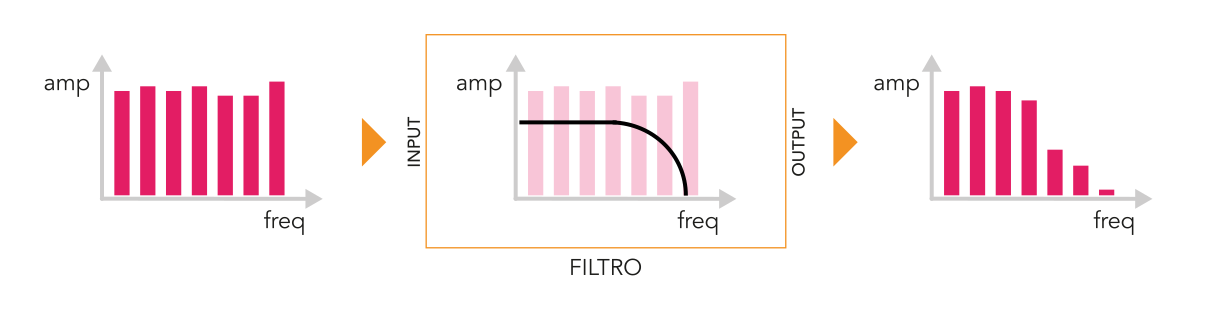
Un filtro è un dispositivo che agisce prevalentemente su alcune frequenze contenute in un suono attenuandone o enfatizzandone l'ampiezza*.
A filter is a device that attenuates (sometimes emphasizes) the amplitude and alters the phase of certain frequencies in a sound. Filters can help us refine or sculpt the sound to meet our sound synthesis goals.
* e/o cambiandone la fase.
Controllo dinamico
Dynamic control
INVILUPPO
ENVELOPE
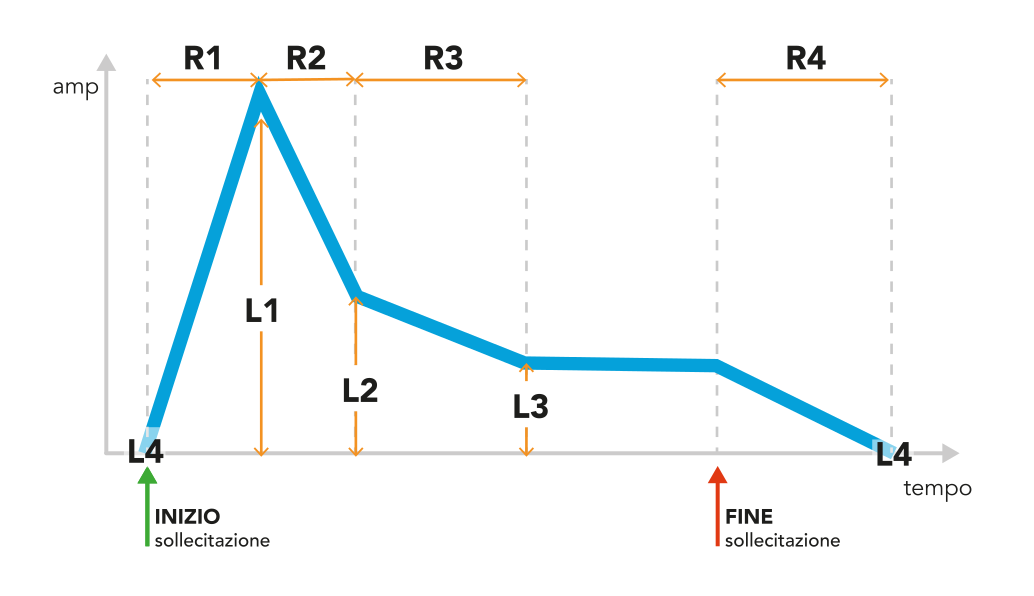
L'inviluppo è l'andamento dell'ampiezza di un suono (o di un altro parametro) dall'inizio della sollecitazione dello strumento fino all'estinzione del suono stesso (o dell'altro parametro a cui è stato applicato).
The envelope is the time-based trajectory of an instrument's amplitude (or sometimes other parameters) from the moment a note is excited to when the note fades away to nothing.
Modulazione ciclica
Cyclic modulation
LFO (Low Frequency Oscillator)
LFO (Low Frequency Oscillator)
Per LFO si intende un oscillatore utilizzato per modulare un parametro del nostro sistema di sintesi.
LFO (Low-Frequency Oscillator) is an oscillator that is not used to generate sound but to move certain parameters of the synthesis algorithm.
Controllo analogico
Analog control
CV (Control Voltage, Controllo in Tensione)
CV (Control Voltage)
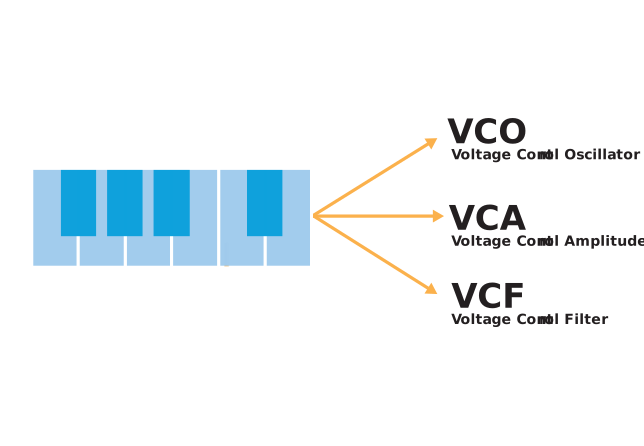
Il CV è il sistema con il quale i synth analogici controllano i vari parametri. Può essere regolato per esempio con un knob o anche con la tastiera musicale, nel caso dell'intonazione.
Control Voltage is the system by which the output voltage of analog synths are used to control various parameters of another synthesizer or algorithm that ultimately generates the sound.
Hardware o Software
Hardware or Software
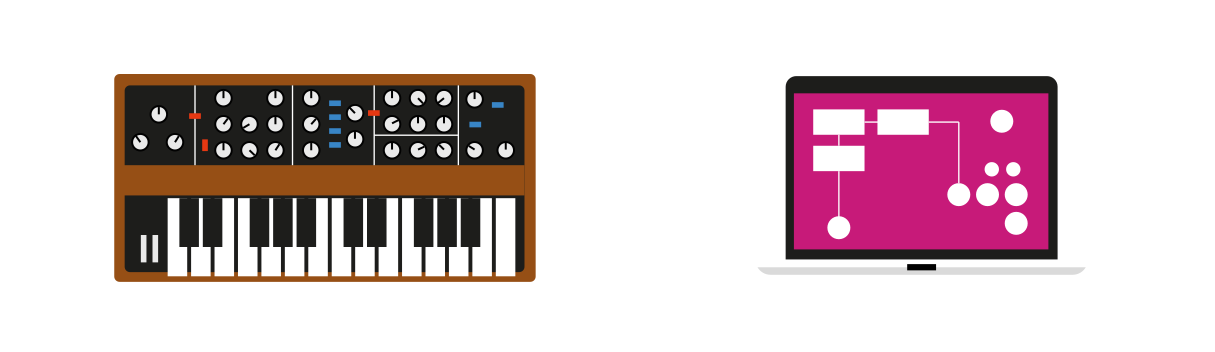
La sintesi sonora può essere attuata da hardware cioè macchine fisiche dedicate oppure software cioè programmi eseguiti su un computer.
Sound synthesis algorithms can be implemented by hardware systems, or software programs executed on a computer.
Analogici o Digitali
Analog or Digital
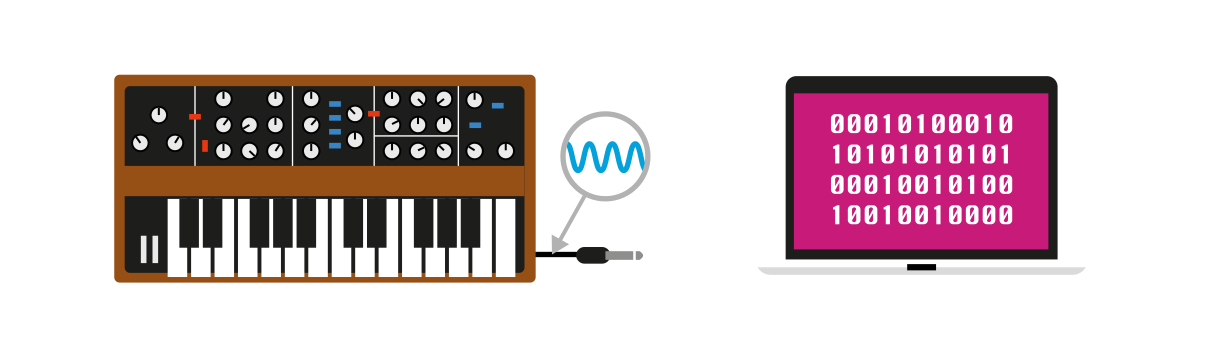
Nel caso del software chiaramente sarà tutto in digitale mentre nei sintetizzatori hardware possiamo trovare parti di circuito analogico ma anche parti digitali.
In the case of software, the synthesis will be digital. Historically, hardware synthesizers only had analog circuits, but modern hardware synths can take a hybrid approach with analog and digital circuitry.
Integrati/Modulari/Semi-Modulari
Standalone, Modular or Semi-Modular
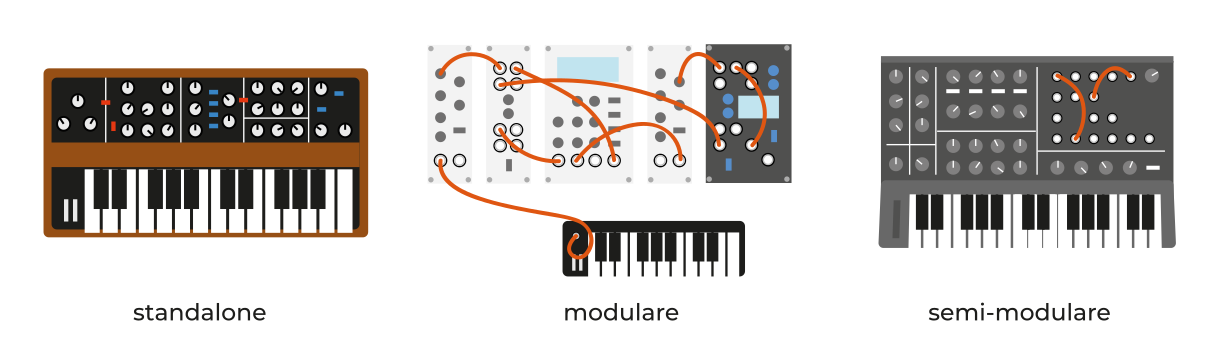
I sintetizzatori standalone (integrati) hanno un circuito interno che non può essere modificato e che permette solo la variazione di parametri attraverso dei potenziometri. I sintetizzatori modulari sono formati da moduli separati che possono essere collegati a piacere. I semi-modulari adottano un approccio misto.
Synthesizers can be classified into 3 categories. Standalone synthesizers have fixed internal circuitry. Modular synthesizers have customizable module connections. Semi-modular synthesizers blend standalone operability with modular flexibility.
Tecniche di Sintesi
Synthesis Techniques
LINEARE
LINEAR
Basandosi su operazioni di somma e differenza, a un aumento della complessità dell'algoritmo corrisponde un aumento proporzionale e lineare della complessità del suono prodotto.
Based on adding and subtracting processes. The algorithm's complexity is directly proportional to the spectral complexity of the sound produced.
AdditivaAdditive
SottrattivaSubtractive
GranulareGranular
NON LINEARE
NONLINEAR
Si ottengono mediante distorsione di un segnale da parte di un altro. Il risultato sonoro non varia proporzionalmente alla complessità dei segnali coinvolti ma segue relazioni di altra natura.
The sonic result does not vary in proportion to the signals' complexity. Complex timbres can emerge from just a few initial elements.
AM
RM
FM
Waveshaping
Sintesi Additiva
Additive Synthesis
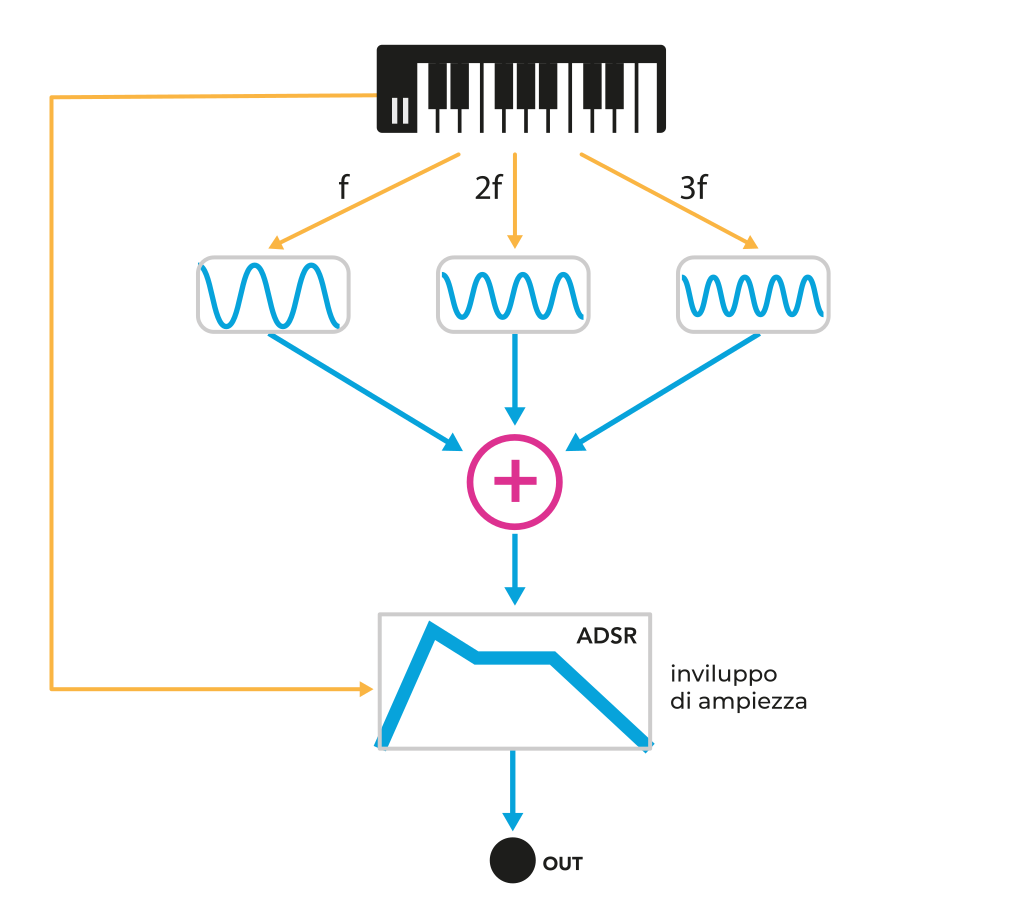
Costruisce il timbro sommando parziali sinusoidali. È un approccio analitico: controllo molto fine dello spettro, maggiore complessità operativa.
Builds timbre by summing sinusoidal partials. It is an analytical approach: very fine spectral control with increased operational complexity.
Sintesi Additiva
Additive Synthesis
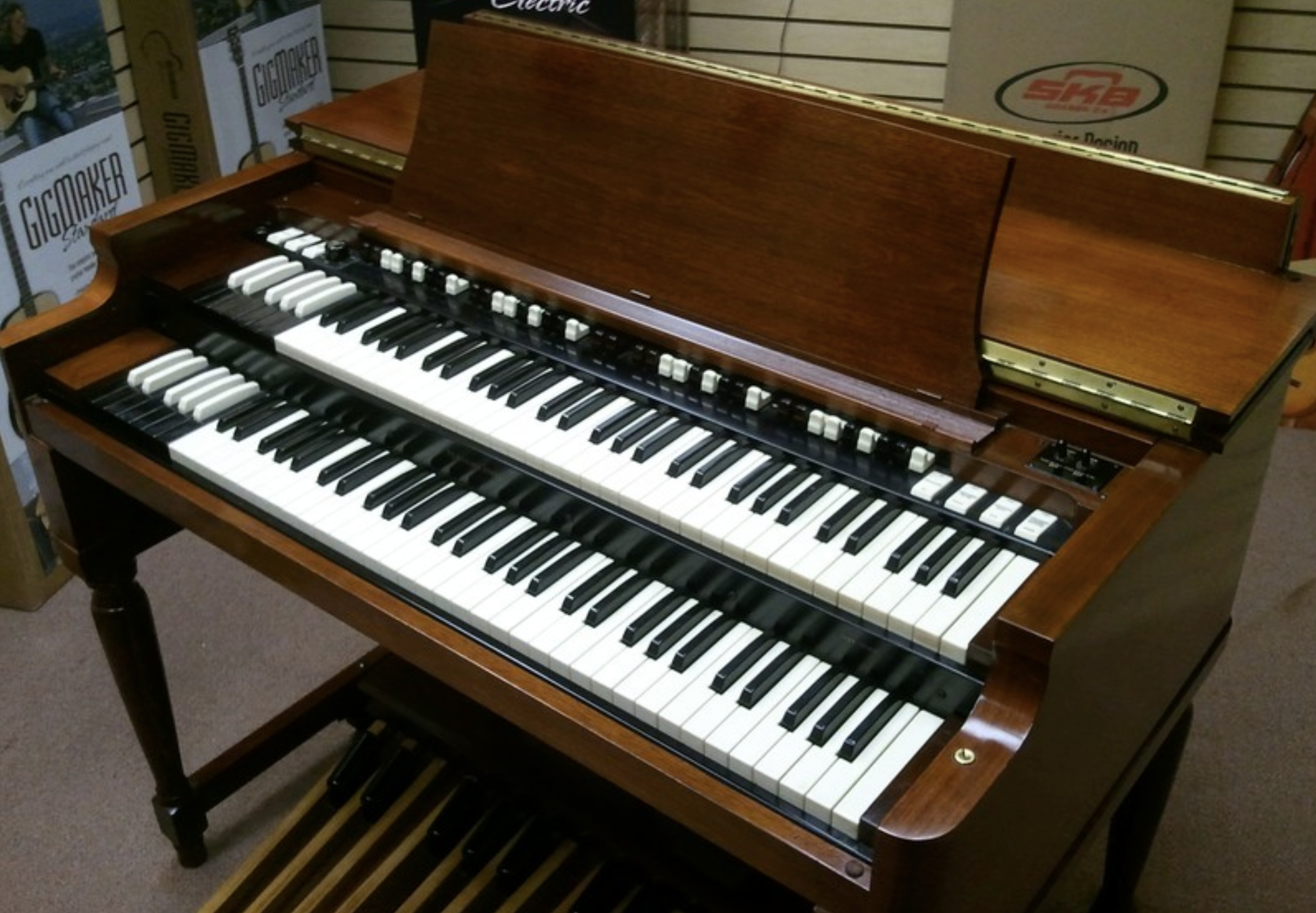
Hammond B3
Hammond B3
Hammond Organ B3 (Model A from 1935)
Hammond Organ B3 (Model A from 1935)
Sintesi Sottrattiva
Subtractive Synthesis
Parte da sorgenti ricche (oscillatori) e scolpisce il suono con filtri e inviluppi. Rimane il paradigma più diffuso nella produzione musicale elettronica.
Starts with harmonically rich sources and sculpts them through filters and envelopes. It remains one of the most widespread paradigms in electronic music production.
Sintesi Sottrattiva
Subtractive Synthesis
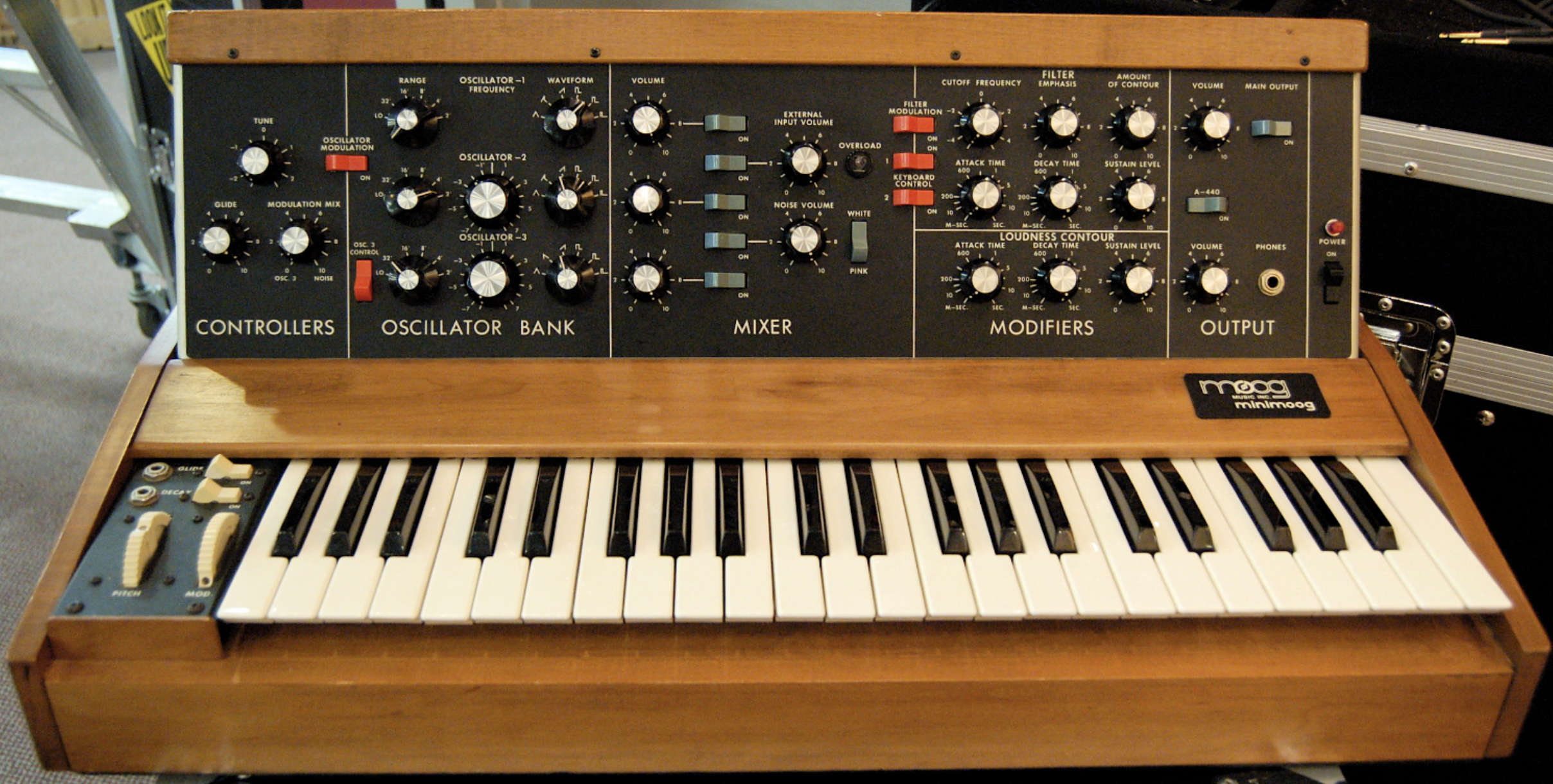
Minimoog
Minimoog
Minimoog (Model D from 1971)
Minimoog (Model D from 1971)
Sintesi Sottrattiva
Subtractive Synthesis
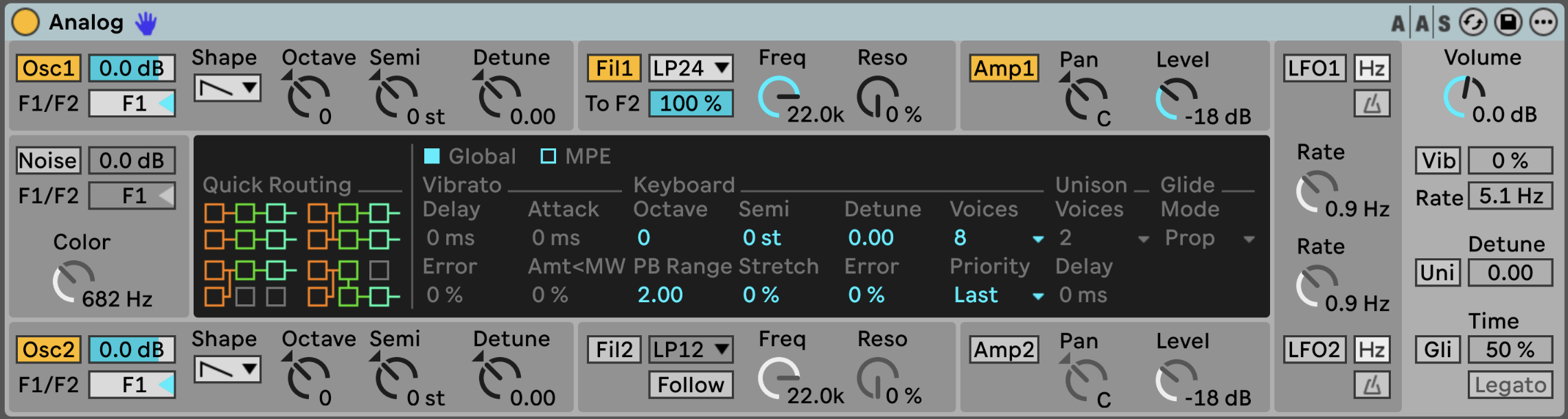
Analog (Ableton Live)
Analog (Ableton Live)
Sintesi AM e RM
AM and RM Synthesis
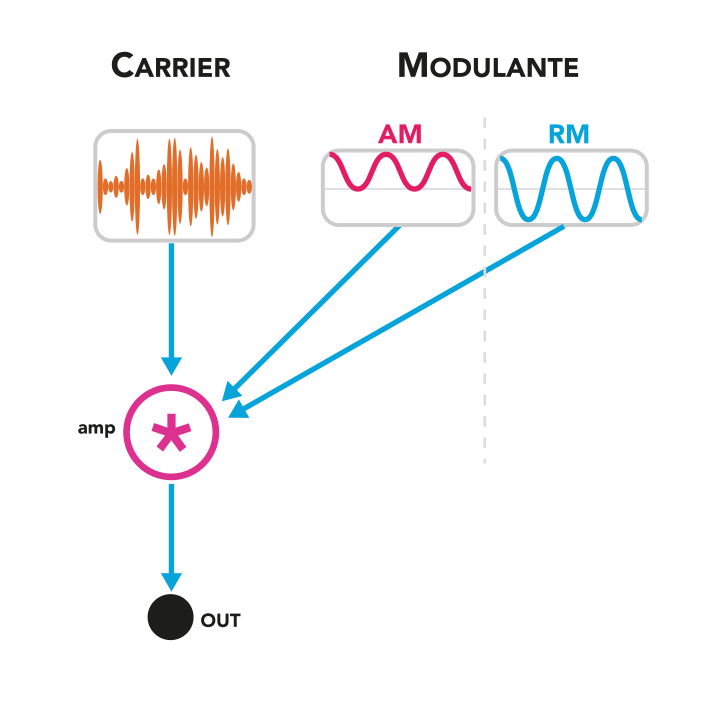
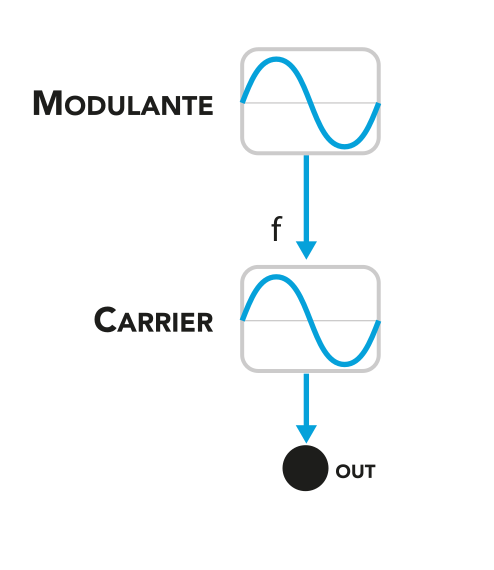
Nell'AM (Amplitude Modulation) un oscillatore modulatore controlla l'ampiezza della portante, producendo bande laterali simmetriche. Nella RM (Ring Modulation) la portante scompare: restano solo le bande laterali, producendo un timbro metallico e inarmonico.
In AM (Amplitude Modulation), a modulator oscillator controls the carrier amplitude, producing symmetric sidebands alongside the carrier. In RM (Ring Modulation), the carrier disappears: only the sidebands remain, producing a metallic, inharmonic timbre.
Amplitude / Ring Modulation
Amplitude / Ring Modulation
Schema AM / RM
AM / RM Diagram
Ring Modulation
Ring Modulation
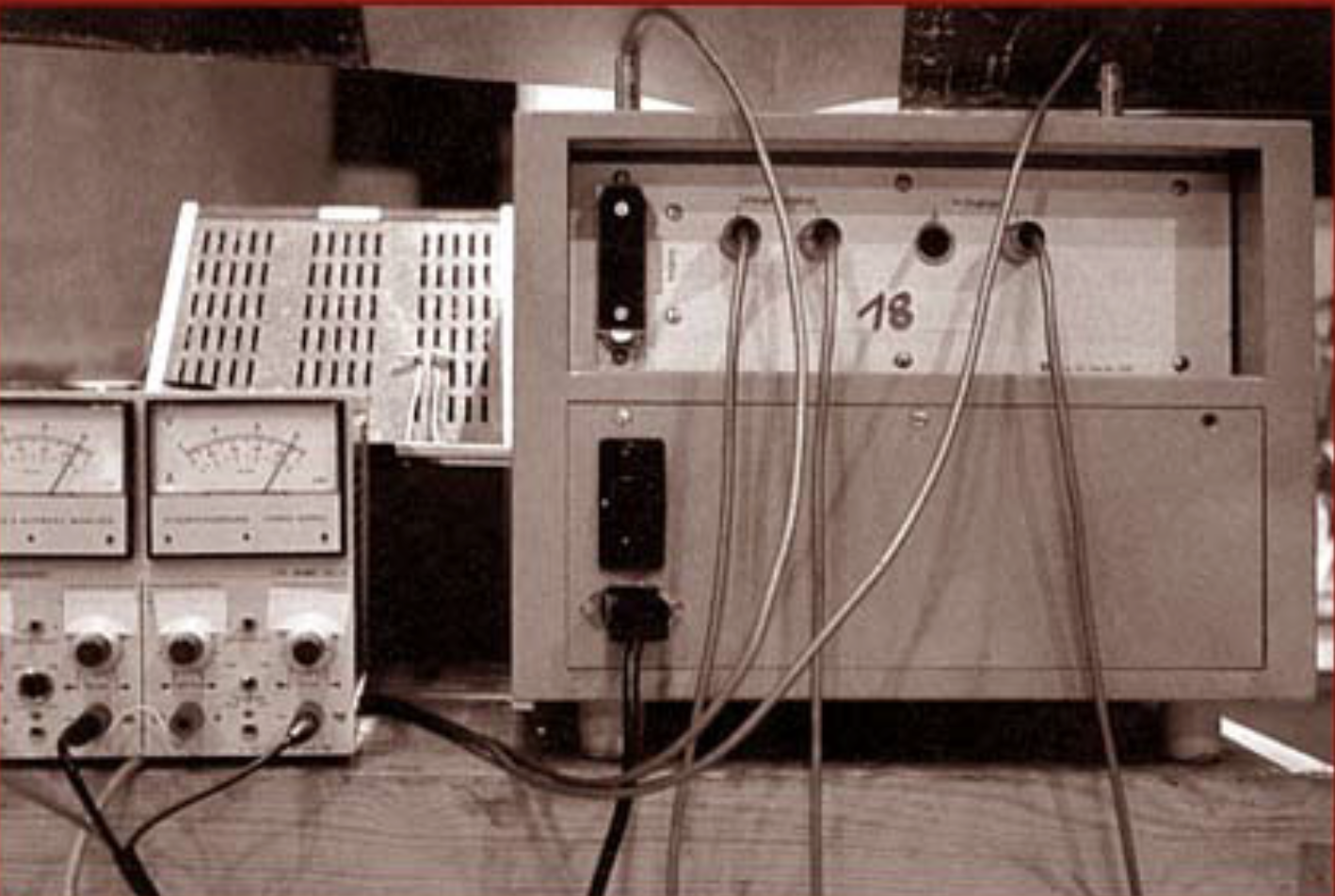
Ring Modulator di Colonia
Cologne Ring Modulator
Ring Modulator, studio di Colonia (1955)
Ring Modulator, Studio for Electronic Music of the West German Radio in Cologne (1955)
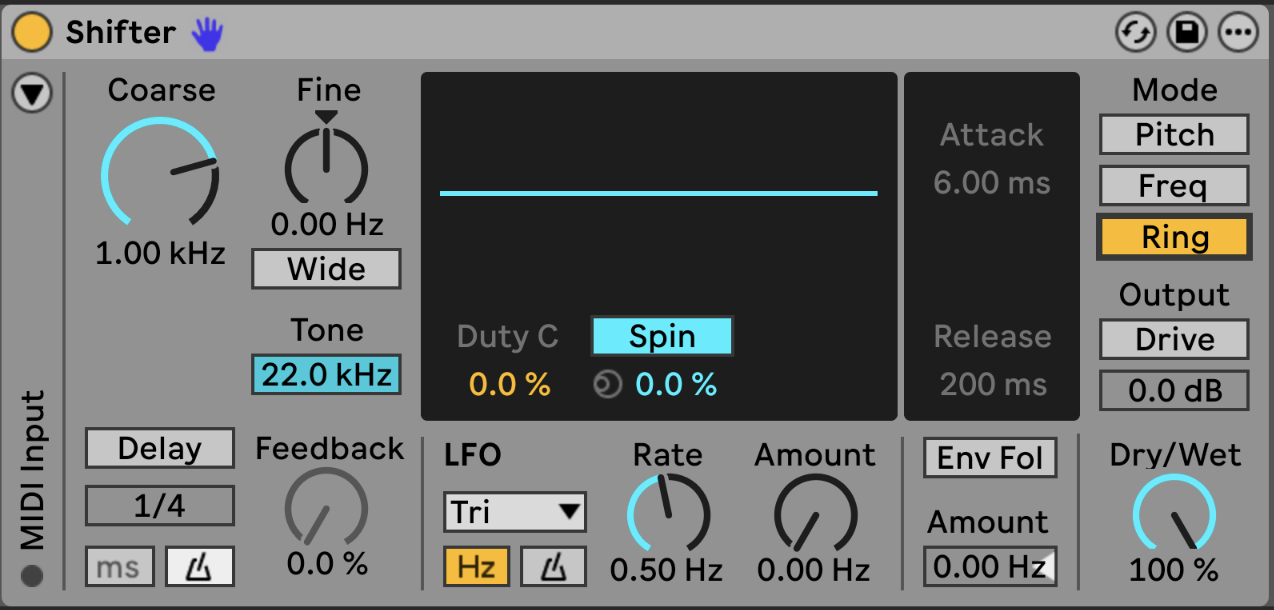
Shifter (Ableton Live)
Shifter (Ableton Live)
Sintesi FM
FM Synthesis
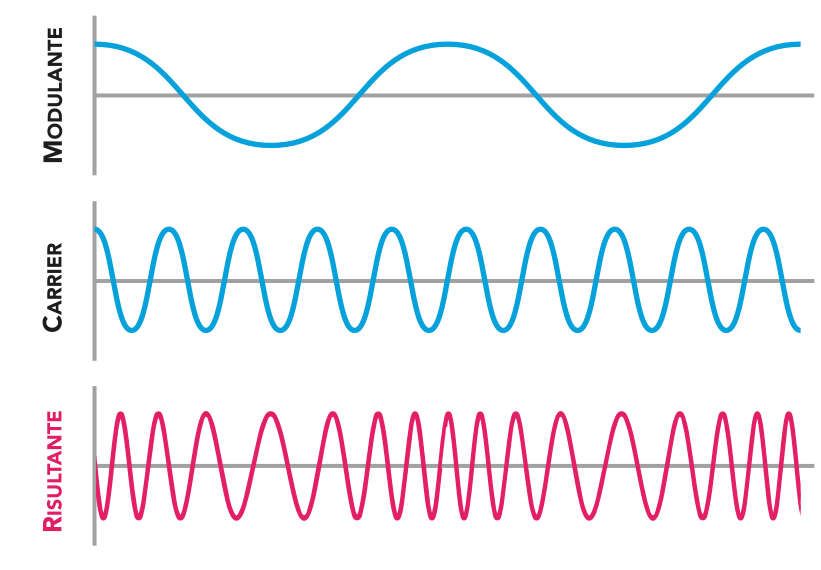
Una forma d'onda semplice (Carrier) viene modificata modulando la sua frequenza con una sinusoide di modulazione (Modulante), ottenendo una forma d'onda e un timbro più complessi.
Uses a modulator oscillator to vary the carrier frequency. With a small set of parameters it can produce both simple and highly complex timbres.
FM: Bande Laterali
FM: Sidebands
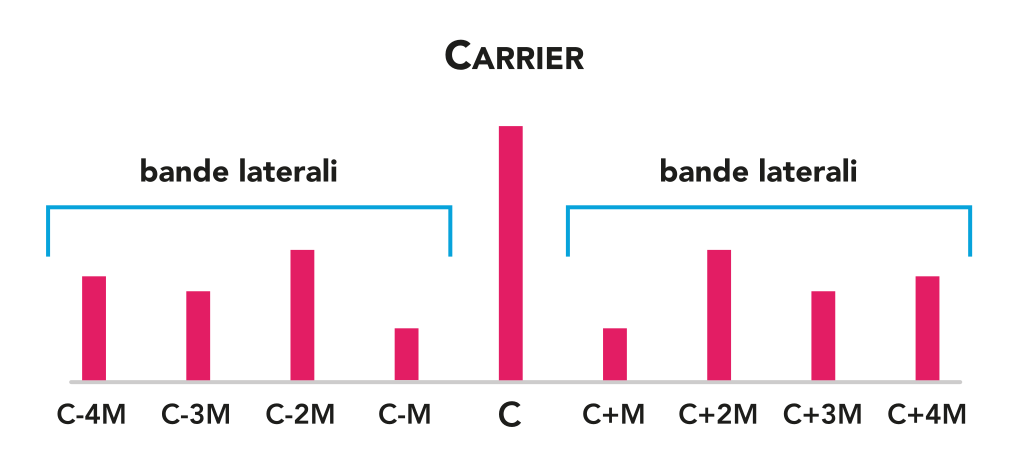
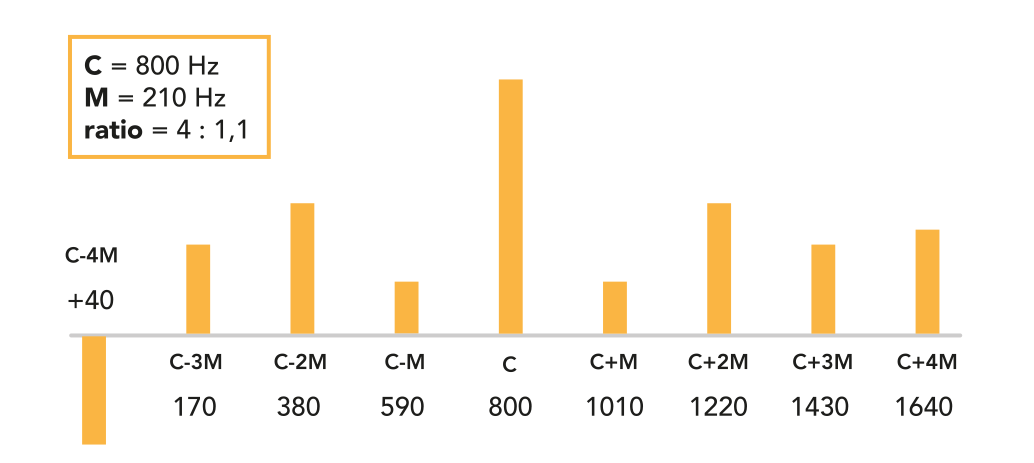
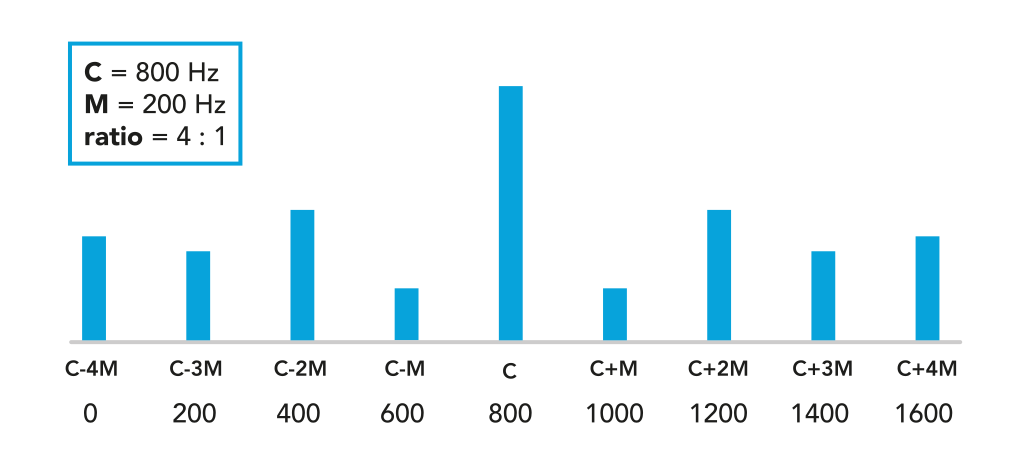
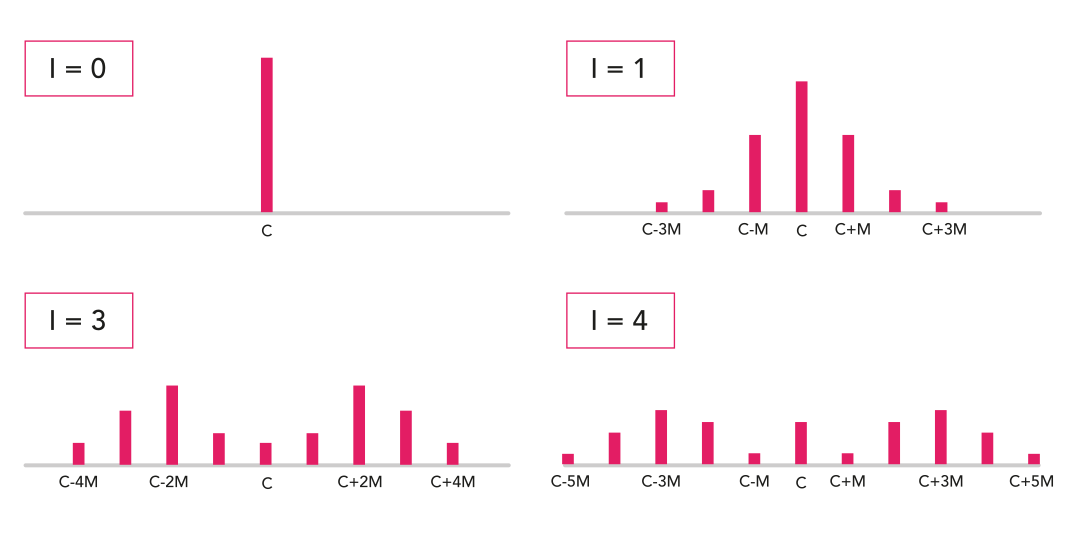
Le bande laterali si distribuiscono simmetricamente attorno alla frequenza portante, a multipli della frequenza modulante (C ± n·M). Le ampiezze relative seguono le funzioni di Bessel, in funzione dell'indice di modulazione I.
Sidebands distribute symmetrically around the carrier at multiples of the modulating frequency (C ± n·M). Their relative amplitudes follow Bessel functions, dependent on the modulation index I.
FM: Rapporto C:M
FM: C:M Ratio
Il rapporto tra frequenza portante (C) e frequenza modulante (M) determina se lo spettro sarà armonico (rapporti interi come 1:2, 1:3) o inarmonico (rapporti complessi come 1:1.41). Questo influenza radicalmente il carattere timbrico del suono generato.
The ratio between carrier (C) and modulator (M) frequencies determines whether the spectrum will be harmonic (integer ratios like 1:2, 1:3) or inharmonic (complex ratios like 1:1.41). This radically influences the timbral character of the generated sound.
FM: Spettro armonico
FM: Harmonic spectrum
Con rapporto C:M intero (es. 1:2) le bande laterali coincidono con la serie armonica. Il risultato è un suono dalla struttura timbrica ricca ma musicalmente stabile e intonato.
With an integer C:M ratio (e.g. 1:2), sidebands align with the harmonic series. The result is a harmonically rich yet musically stable and in-tune timbre.
FM: Spettro inarmonico
FM: Inharmonic spectrum
Con rapporto C:M non intero (es. 1:1.41) le bande laterali non coincidono con la serie armonica. Produce suoni metallici, campane, gong — timbri tipici della sintesi FM in regime inarmonico.
With a non-integer C:M ratio (e.g. 1:1.41), sidebands do not align with the harmonic series. Produces metallic sounds, bells, gongs — timbres characteristic of inharmonic FM synthesis.
FM: Indice di Modulazione
FM: Modulation Index
L'indice di modulazione (I) controlla quante bande laterali vengono generate e le loro ampiezze relative. Con I basso si ottengono timbri morbidi e sinusoidali; con I alto, timbri ricchi e brillanti. Modulare I nel tempo crea un'evoluzione timbrica dinamica.
The modulation index (I) controls how many sidebands are generated and their relative amplitudes. A low I yields soft, sine-like timbres; a high I produces rich, bright timbres. Modulating I over time creates dynamic timbral evolution.
FM: Algoritmi
FM: Algorithms
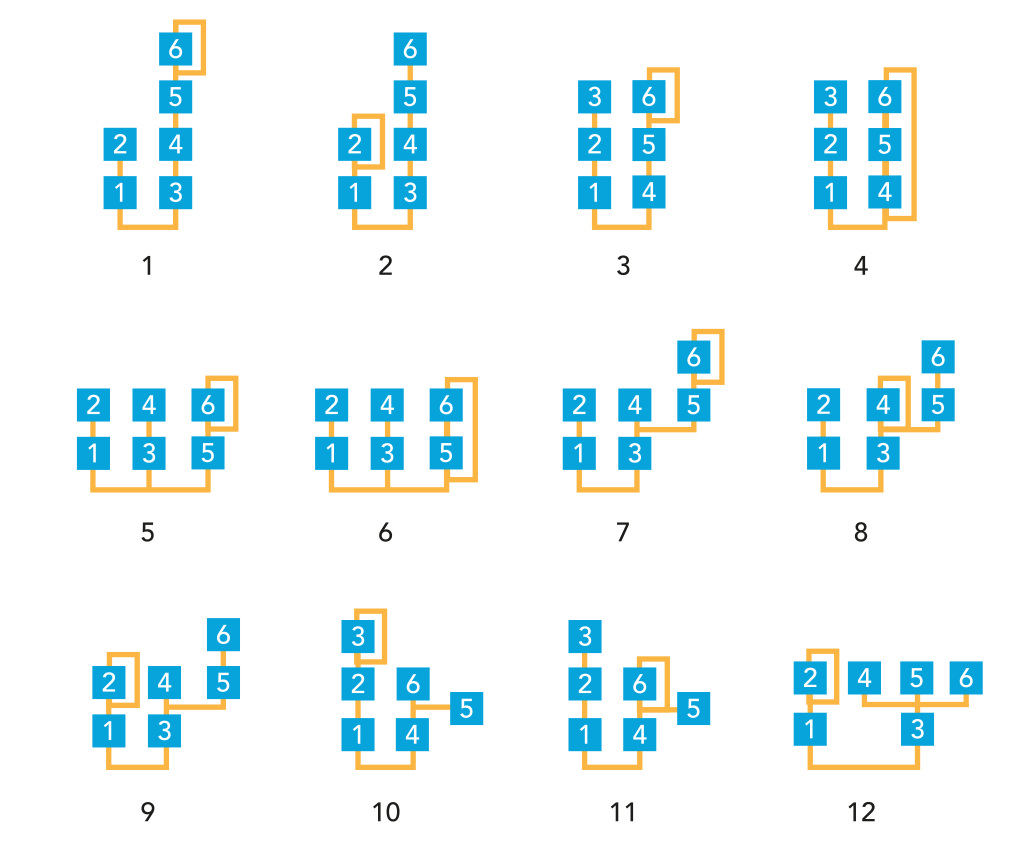
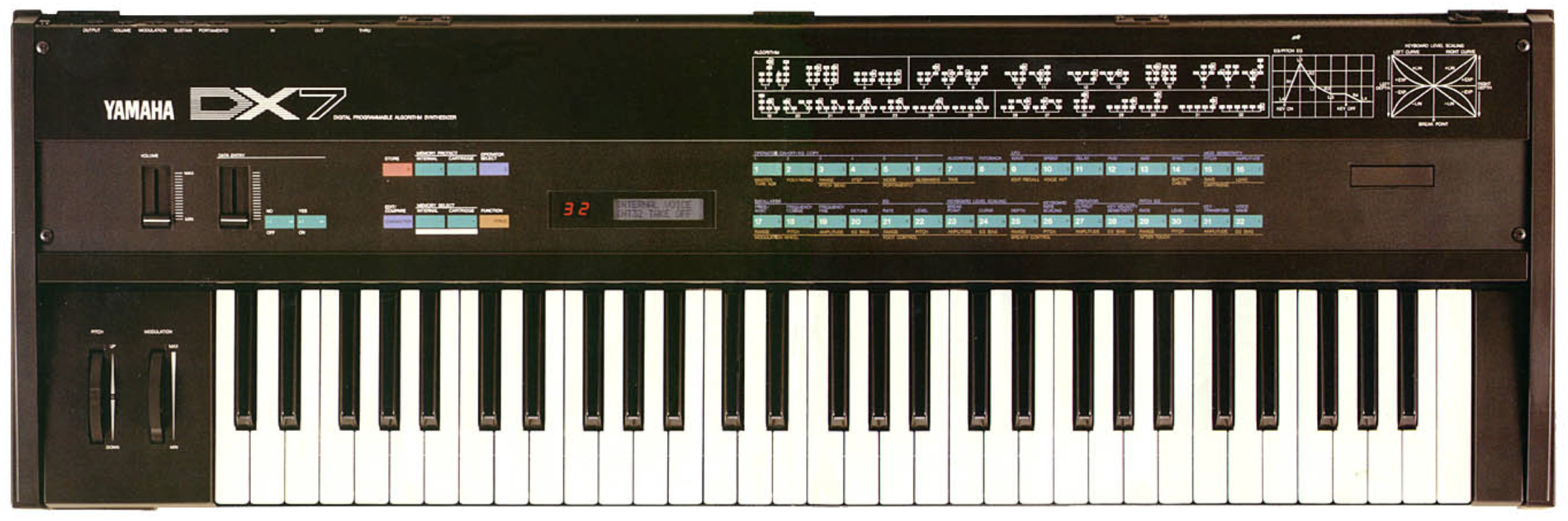
Gli operatori FM (oscillatori con inviluppo proprio) si collegano in catene modulanti (seriali) o sommatori (paralleli). Il Yamaha DX7 usa 6 operatori organizzati in 32 algoritmi — ogni configurazione produce un carattere timbrico distinto.
FM operators (oscillators with their own envelopes) connect in modulating chains (series) or as summing outputs (parallel). The Yamaha DX7 uses 6 operators in 32 algorithms — each configuration yields a distinct timbral character.
FM: Inviluppi degli Operatori
FM: Operator Envelopes
Assegnare inviluppi ADSR separati a ciascun operatore permette di variare l'indice di modulazione nel tempo. Questo produce la tipica evoluzione timbrica della sintesi FM — essenziale per simulare strumenti acustici come ottoni, pianoforte e marimba.
Assigning separate ADSR envelopes to each operator allows the modulation index to vary over time, producing the typical timbral evolution of FM synthesis — essential for simulating acoustic instruments such as brass, piano, and marimba.
Sintesi FM
FM Synthesis
Yamaha DX7
Yamaha DX7
Yamaha DX7 (1982)
Yamaha DX7 (1982)
Sintesi FM
FM Synthesis
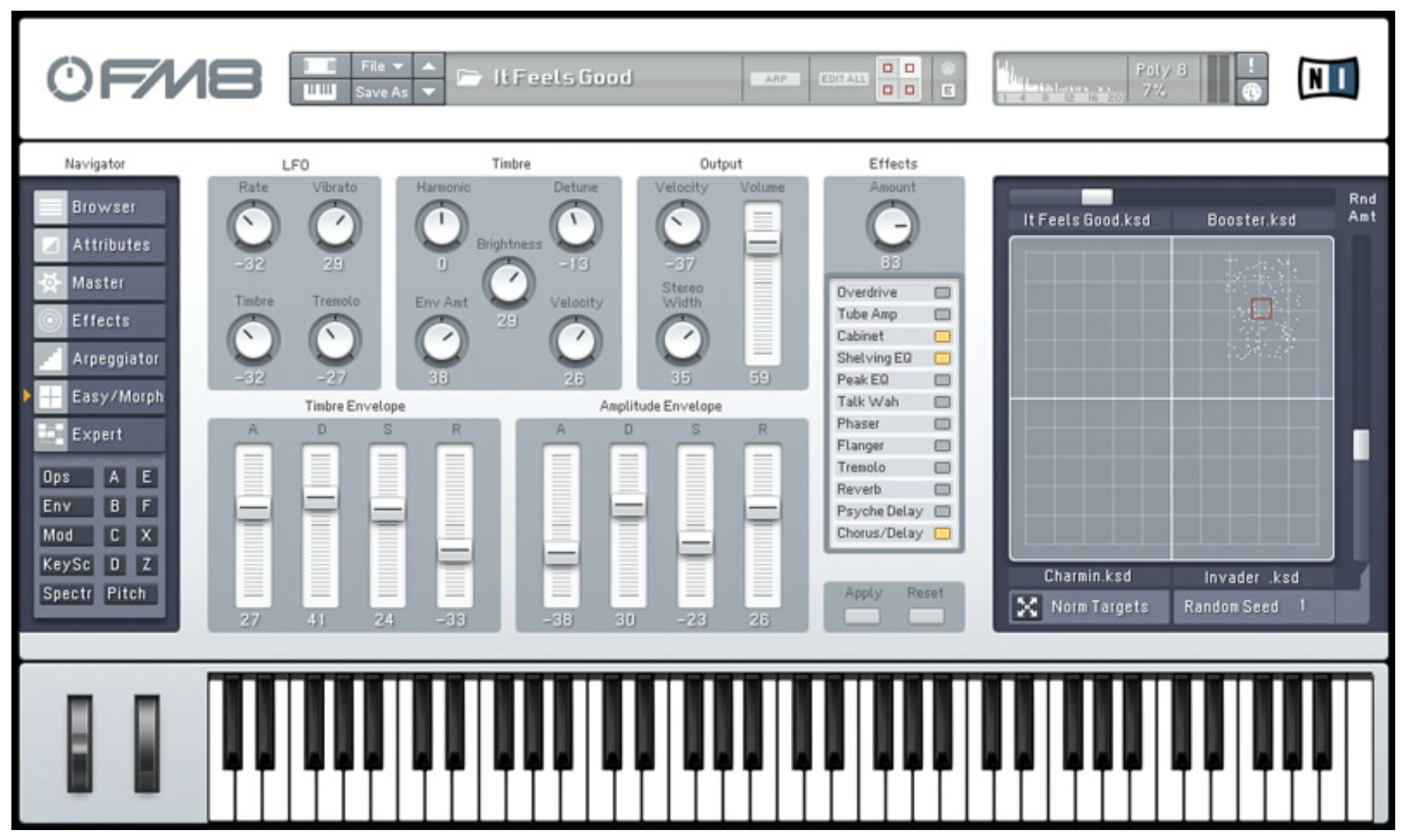
FM8 (Native Instruments)
FM8 (Native Instruments)
Sintesi FM
FM Synthesis
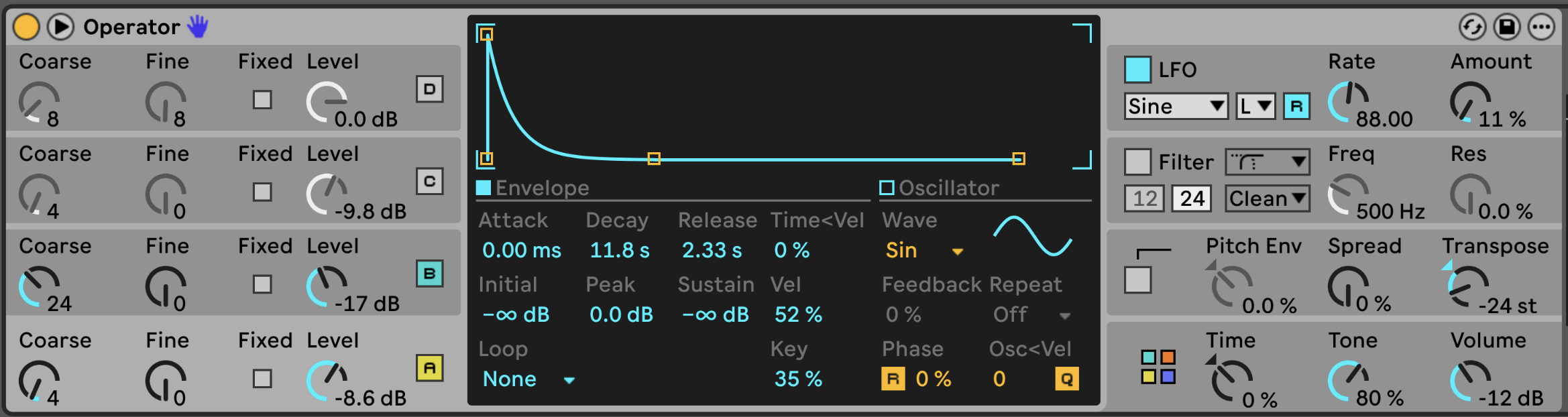
Operator (Ableton Live)
Operator (Ableton Live)
Sintesi FM
FM Synthesis
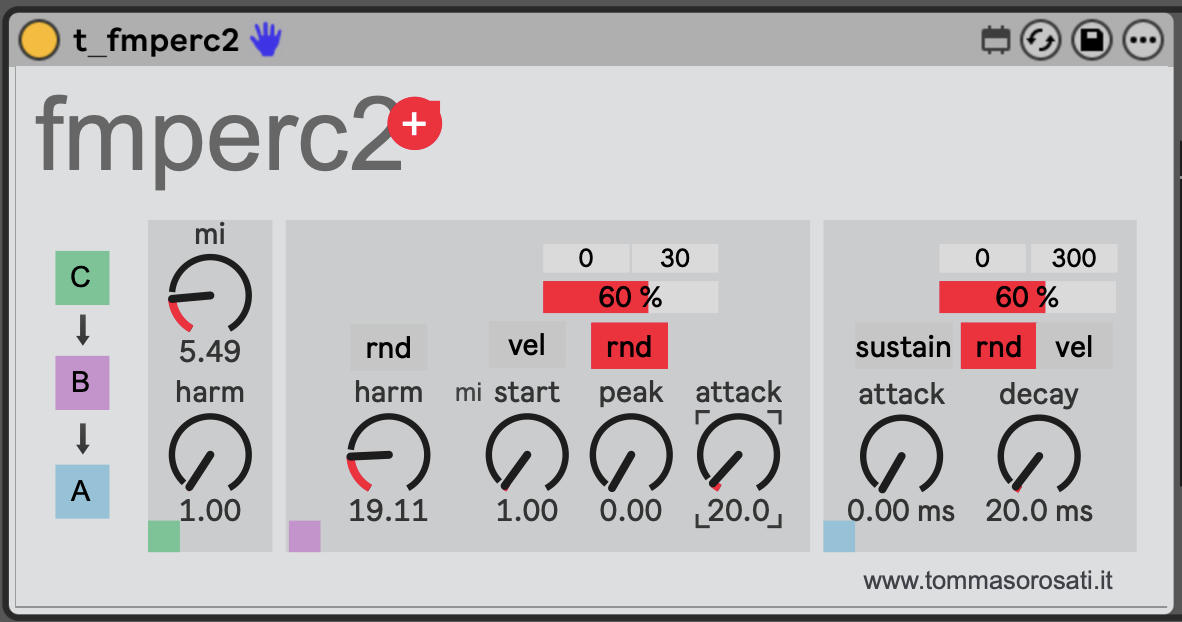
fmperc2 by piùmaxforlive
fmperc2 by piùmaxforlive
Waveshaping e non linearità
Waveshaping and non-linearity
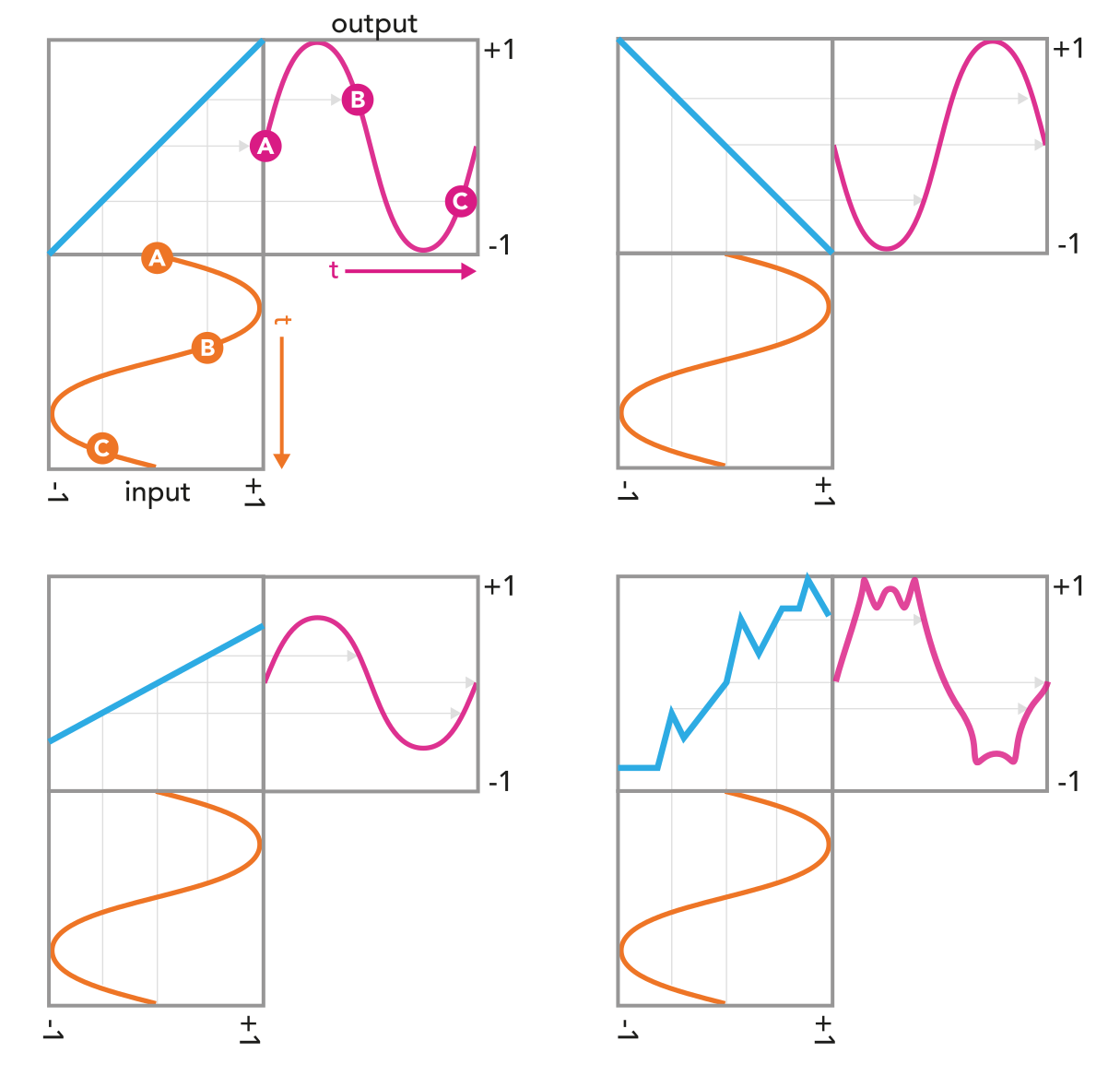
Una funzione di trasferimento trasforma la forma d'onda in ingresso introducendo armoniche nuove. È una tecnica ponte tra sintesi e distorsione.
A transfer function transforms the input waveform and introduces new harmonics. It is a bridge technique between synthesis and distortion.
Waveshaping: funzione di trasferimento
Waveshaping: transfer function
La funzione di trasferimento mappa ogni valore del segnale in ingresso a un valore in uscita. Funzioni non lineari — polinomiali, sigmoidi, a tratti — producono armoniche aggiuntive. L'ampiezza del segnale in ingresso controlla la ricchezza spettrale del risultato.
The transfer function maps each input sample value to an output value. Non-linear functions — polynomial, sigmoid, piecewise — produce additional harmonics. The input signal's amplitude directly controls the spectral richness of the output.
Waveshaping
Waveshaping
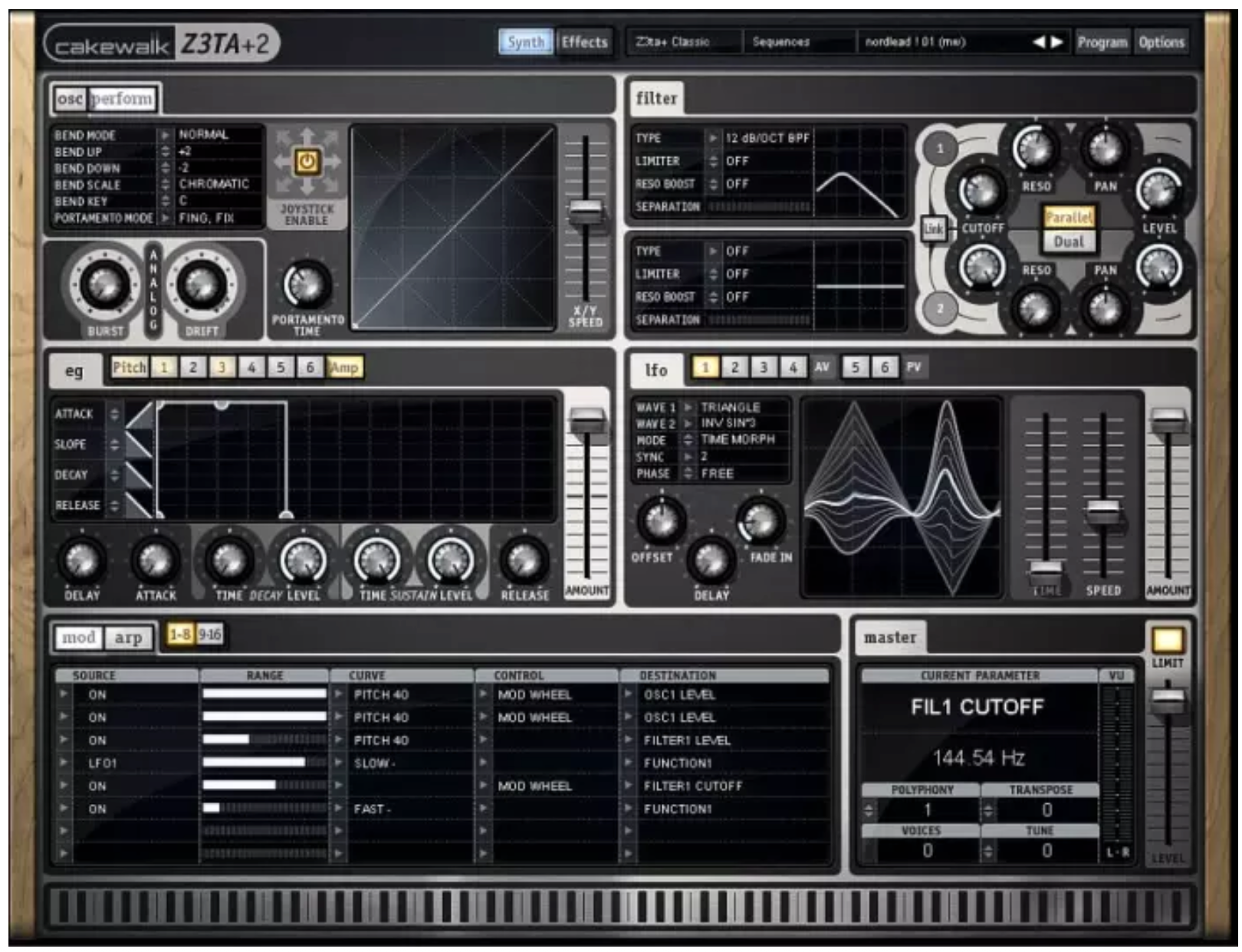
Z3TA+2
Z3TA+2
Phase Distortion
Phase Distortion
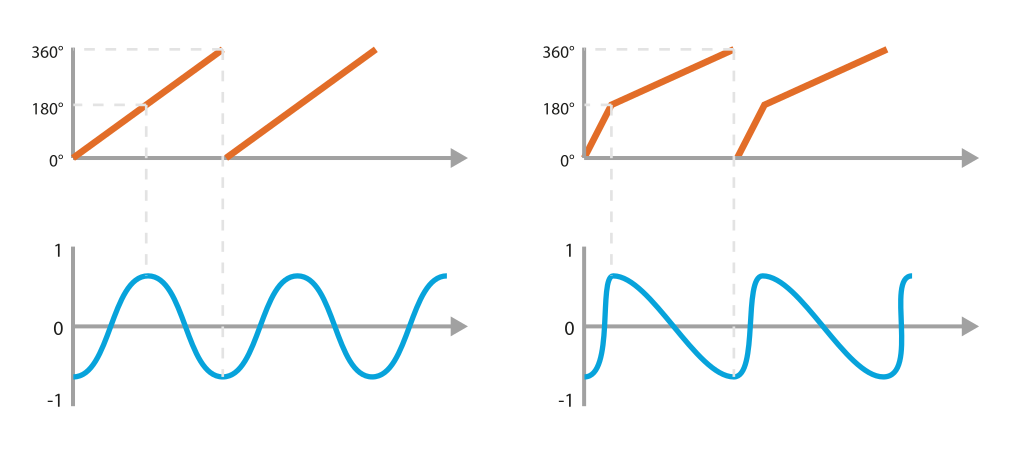
La sintesi phase distortion si basa sulla lettura a velocità variabile di una tabella in cui è memorizzata una sinusoide. La durata totale della lettura del ciclo dell'onda è sempre il valore del periodo, in modo da mantenere l'intonazione scelta per la nota ma all'interno di questo tempo c'è una parte letta più lentamente e una letta più rapidamente.
Phase distortion synthesis reads a wavetable — containing a single sinusoid — at variable speed. The total duration of each wave cycle always equals the period, keeping the chosen pitch stable; within that time, one portion is read more slowly and another more rapidly.
Phase Distortion: schema
Phase Distortion: diagram
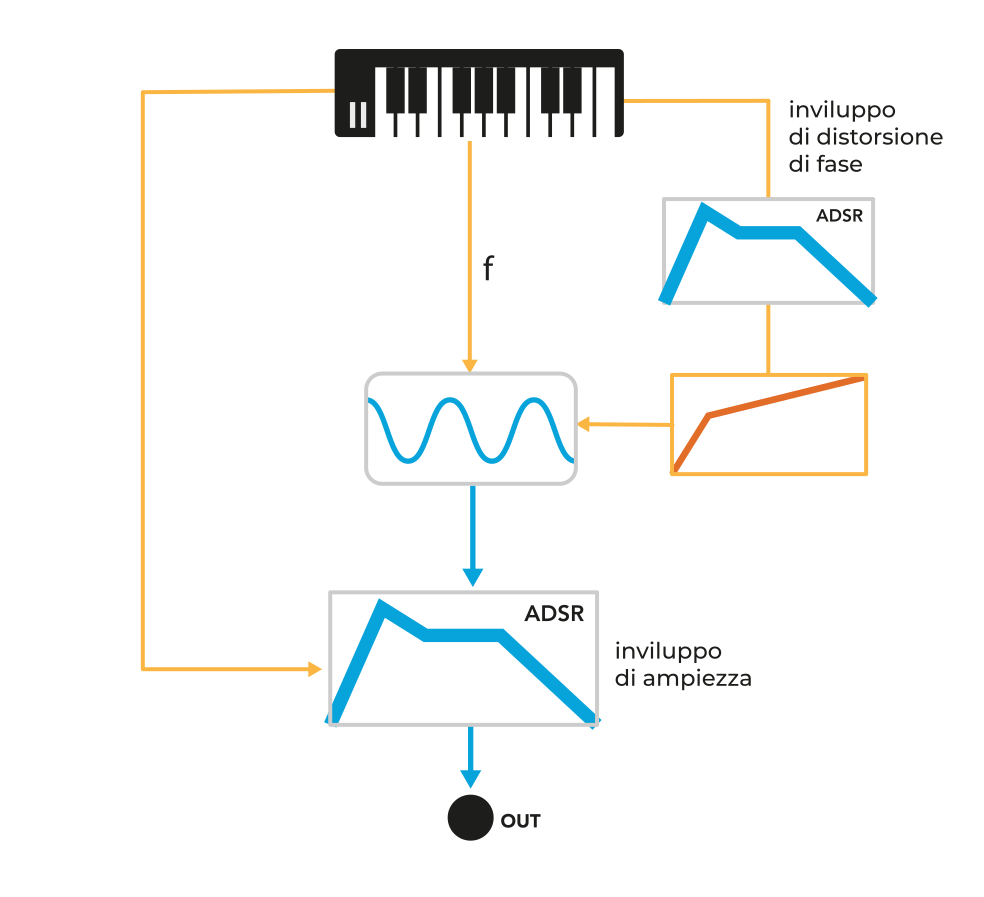
Un'altra caratteristica importante è la presenza di inviluppi sia per l'ampiezza finale che per la quantità di distorsione. Quest'ultimo inviluppo varia la complessità dell'onda, rendendola variabile durante l'esecuzione della nota e quindi "viva".
Another important feature is the presence of envelopes for both the final amplitude and the amount of distortion. This envelope varies the complexity of the waveform throughout the note's duration, making the sound feel alive.
Phase Distortion
Phase Distortion
Phase Distortion
Phase Distortion
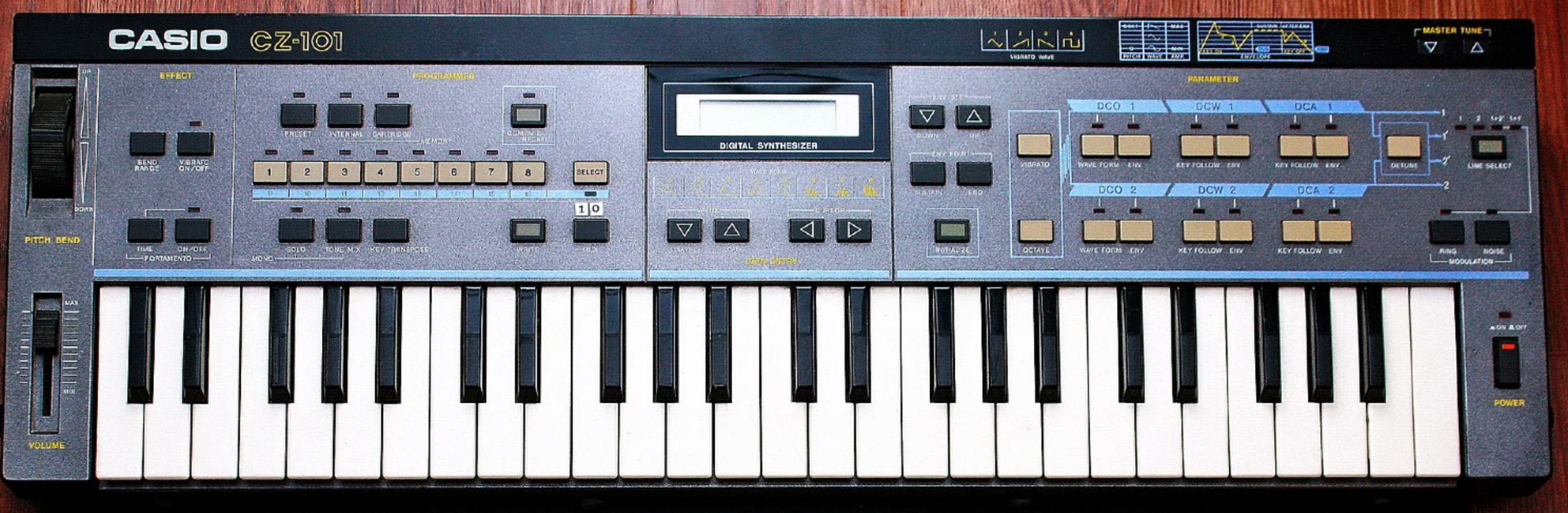
Casio CZ-101
Casio CZ-101
Phase Distortion
Phase Distortion
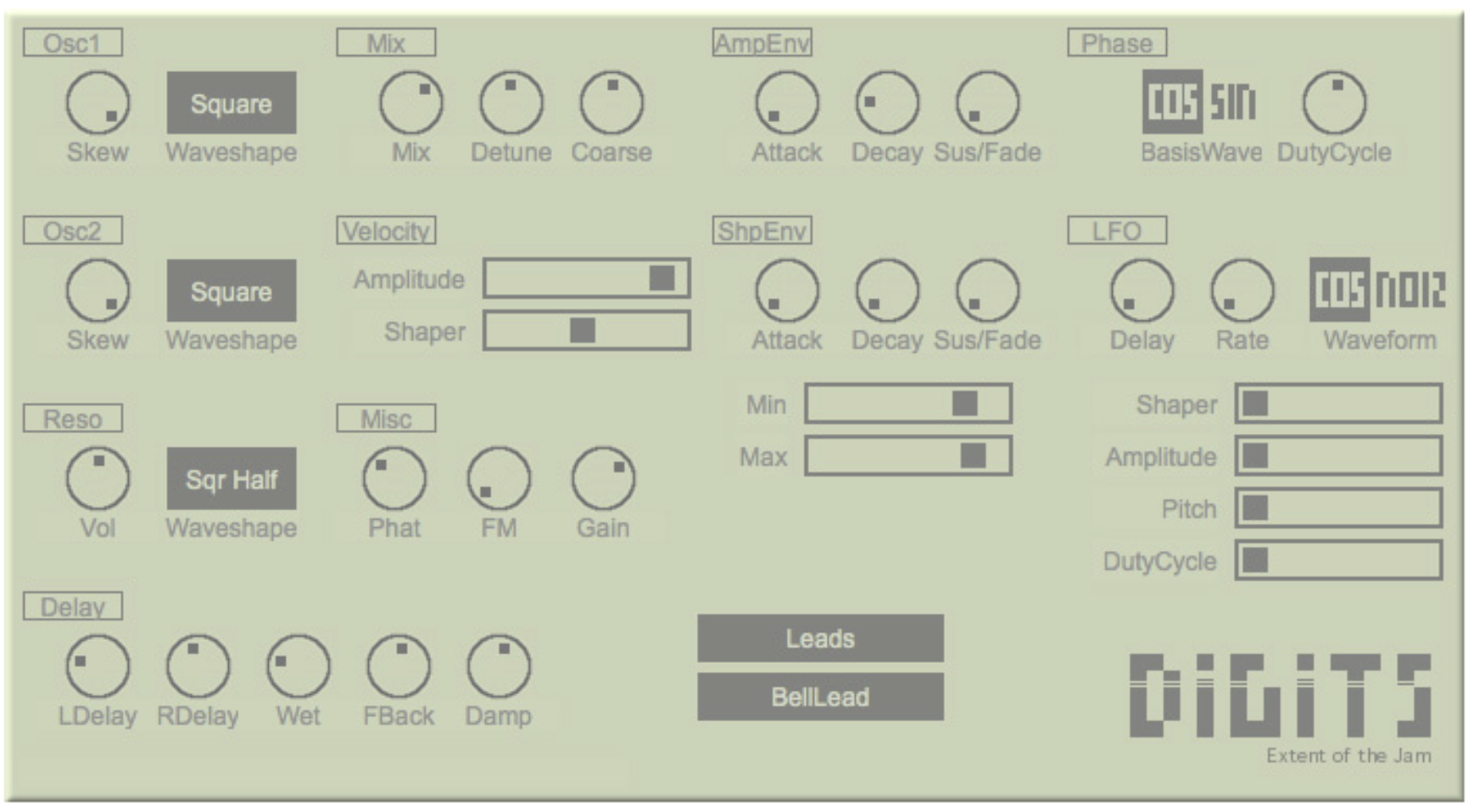
VST Digits
VST Digits
Modelli Fisici
Physical Modeling
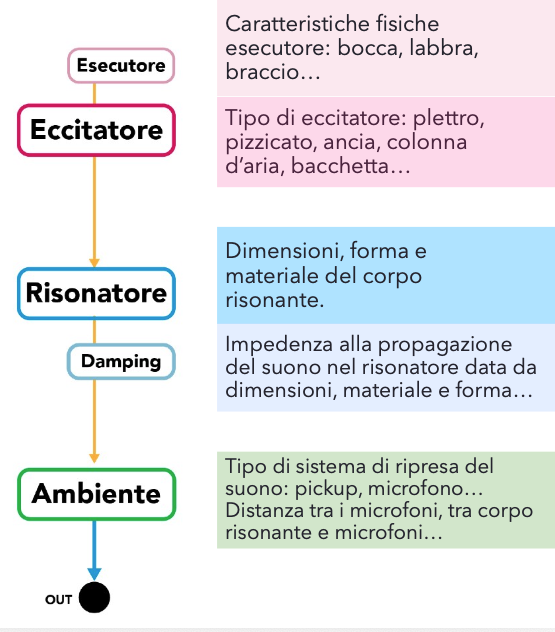
La sintesi per modelli fisici usa equazioni ed algoritmi per simulare il naturale processo fisico che genera i suoni. Si può dividere in 2 stadi principali: eccitatore (comportamento non lineare) e risonatore (comportamento lineare). Si può inoltre modellizzare il comportamento dell'ambiente.
Physical modeling synthesis uses equations and algorithms to simulate the natural physical process that generates sounds. It can be divided into 2 main stages: the exciter (non-linear behavior) and the resonator (linear behavior). It can also model the behavior of the environment.
Modelli Fisici
Physical Modeling
Parametri del modello
Model parameters
In ogni stadio di sintesi possiamo avere parametri diversi che vanno a modificare le variabili delle funzioni matematiche. Con questo tipo di sintesi si possono creare strumenti virtuali con caratteristiche impossibili da realizzare nella realtà.
In each synthesis stage we can have different parameters that modify the variables of the mathematical functions. With this type of synthesis it is possible to create virtual instruments with characteristics impossible to achieve in reality.
Karplus-Strong
Karplus-Strong
Simula corde pizzicate tramite un segnale di rumore breve che circola in un delay con retroazione filtrata. Il ritardo determina il pitch, il filtro l'assorbimento (smorzamento), il feedback la durata della risonanza.
Simulates plucked strings using a brief noise burst circulating in a delay with filtered feedback. The delay time sets the pitch, the filter controls damping, and the feedback level sets resonance duration.
Modelli Fisici
Physical Modeling
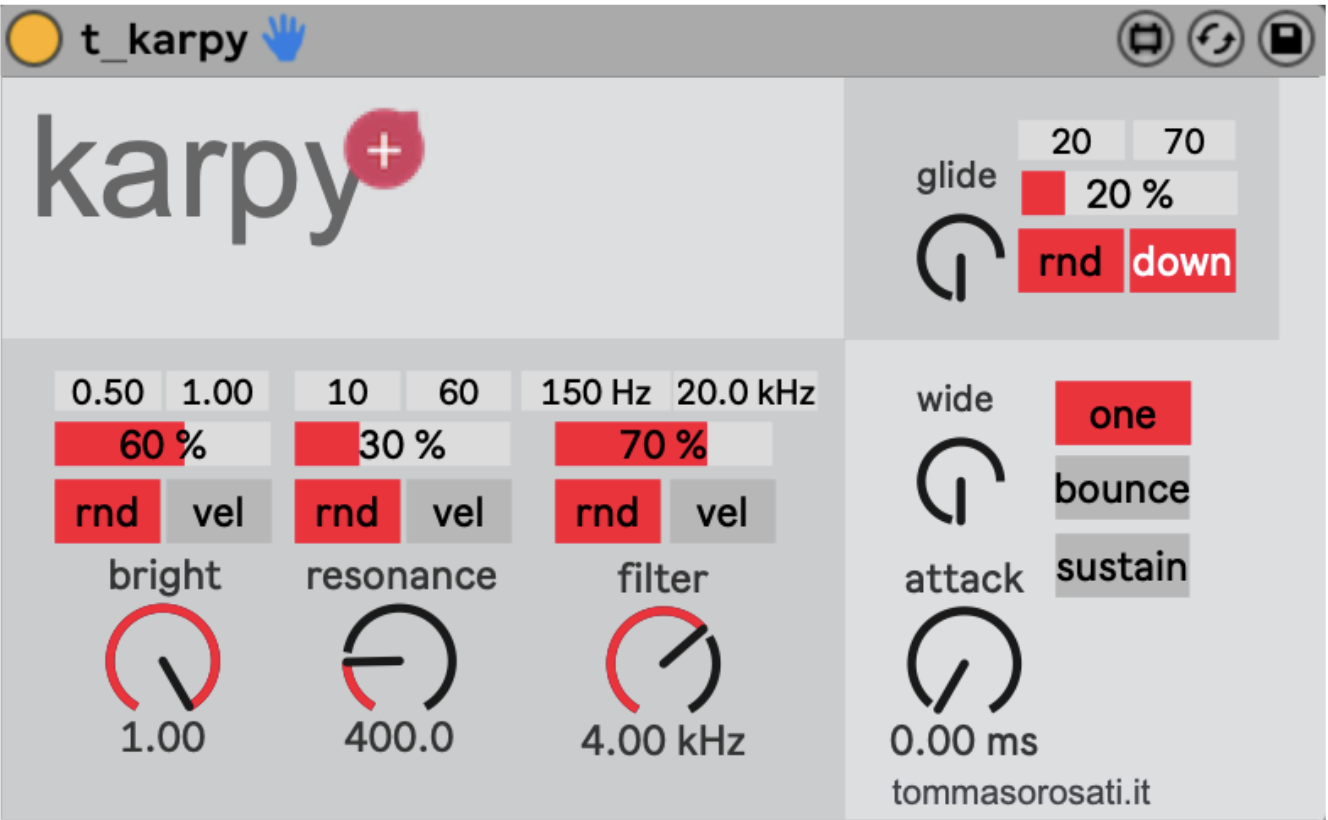
Karpy
Karpy
karpy by piùmaxforlive
karpy by piùmaxforlive
Modelli Fisici
Physical Modeling
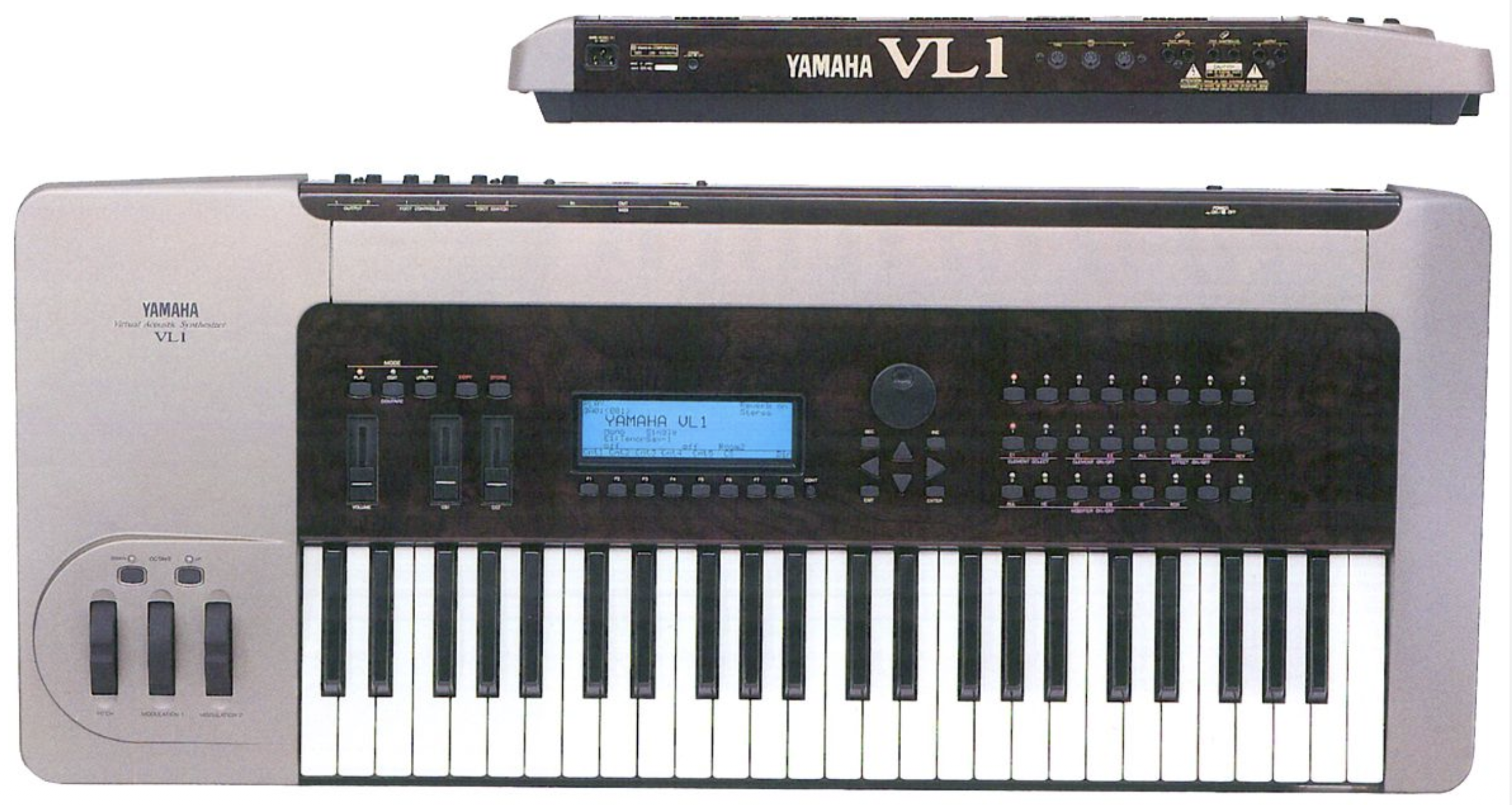
Yamaha VL1
Yamaha VL1
Modelli Fisici
Physical Modeling
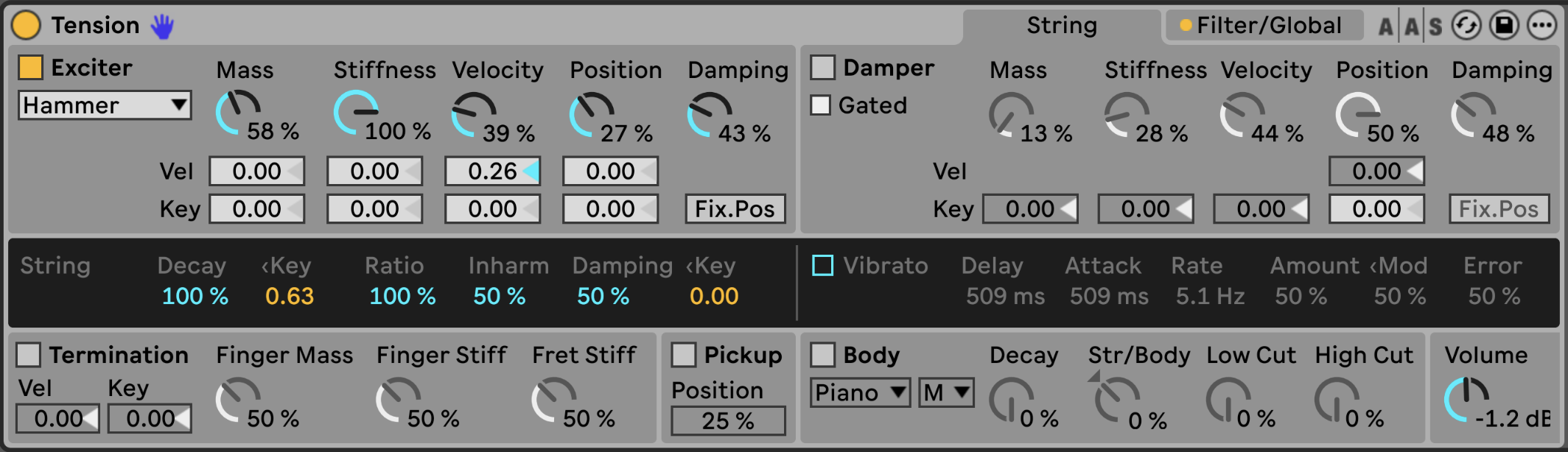
TENSION / COLLISION
TENSION / COLLISION
Sintesi Granulare
Granular Synthesis
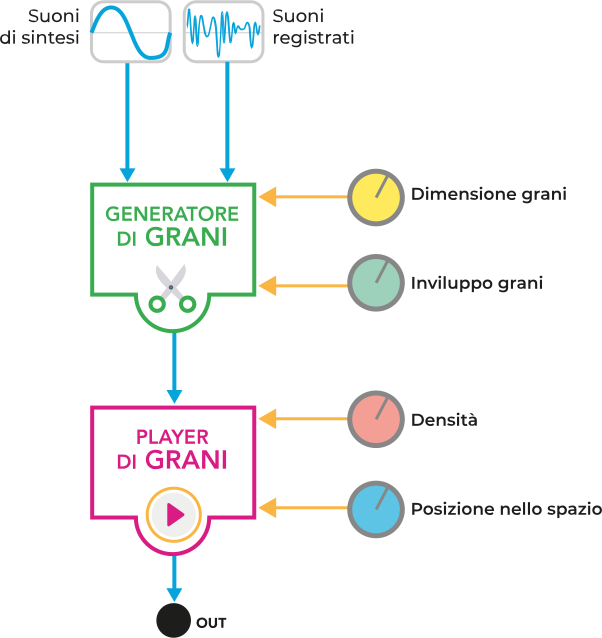
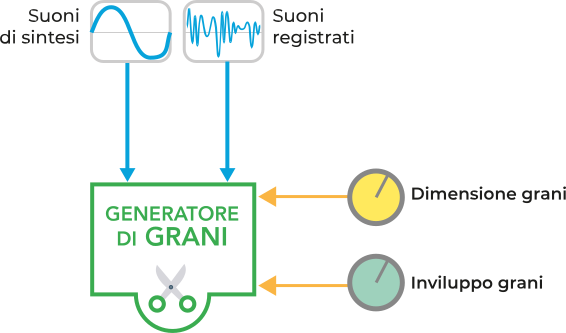
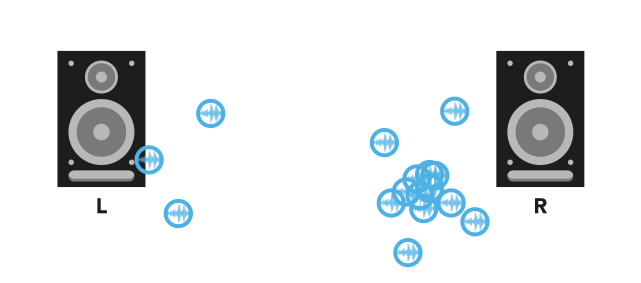
La sintesi granulare sviluppa l'idea di creare suoni complessi a partire da una grossa quantità di suoni semplici chiamati grani. Essi sono di durata compresa tra 1 e 100 millisecondi e possono essere combinati e riprodotti in sequenza e/o sovrapposti a velocità, fase e volume variabili. Il risultato non è un unico tono, ma una nuvola di suoni.
Granular synthesis centers on the idea of creating complex sounds from many simple short sounds called grains. A grain is a very small sound fragment that, when combined and played sequentially and/or superimposed at varying speeds, phases, and volumes, generates a single fused timbre.
Sintesi Granulare
Granular Synthesis
Generatori e Sorgenti
Generators and Sources
I grani possono essere ricavati da vari tipi di sorgente.
These sound grains can be derived from various sources, from recorded sounds to other synthesized sounds.
Sintesi Granulare
Granular Synthesis
Dimensione del Grano
Grain Size
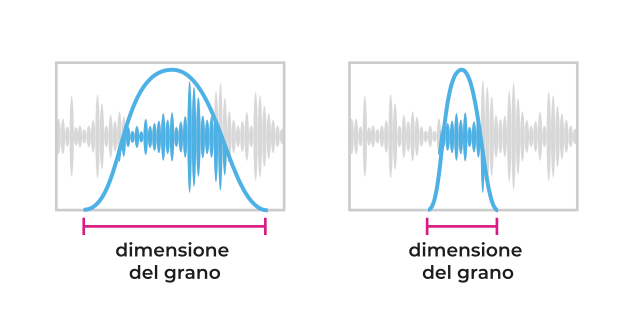
Si può impostare una dimensione di ogni grano (1–100 ms).
We set the length of the grains (generally between 1 and 100 ms).
Sintesi Granulare
Granular Synthesis
Inviluppo del Grano
Grain Envelope
Sintesi Granulare
Granular Synthesis
Tipi di Player
Player Types
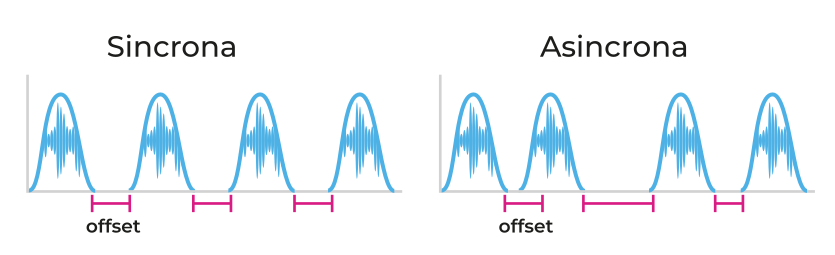
- Sincrona (Synchronous Granular Synthesis) — la distanza o offset tra i grani è costante
- Quasi-sincrona (QSGS) — la distanza tra i grani è quasi costante
- Asincrona (ASGS) — la distanza tra i grani non è costante
- Sincrona intonata (Pitch-Synchronous Granular Synthesis) — distanza e intonazione dei grani variabile in base alla nota che si vuole ottenere
- Synchronous (SGS) — the time gap between grains is constant
- Quasi-synchronous (QSGS) — the time gap is almost, but not exactly, constant
- Asynchronous (ASGS) — the time gap between grains is not constant
- Pitch-synchronous (PSGS) — the time gap corresponds to a frequency synchronized with the pitch of the grains
Sintesi Granulare
Granular Synthesis
Densità e Posizione
Density and Position
- Densità dei grani: quantità di istanze del player che suonano in contemporanea
- Posizione nello spazio dei grani: indicazione della posizione spaziale di ogni grano eseguito
- Grain density: the number of grains that the player plays at the same time
- Spatial position: determines where to place each grain within the space
Sintesi Granulare
Granular Synthesis
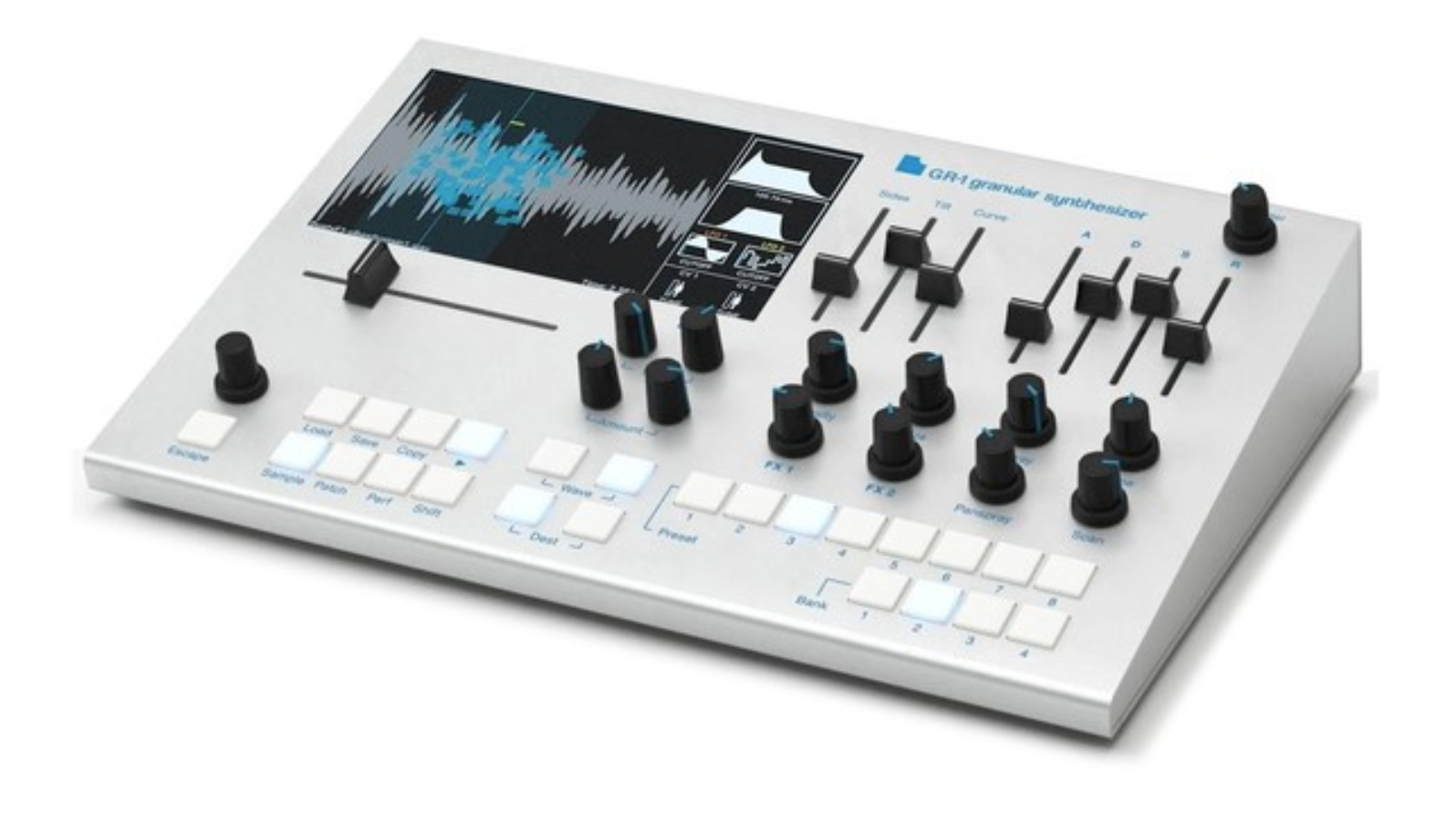
GR-1 (Tasty Chips)
GR-1 (Tasty Chips)
Sintesi Granulare
Granular Synthesis
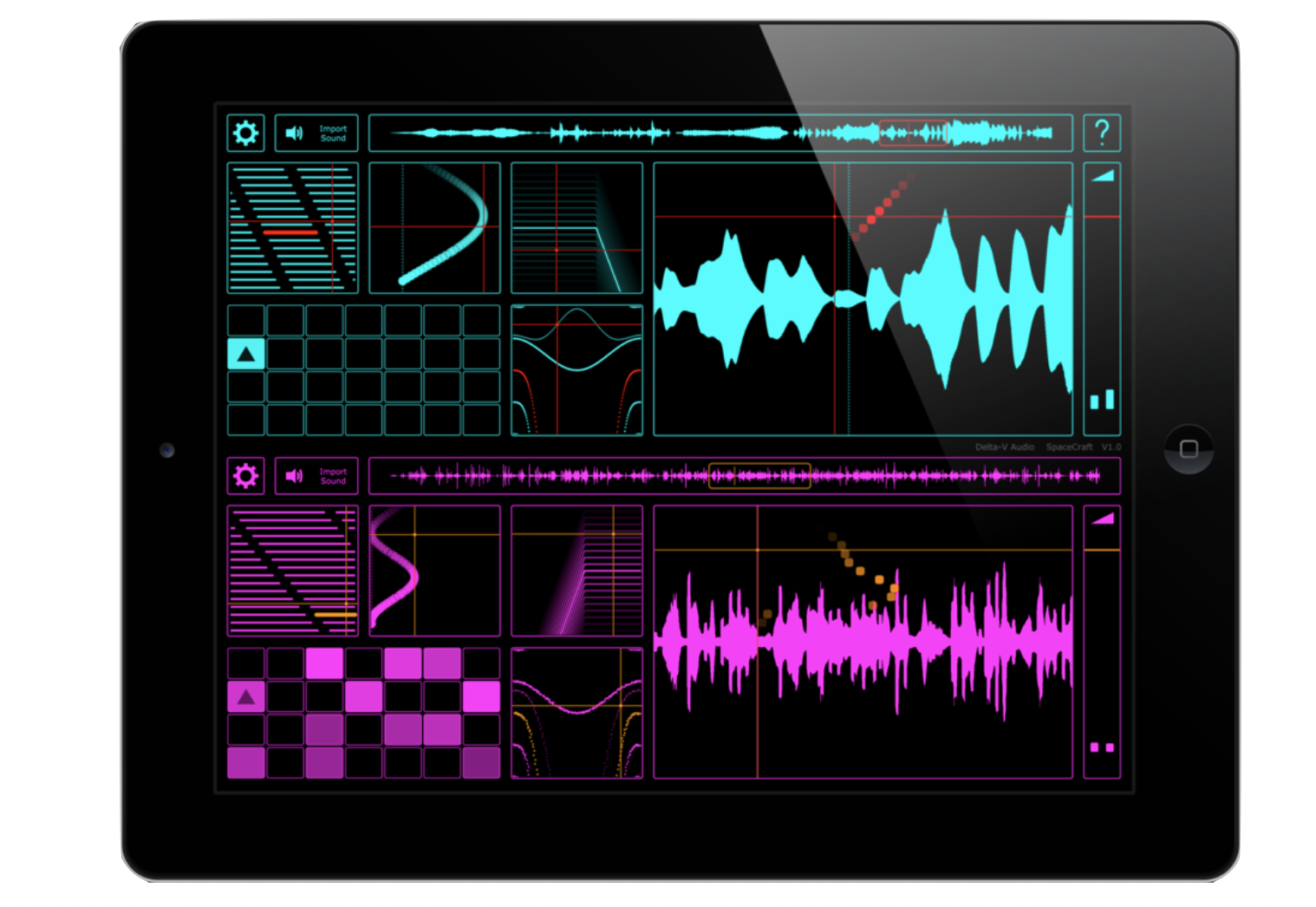
SpaceCraft
SpaceCraft
Sintesi Granulare
Granular Synthesis
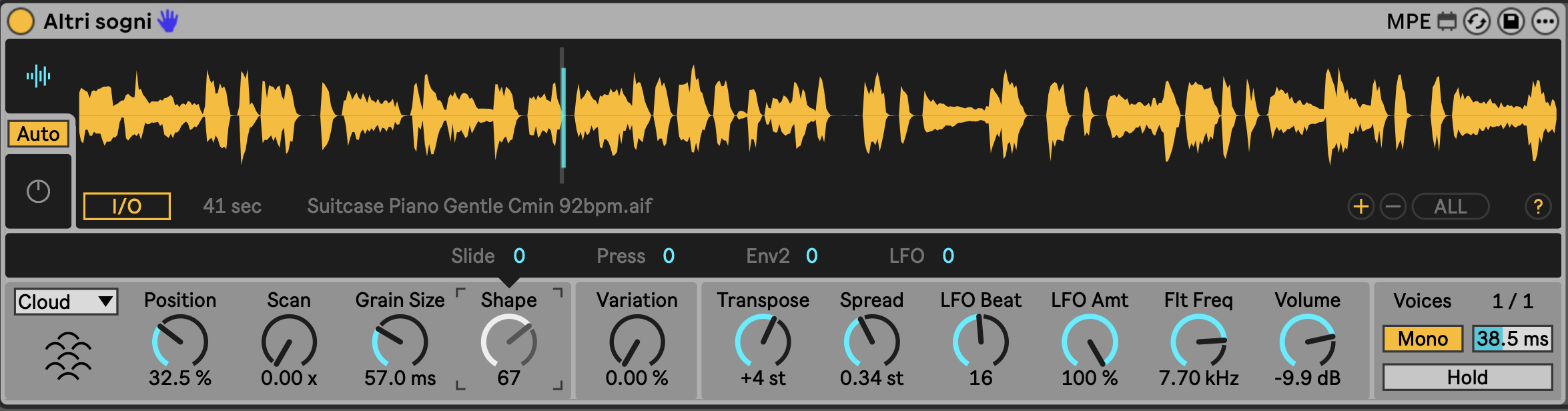
Granulator 3 (Ableton)
Granulator 3 (Ableton)
Sintesi per Campioni
Sample-based Synthesis
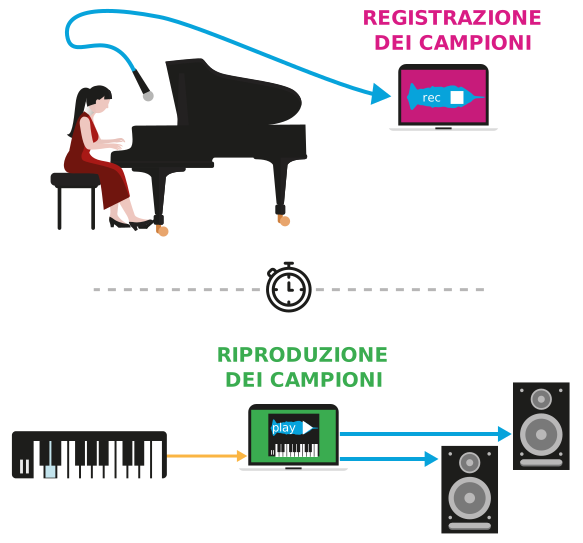
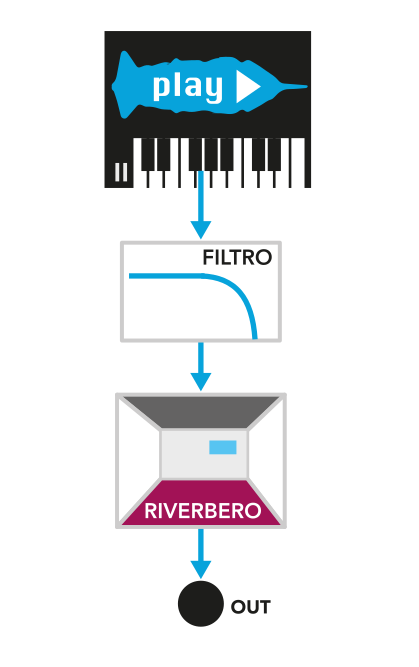
Nella sintesi per campioni un suono viene registrato e poi riprodotto intonato con la nota scelta in fase di esecuzione. Può essere inoltre processato attraverso filtri ed effetti.
In sample-based synthesis a sound is recorded and then reproduced at the pitch of the selected note during performance. It can also be processed through filters and effects.
Sintesi per Campioni
Sample-based Synthesis
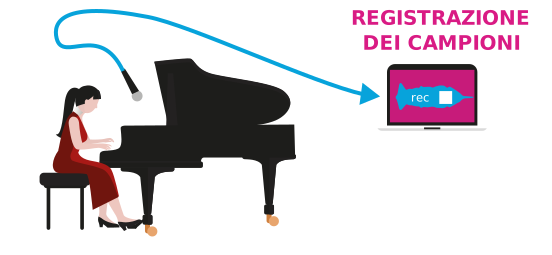
1. Registrazione dei campioni
1. Sample recording
Esistono tre tipi di registrazione dei campioni:
There are three types of sample recording:
- Single-sampled — si registra un solo campione che servirà, in fase di riproduzione, per generare tutte le note
- Multi-sampled — si registra un campione per ogni nota dello strumento
- MultiLayer-sampled — si registrano più campioni per ogni nota, di solito note a dinamiche diverse
- Single-sampled — one sample is recorded, which will be used, during playback, to generate all the notes of the instrument
- Multi-sampled — a sample is recorded for each note of the instrument
- Multilayer-sampled — not only is every note of an instrument recorded, but each note is also recorded at different dynamics
Sintesi per Campioni
Sample-based Synthesis
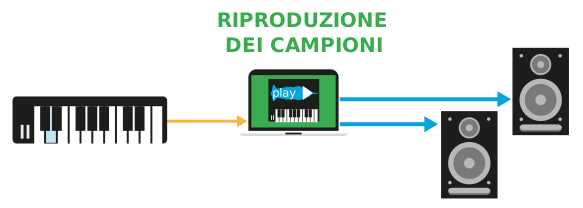
2. Riproduzione dei campioni
2. Sample playback
Prendiamo per esempio il single-sampled. La prima cosa da fare è quella di dire al nostro software imputato alla riproduzione (sampler) quale nota abbiamo registrato come campione. In questo modo il software si incarica di trasporre la nota in caso di pressione di altri tasti.
For single-sampled synthesis, we tell our sampler what note we have recorded as a sample. The software then transposes the note to output pitches for all the other keys that are pressed.
Sintesi per Campioni
Sample-based Synthesis
Operazioni sul campione
Sample operations
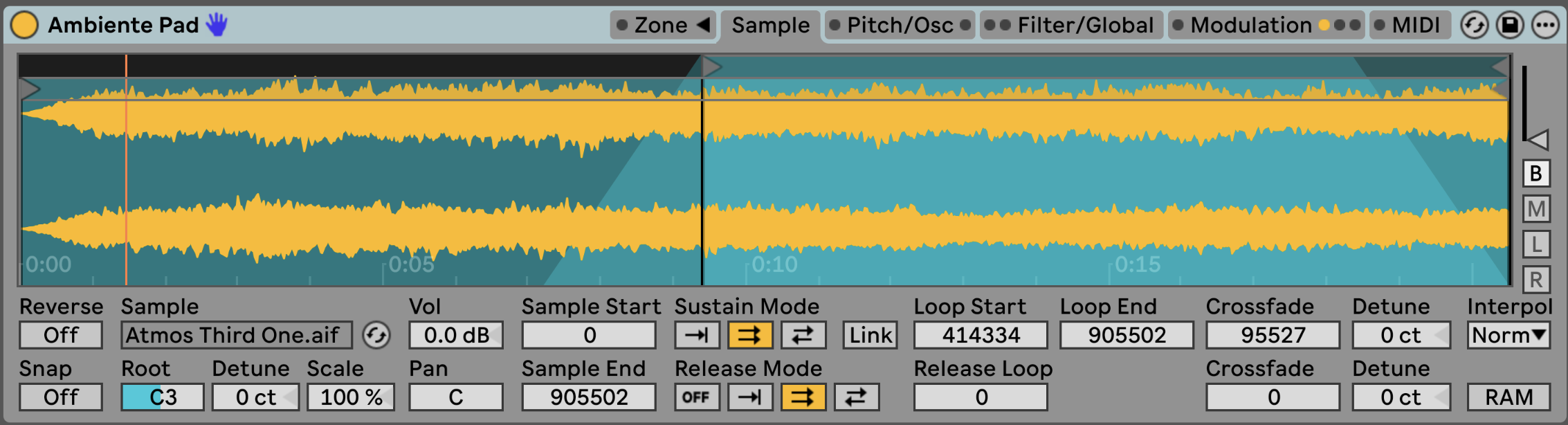
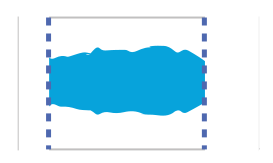
Crop
Si può scegliere la porzione di suono da riprodurre: il punto di inizio e il punto di fine del campione durante la riproduzione.
You can choose the start and end point of the sample during playback, selecting only the desired portion of the recording.
ADSR
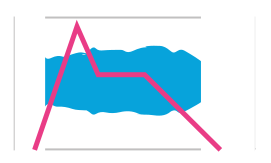
Si imposta un inviluppo di ampiezza al campione per definire come evolve il volume nel tempo.
You can superimpose an amplitude envelope to each sample (ADSR) to shape how the volume evolves over time.
Sintesi per Campioni
Sample-based Synthesis
Operazioni sul campione
Sample operations
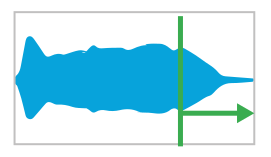
Loop
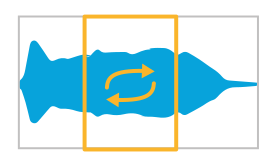
Si può impostare una porzione di campione da looppare in caso di pressione continuata del tasto (sustain).
A loop is the portion of the sample that plays back continuously as long as the key is pressed and sustained.
End Point
Si può impostare il punto del campione da cui ripartire quando si lascia il tasto (release).
The end point is the parameter that marks the time point within the sample that tells the sampler where to go after the key is released.
Sintesi per Campioni
Sample-based Synthesis
Filtri ed effetti
Filters and effects
Si possono impostare filtri o effetti come riverberi, distorsori, delay allo scopo di completare il suono del nostro strumento campionato.
At the end of the sampler's workflow, as with other types of synthesizers, we can find one or more effects that help refine the sound we just created.
Sintesi per Campioni
Sample-based Synthesis
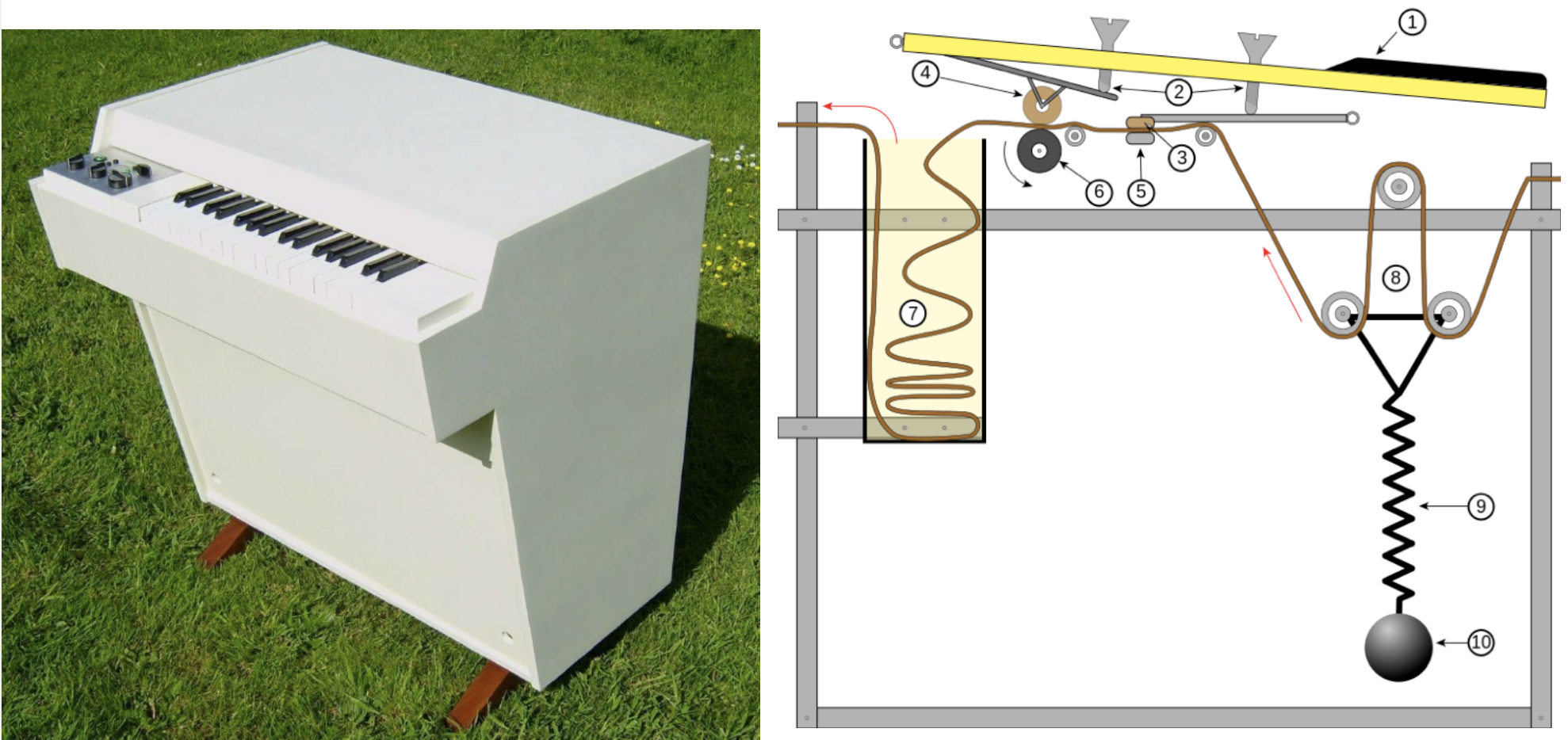
Mellotron
Mellotron
MELLOTRON M400 (1970)
MELLOTRON M400 (1970)
Sintesi per Campioni
Sample-based Synthesis
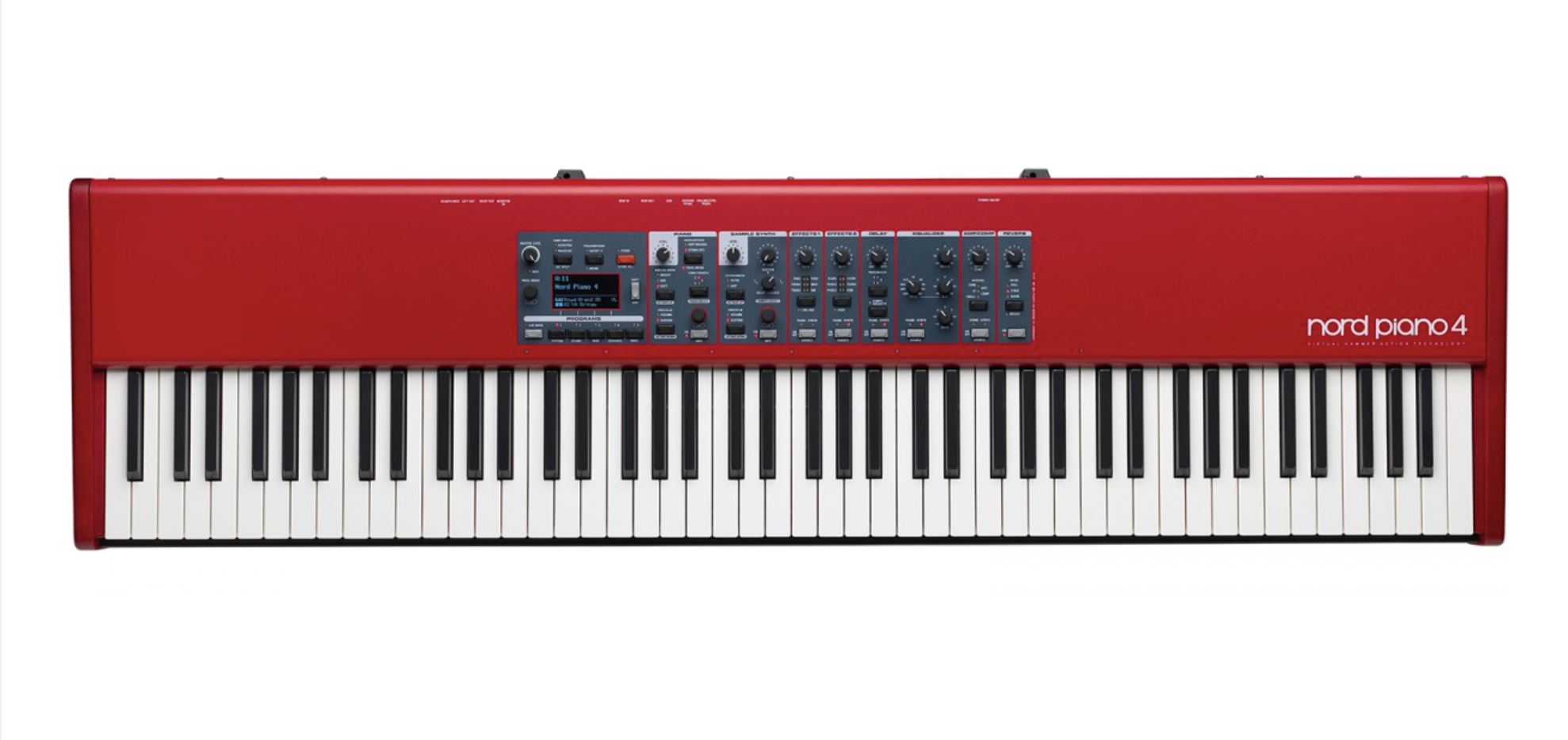
Nord Piano 4
Nord Piano 4
NORD PIANO 4 - Nord (2019)
NORD PIANO 4 - Nord (2019)
Sintesi per Campioni
Sample-based Synthesis
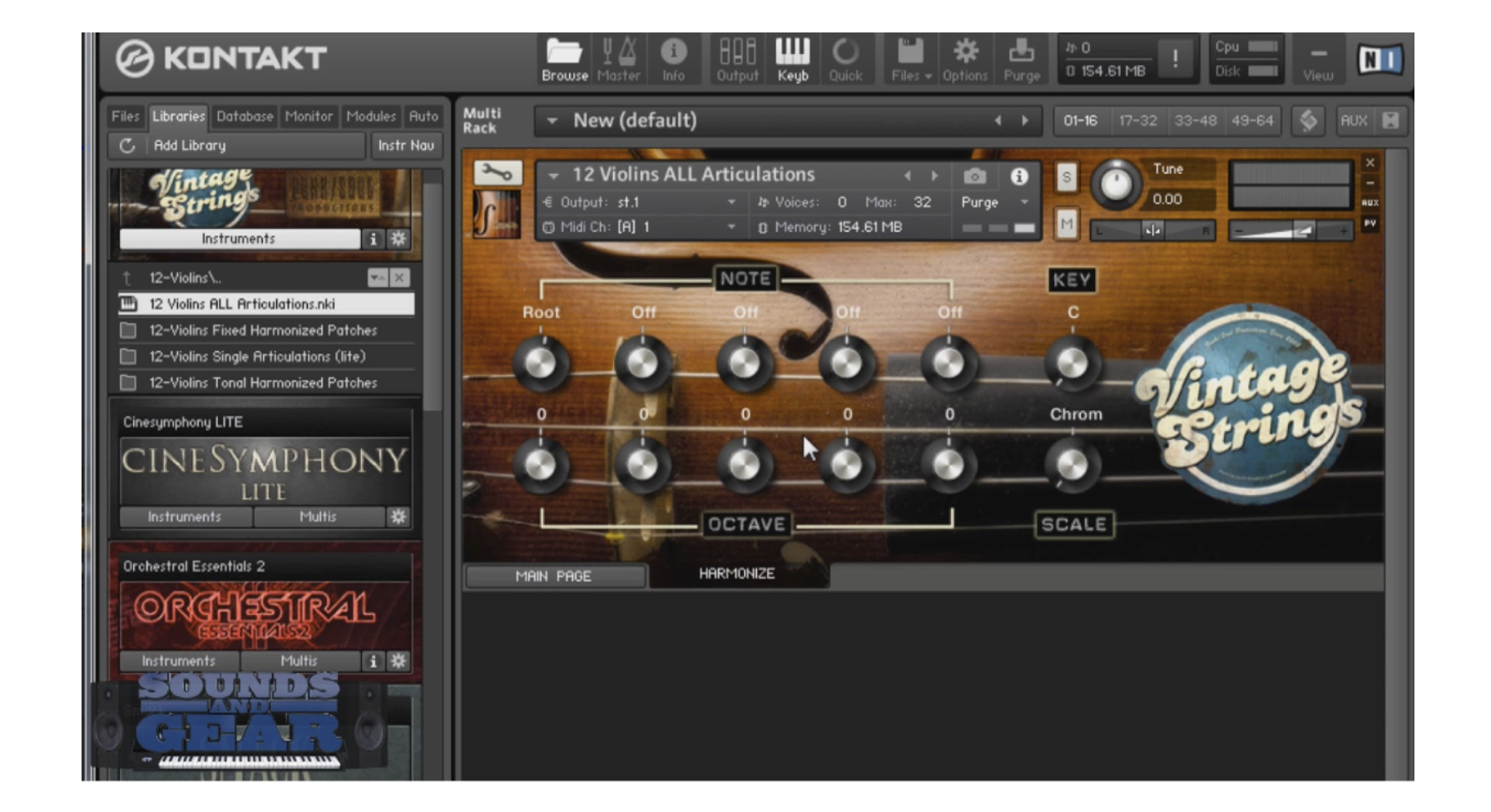
Kontakt (Native Instruments)
Kontakt (Native Instruments)
KONTAKT by Native Instruments
KONTAKT by Native Instruments
Sintesi per Campioni
Sample-based Synthesis
Sampler Ableton Live
Sampler Ableton Live
Wavetable e scansione timbrica
Wavetable and timbral scanning
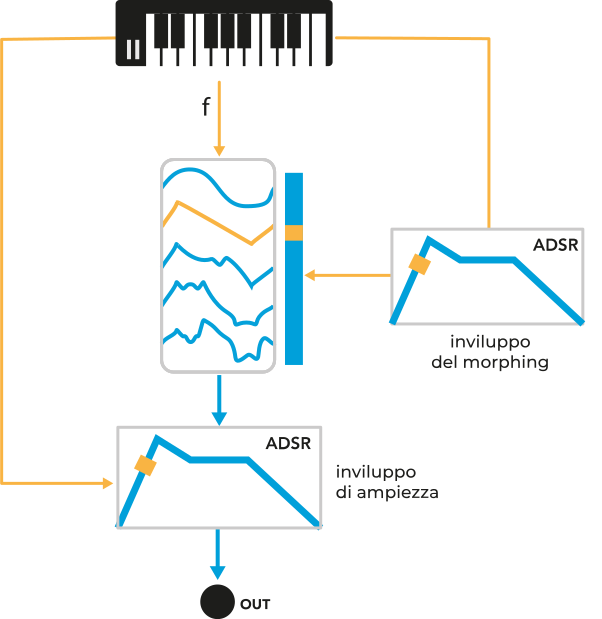
La sintesi wavetable si basa sulla lettura di una tabella che contiene una forma d'onda. In ogni tabella ci possono essere tante varianti dell'onda e il sistema permette di spostarsi da una all'altra in vari modi, spesso gestiti da un inviluppo.
Wavetable synthesis uses tables of pre-existing waveforms to generate sound. By scanning through the values at varying speeds, the system produces different pitches while preserving the timbre. Movement between waveforms is controlled by modulation sources such as ADSR envelopes, LFOs, or manual controls, allowing the sound to continuously change character.
Wavetable
Wavetable
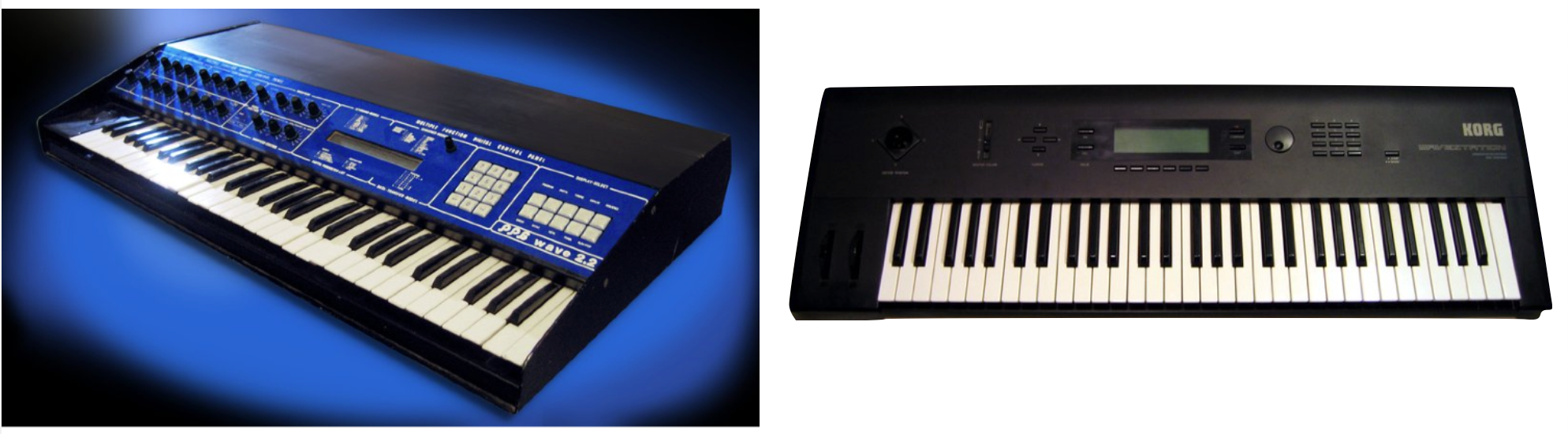
PPG Wave / Korg Wavestation
PPG Wave / Korg Wavestation
Wavetable
Wavetable
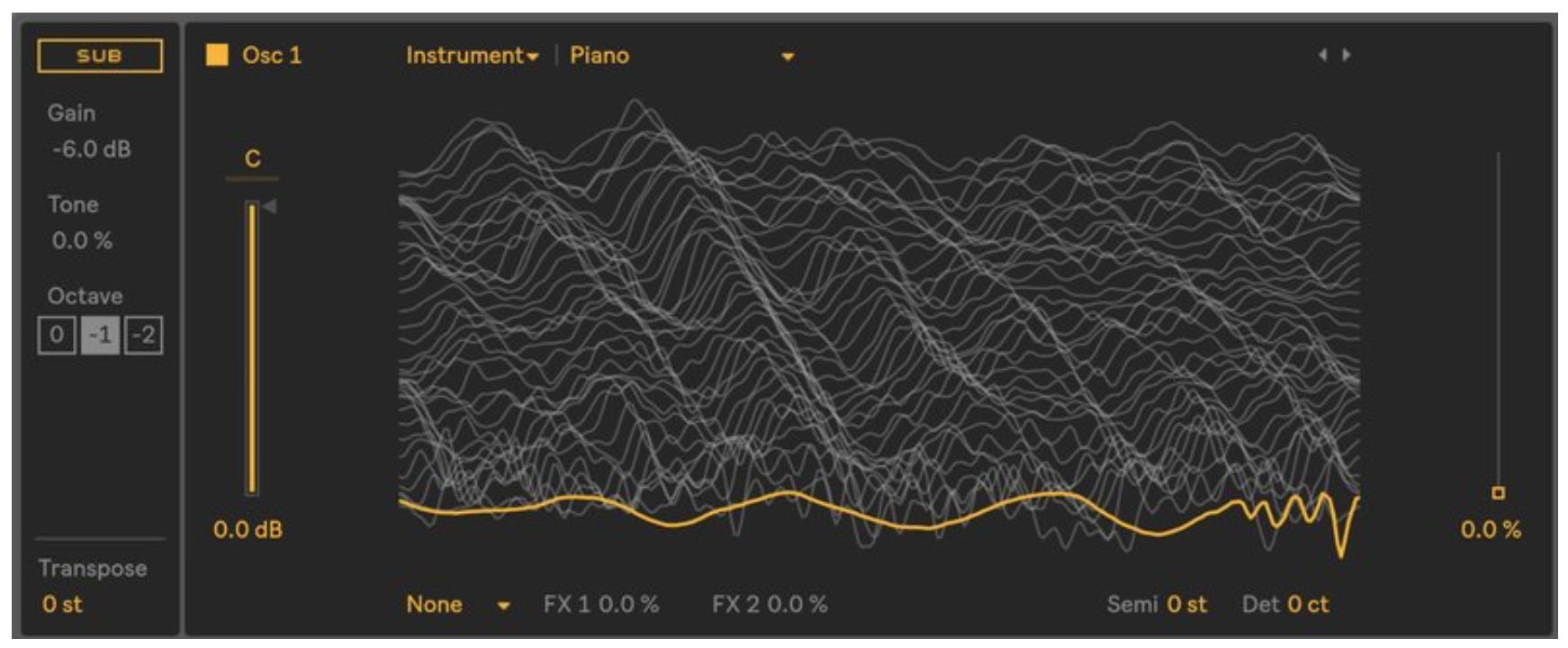
Wavetable (Ableton Live)
Wavetable (Ableton Live)
Sintesi Vettoriale
Vector Synthesis
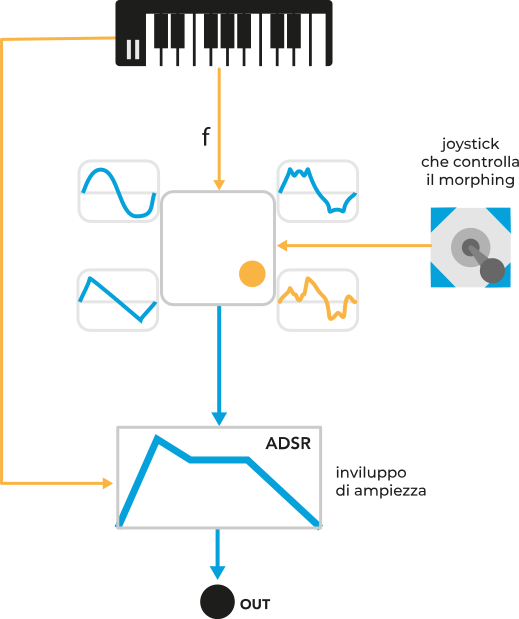
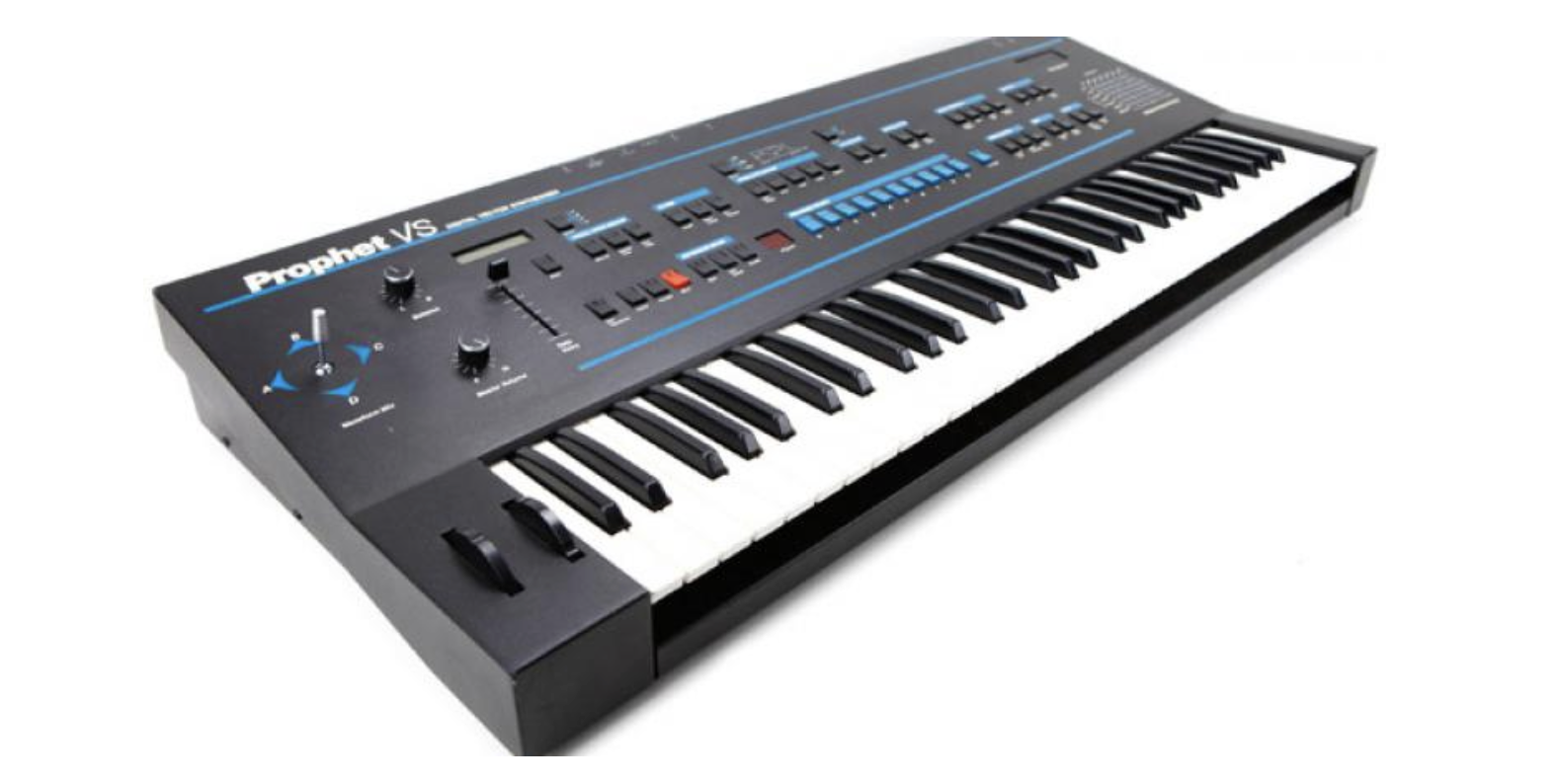
La sintesi vettoriale è una variante della sintesi wavetable che, invece di muoversi su una sola dimensione, permette attraverso un joystick di muoversi su un piano immaginario a due dimensioni che ha, ai quattro angoli, quattro tabelle diverse, creando un morphing tra quattro timbri diversi.
A variation of wavetable synthesis. Instead of moving in one dimension through a table, we use a two-dimensional plane with four tables at the corners. A joystick (or similar device) sends X and Y values to morph between the four timbres.
Sintesi Vettoriale
Vector Synthesis
Prophet VS
Prophet VS