Elaborazione del Suono
Sound Processing
RIVERBERI
REVERB
Riverbero Naturale · Riverberi Digitali · Convoluzione
Natural Reverb · Classic Digital Reverb · Convolution
Cos'è il Riverbero?
What is Reverb?
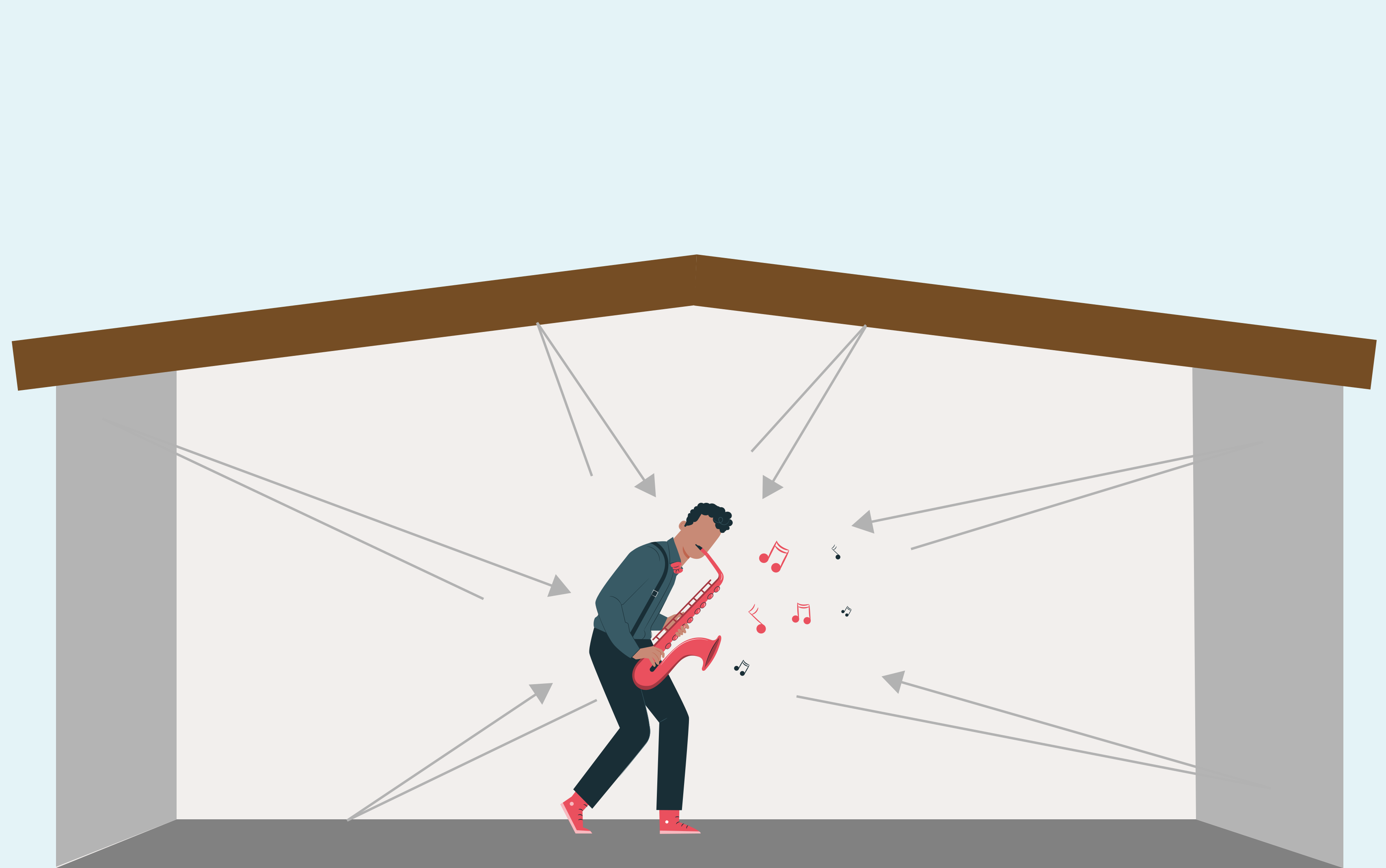
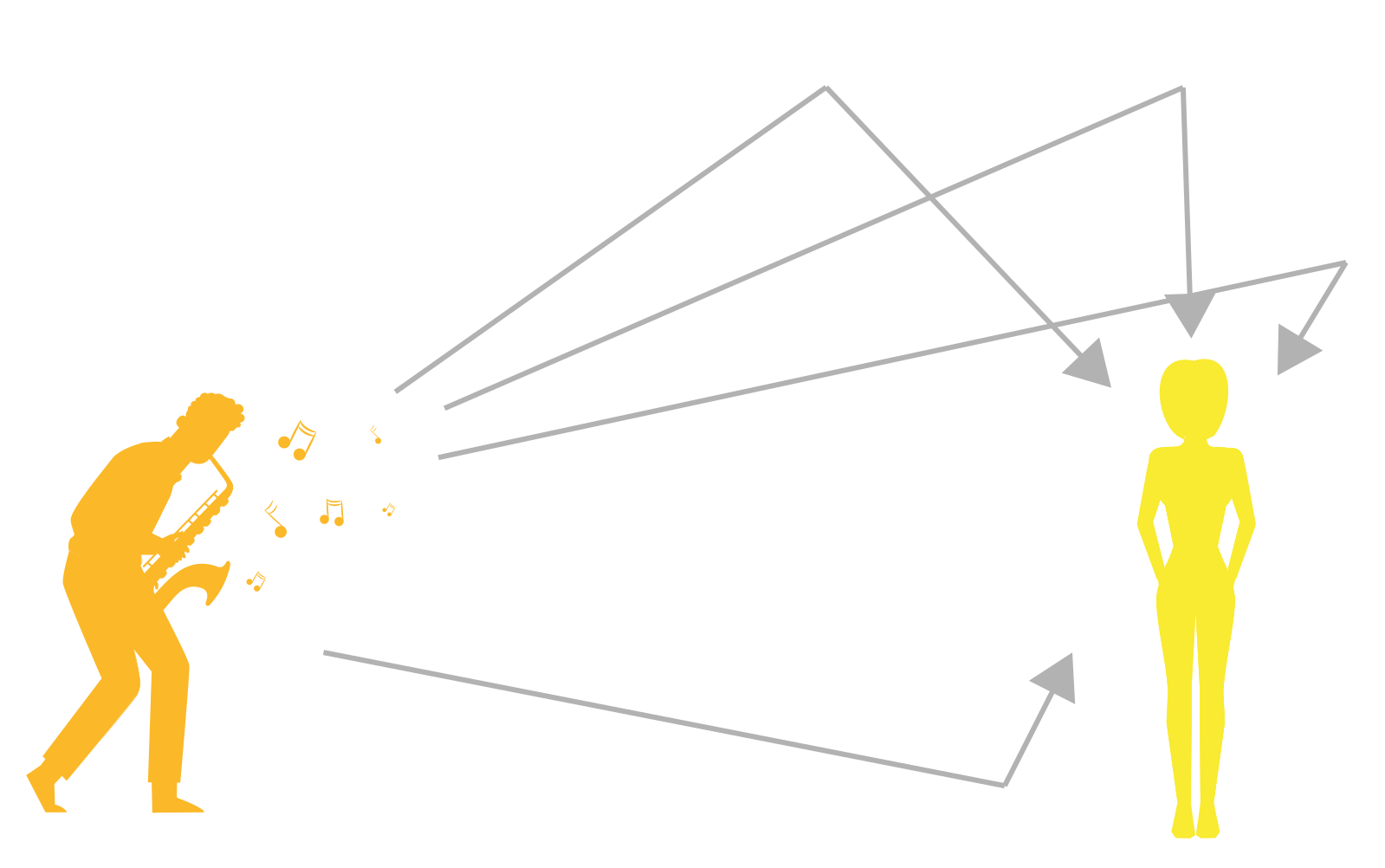
Il Riverbero è in acustica un risultato naturale dato dalle onde sonore che interagiscono con delle superfici prima di arrivare all'ascoltatore.
Reverb is the natural acoustic phenomenon that results from sound waves interacting with and bouncing off surfaces in a room.
Superfici diverse, riverberazioni diverse
Different surfaces, different reverberations
Le superfici possono essere vicine o lontane, morbide o dure, lisce o ruvide. Superfici diverse danno riverberazioni diverse, creando il "suono" o "colore" della stanza.
Reverberation is affected by the size of the room, the material of the surfaces, and the overall geometry, contributing to create the unique "sound" or "color" of the room.
Quando il suono arriva alle superfici, una parte viene assorbita e una parte viene riflessa, a seconda del materiale.
When sound reaches a surface, some energy is absorbed and some energy is reflected, depending on the material of the surface.
Dimensioni della Stanza
Room Dimensions
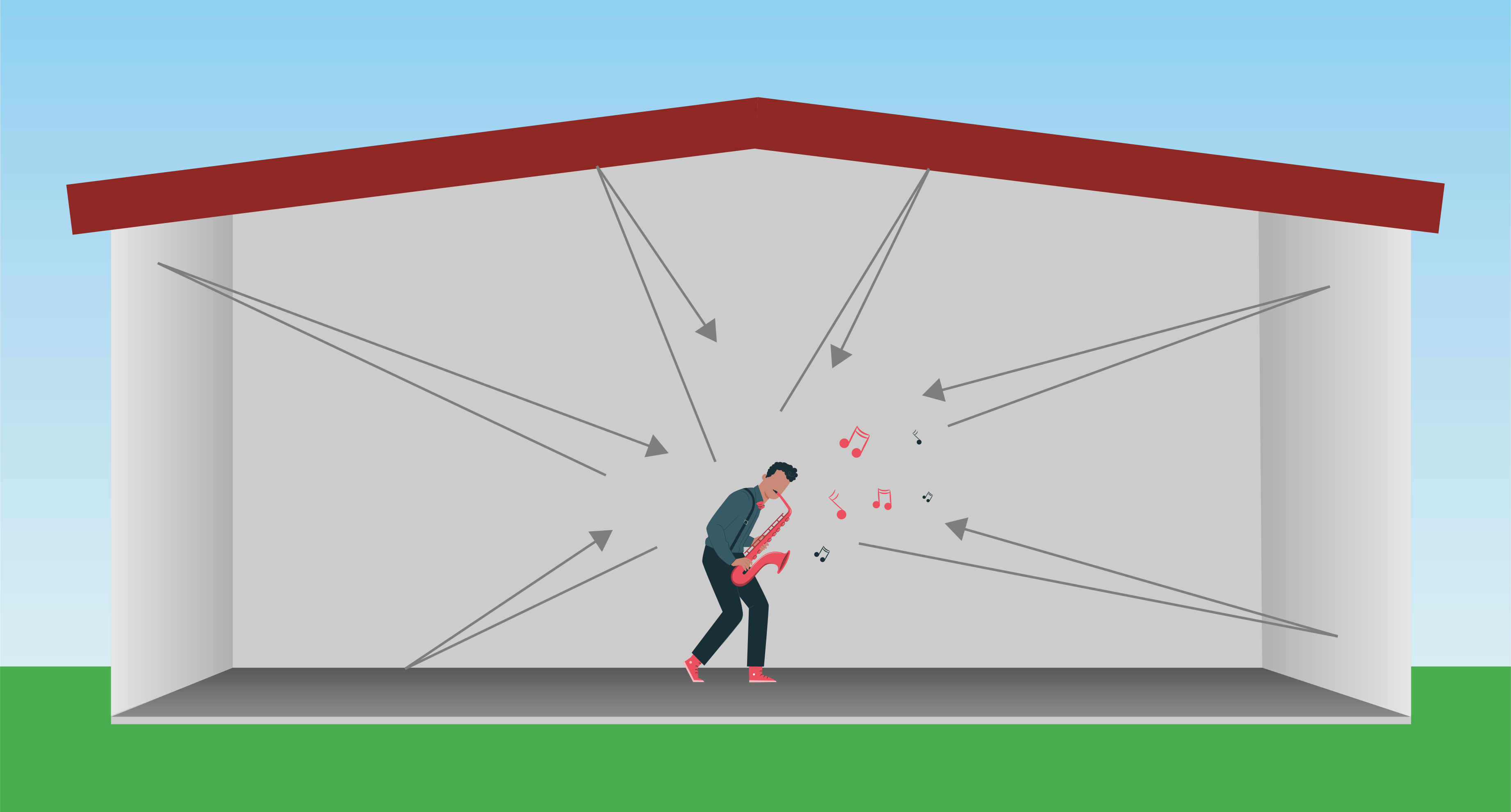
La dimensione della stanza influisce molto sul tipo di riverberazione, in particolare sulla sua durata.
The room's size or volume greatly affects the reverberation type, length, and "color."
A parità di materiali, più la stanza è grande, più lunga sarà la riverberazione.
If the materials are the same, the larger the room volume, the longer the reverberation.
Stanza piccola
Small room
Riflessioni rapide, riverbero corto, suono "asciutto".
Fast reflections, short reverb, "dry" sound.
Stanza grande
Large room
Riflessioni distanziate, riverbero lungo, suono "aperto".
Spaced reflections, long reverb, "open" sound.
Spazi aperti
Open space
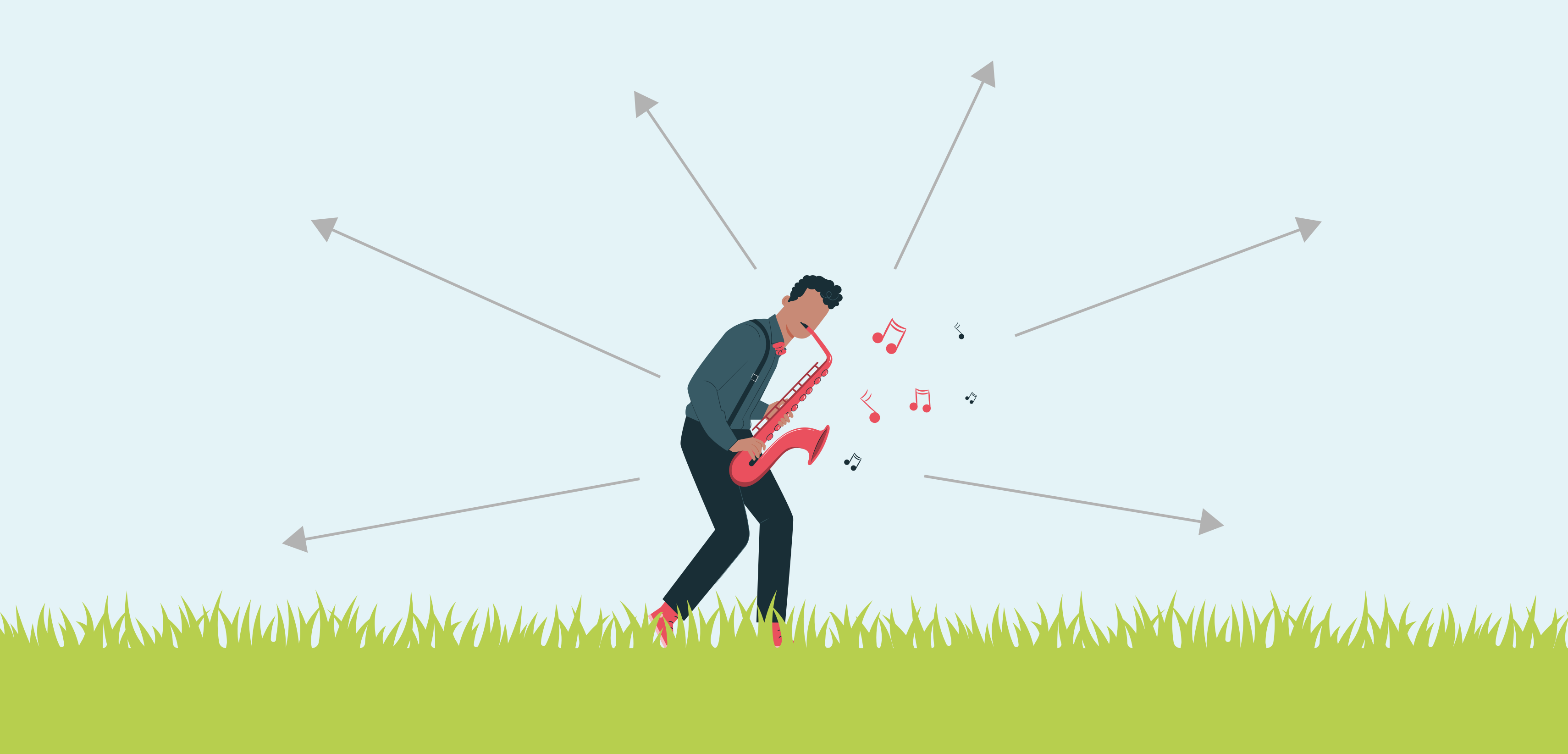
Se suoniamo in mezzo a un prato all'aria aperta, non udiamo nessuna riverberazione del suono.
If surfaces are absent, such as playing in the middle of a meadow in open air, we generally will not experience significant reverberation of our sound.
Suono Diretto e Suono Riflesso
Direct Sound and Reflected Sound
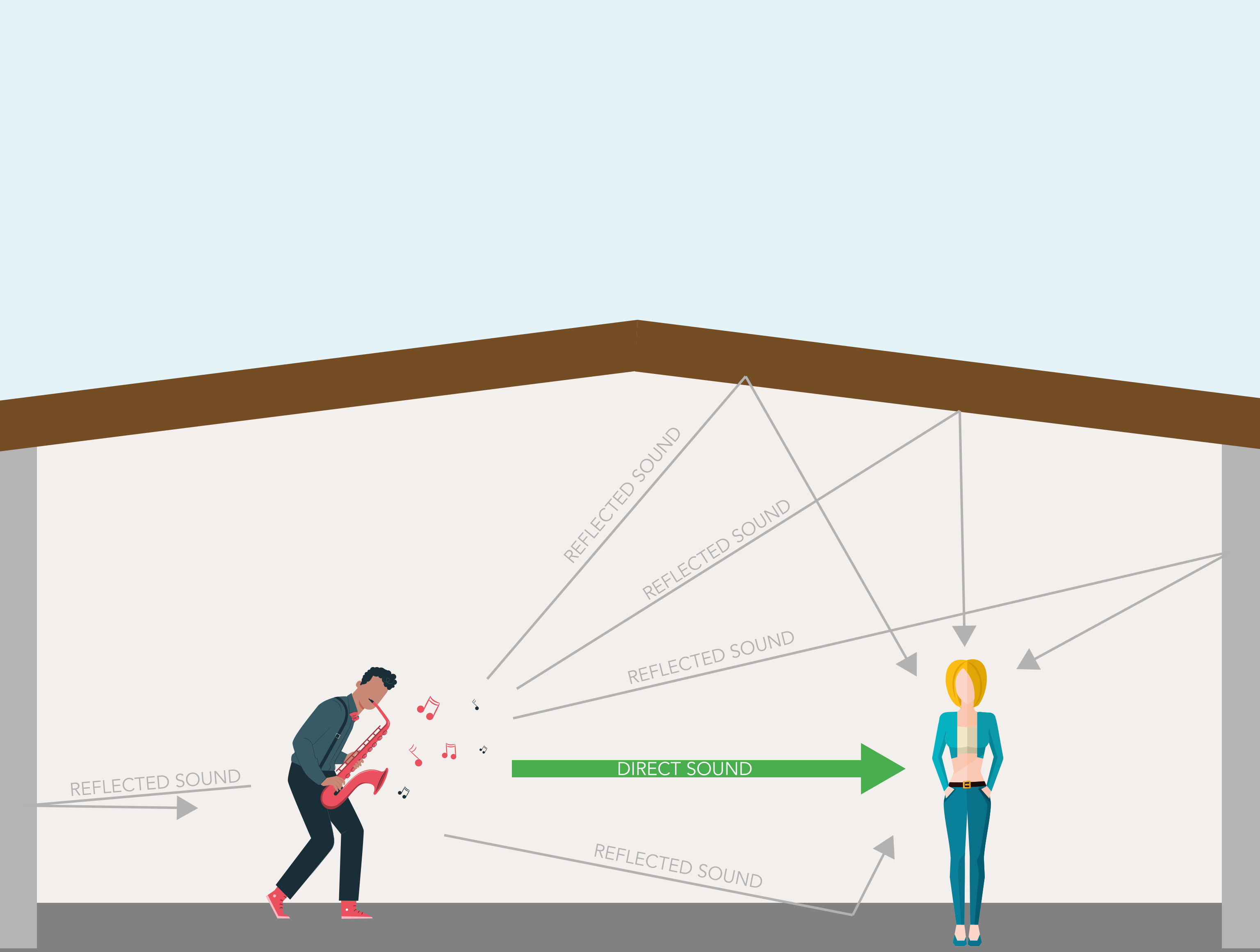
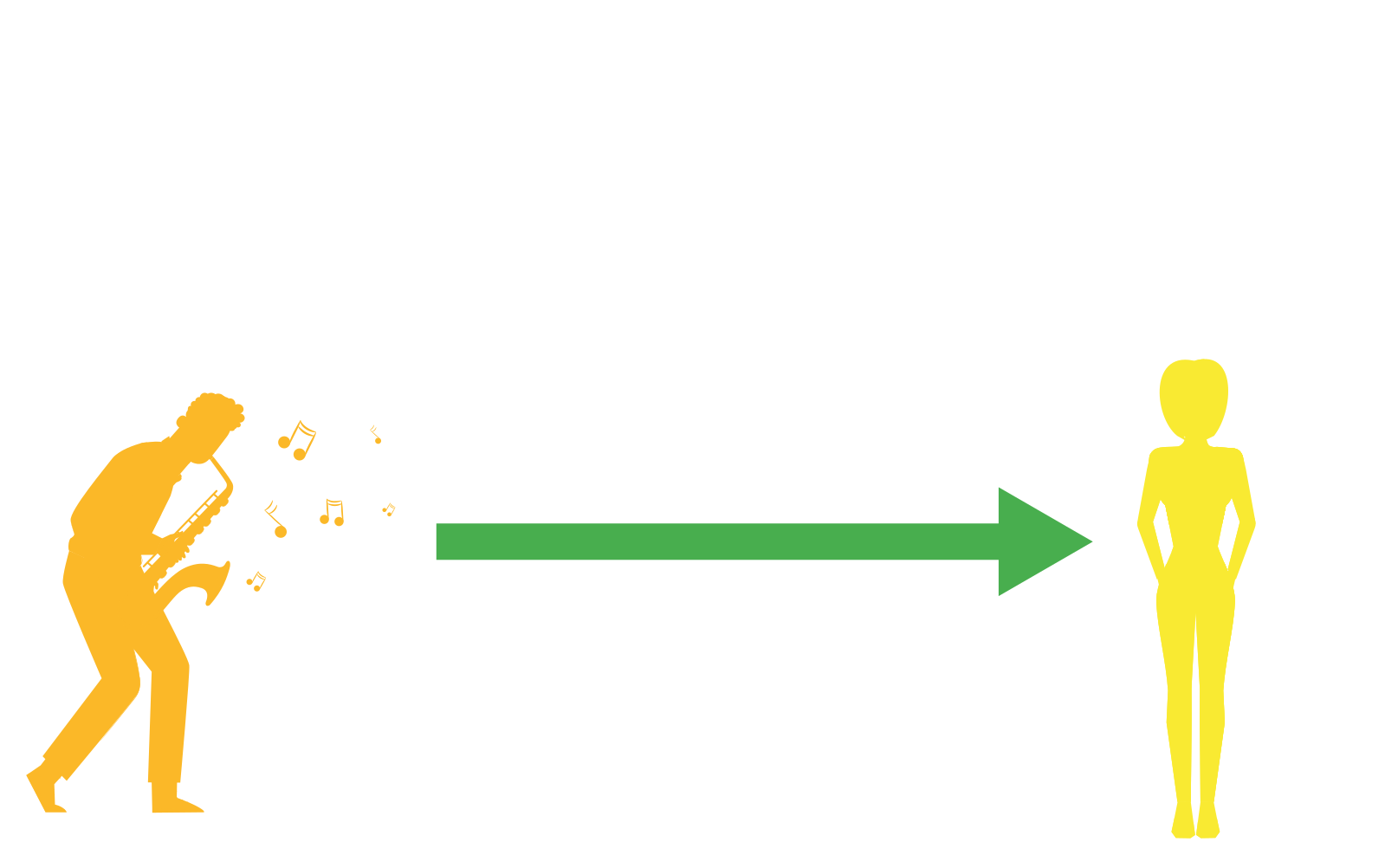
In spazi chiusi il suono che giunge all'ascoltatore è di due tipi: suono diretto e suono riflesso.
In enclosed spaces, the sound reaching the listener is of two types: direct sound and reflected sound.
Suono Diretto
Direct Sound
Tutte le onde sonore che non incontrano ostacoli. È attenuato in ampiezza dall'aria.
Sound from source that reaches the listener without obstacles. Attenuated in amplitude due to the inverse square law.
Suono Riflesso
Reflected Sound
Tutte le onde che incontrano superfici riflettenti. È filtrato, attenuato in ampiezza e ritardato nel tempo.
Sound waves that reach the listener after reflecting off surfaces. It is filtered, attenuated in amplitude, and time delayed.
Impulso di Risposta
Impulse Response
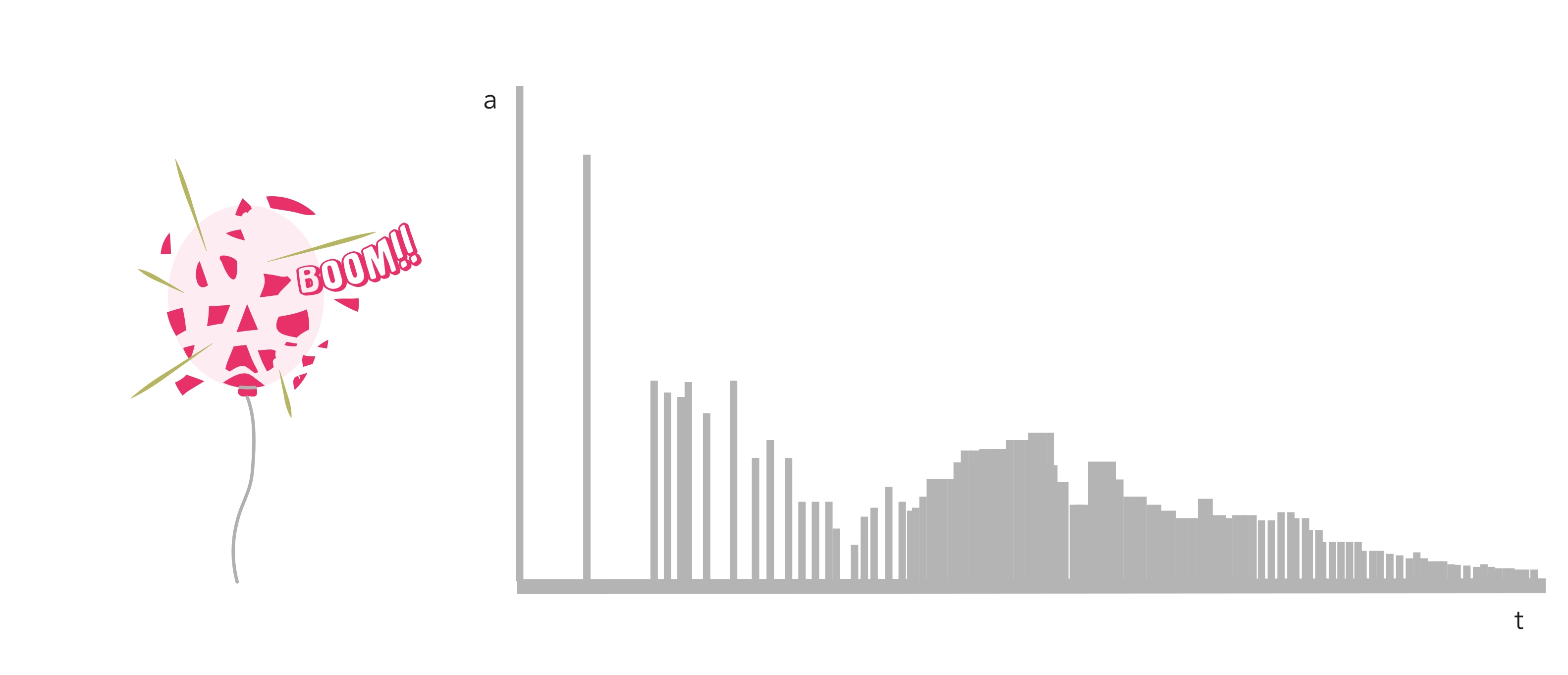
Se in una stanza creiamo un suono impulsivo (come un palloncino che scoppia) e misuriamo l'ampiezza del suono nel tempo, otteniamo l'Impulso di Risposta. Ogni stanza ha il suo IR caratteristico.
If we create a rich, impulsive sound in a room (balloon pop) and measure the amplitude of the sound over time, we get the room's Impulse Response. Each room has its characteristic Impulse Response.
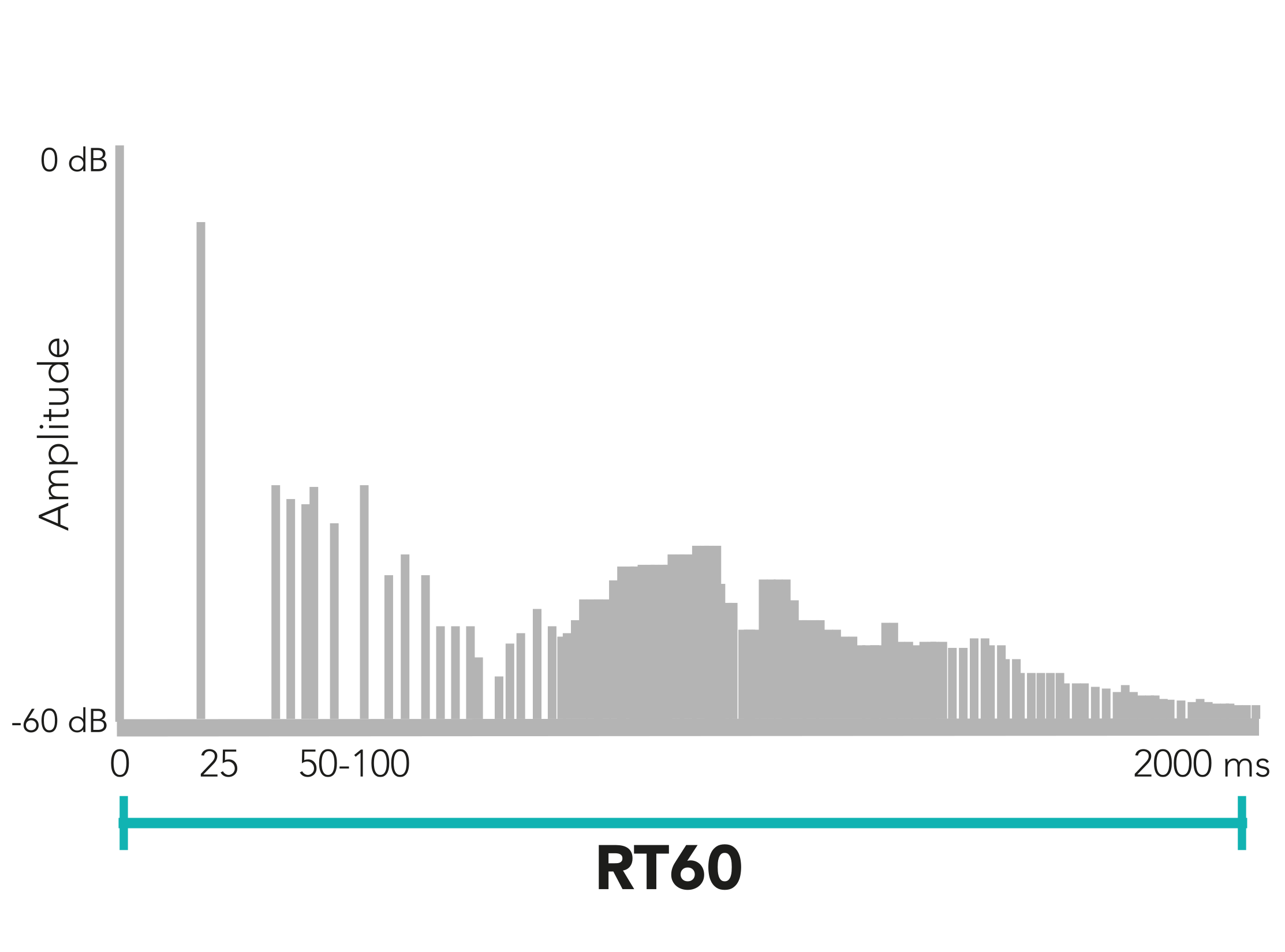
Tempo di Riverberazione RT60Reverberation Time RT60
Il tempo che una stanza impiega per attenuare un suono di 60 dB dal suo picco di ampiezza.
The amount of time it takes a sound to attenuate by 60 dB from its peak amplitude.
| AmbienteSpace | RT60 |
|---|
| CamerettaSmall bedroom | 0.1 – 0.5 s |
| Studio di registrazioneRecording studio | 0.3 – 0.7 s |
| Sala da concertoConcert hall | 1.5 – 3 s |
| CattedraleCathedral | 3 – 10 s |
Riverbero Artificiale — Camere d'eco acustiche
Artificial Reverb — Acoustic Echo Chambers
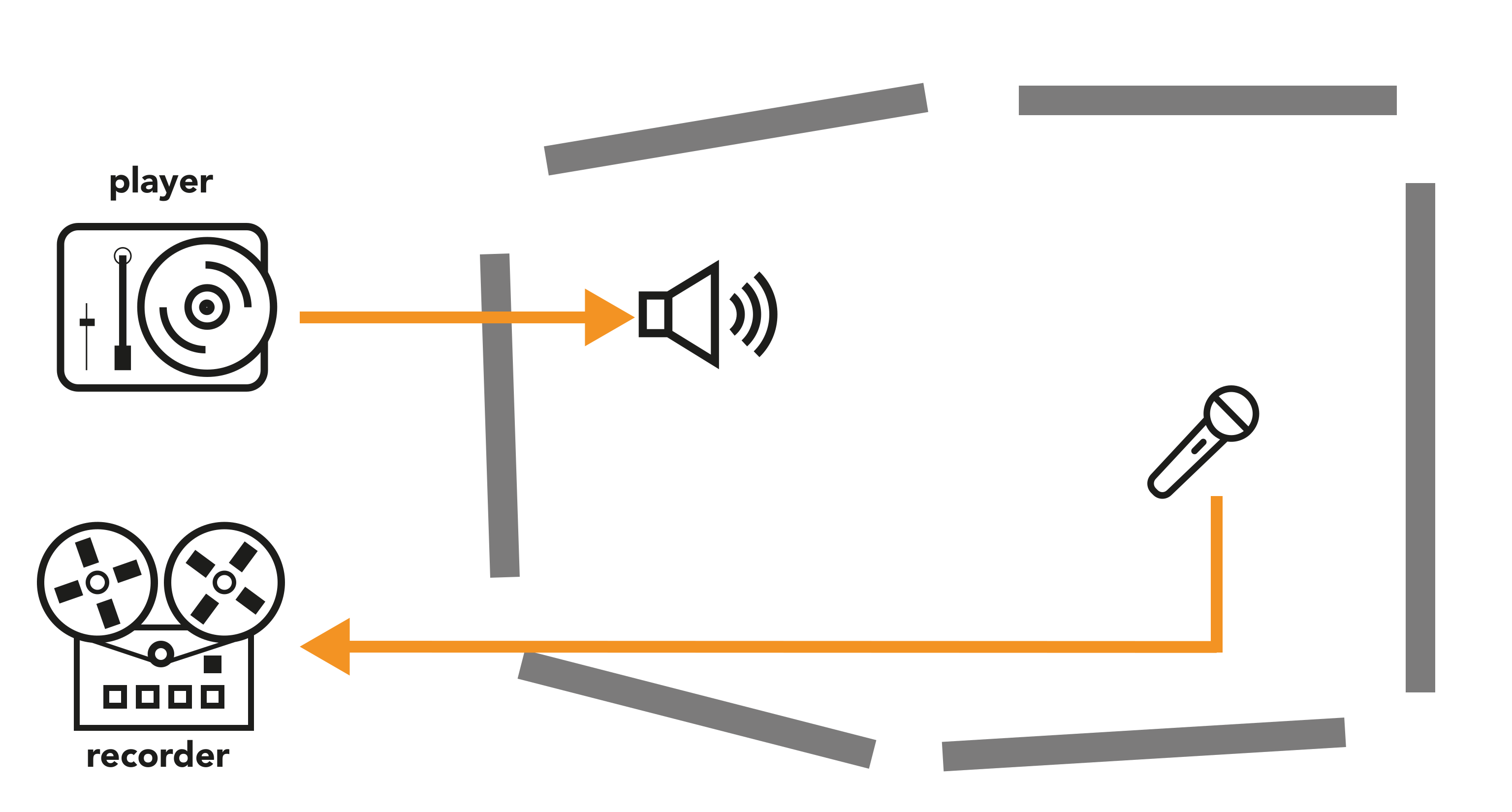
Le camere d'eco acustiche sono vere e proprie stanze nelle quali viene riprodotto il suono da riverberare e si registra il risultato dato dal suono diretto e dalle riflessioni della stanza.
Acoustic echo chambers are real rooms where sound is played back from a speaker into a room. The sound then propagates and is re-recorded by a microphone, capturing the natural reverb of the space.
Riverberi Elettromeccanici
Electromechanical Reverb
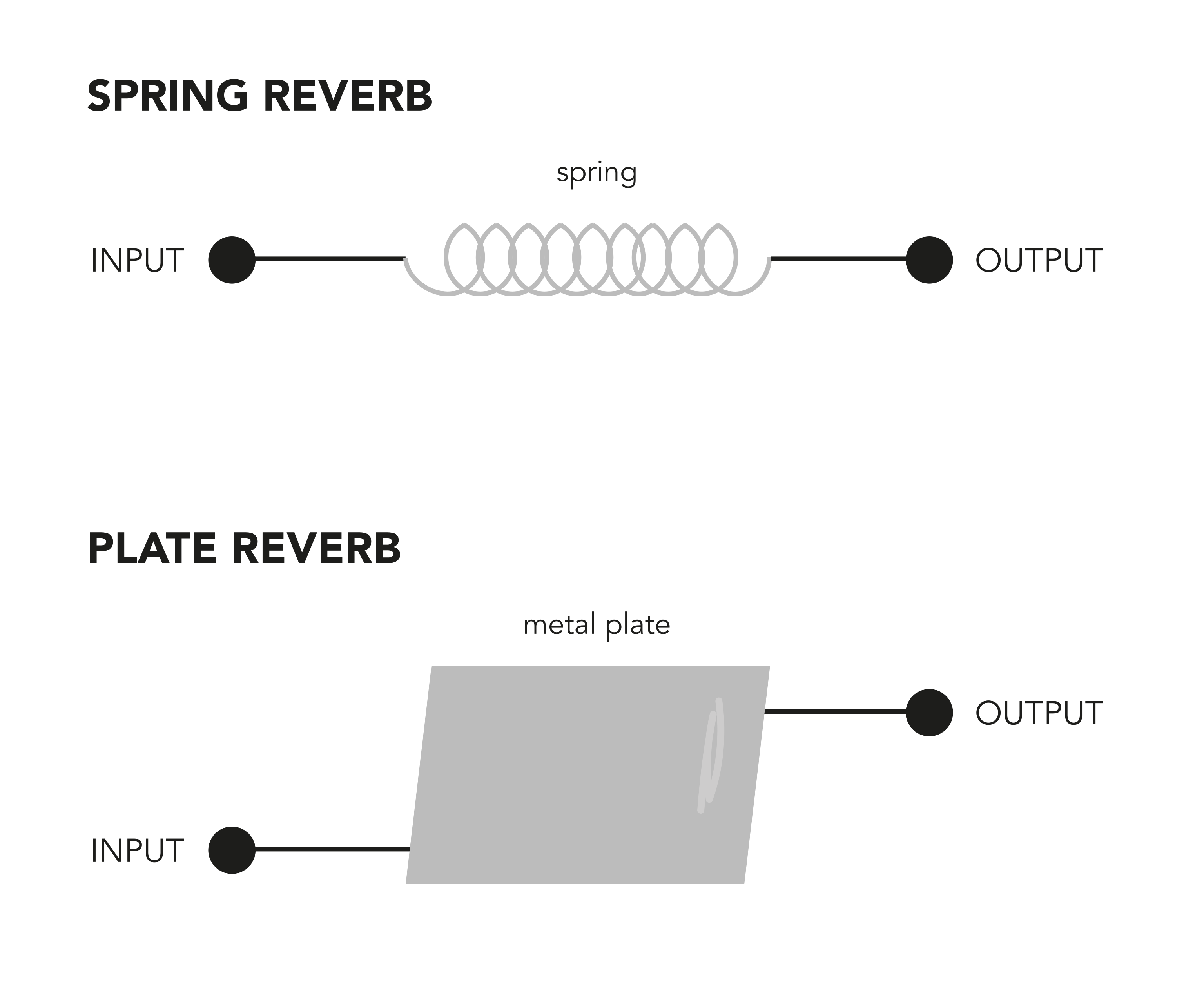
Il segnale audio passa attraverso un medium meccanico riverberante (molla o lastra di metallo) che introduce copie sfasate del suono originale. Medium diversi danno risultati diversi.
The audio signal passes through a mechanical reverberating medium (spring or metal plate) that introduces phase-shifted copies of the original sound. Different mediums produce different reverb sounds.
Riverberi Artificiali DigitaliArtificial Digital Reverb
Nei riverberi digitali si crea un algoritmo che simula le varie parti di una riverberazione acustica.
Il primo a creare algoritmi digitali di riverberazione è stato Manfred Schroeder ai laboratori Bell Telephone a partire dal 1961. I suoi algoritmi sono ancora molto attuali.
In digital reverb, an algorithm simulates the various components of natural acoustic reverberation.
The first person to create digital reverberation algorithms was Manfred Schroeder at Bell Telephone Laboratories in 1961. His algorithms are still widely used today.
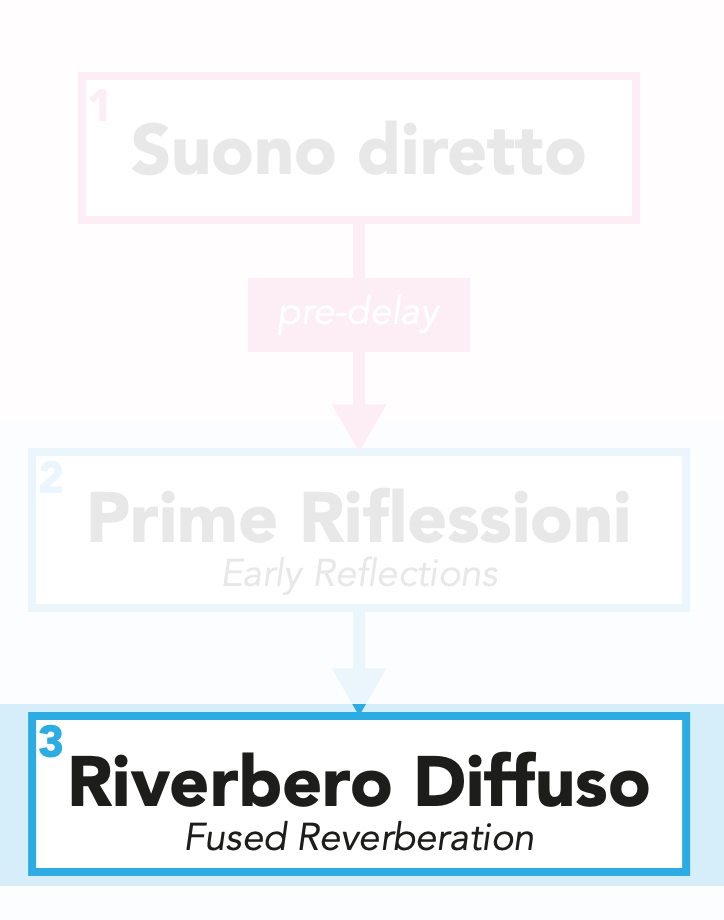
Le 3 parti del Riverbero
The 3 parts of Reverb
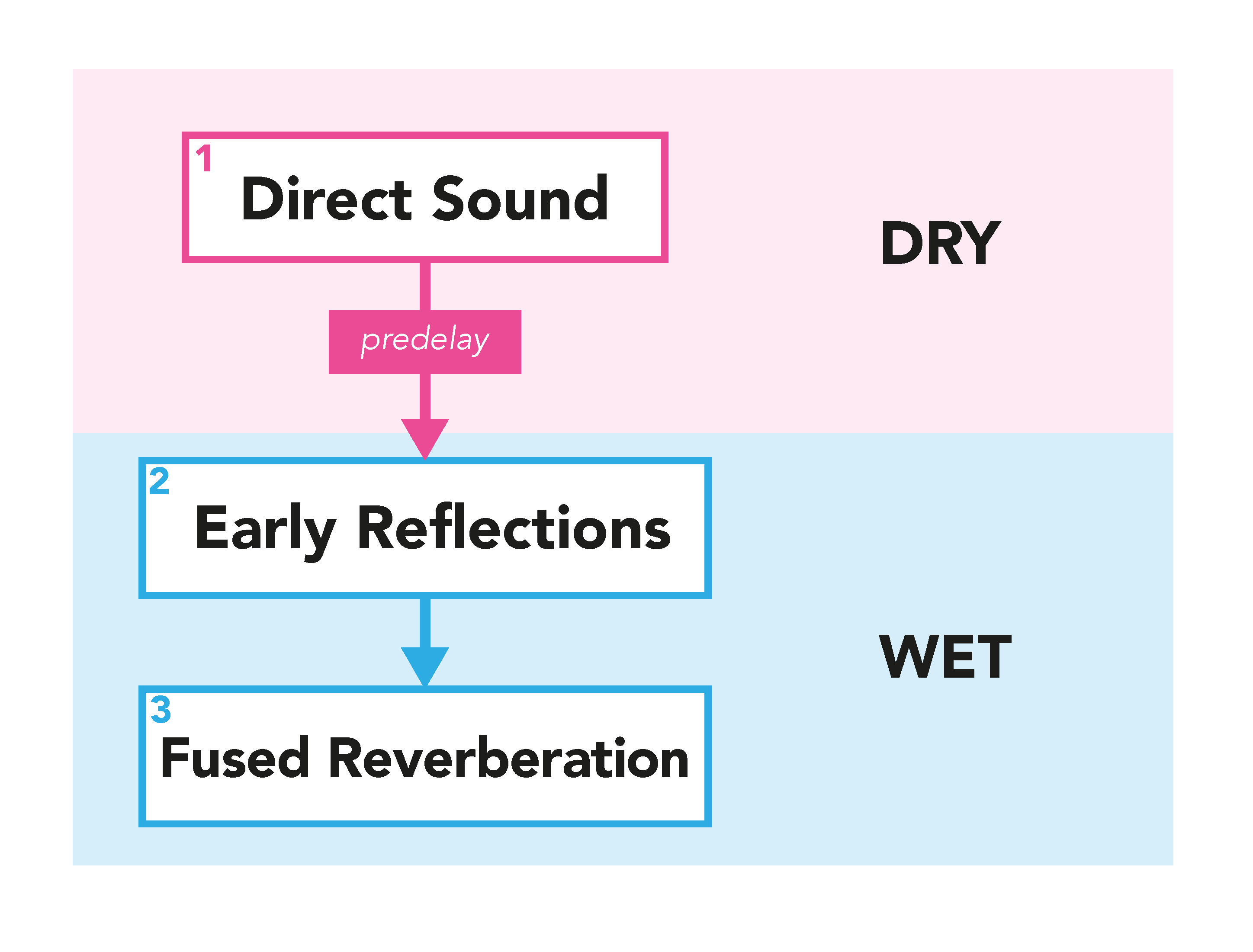
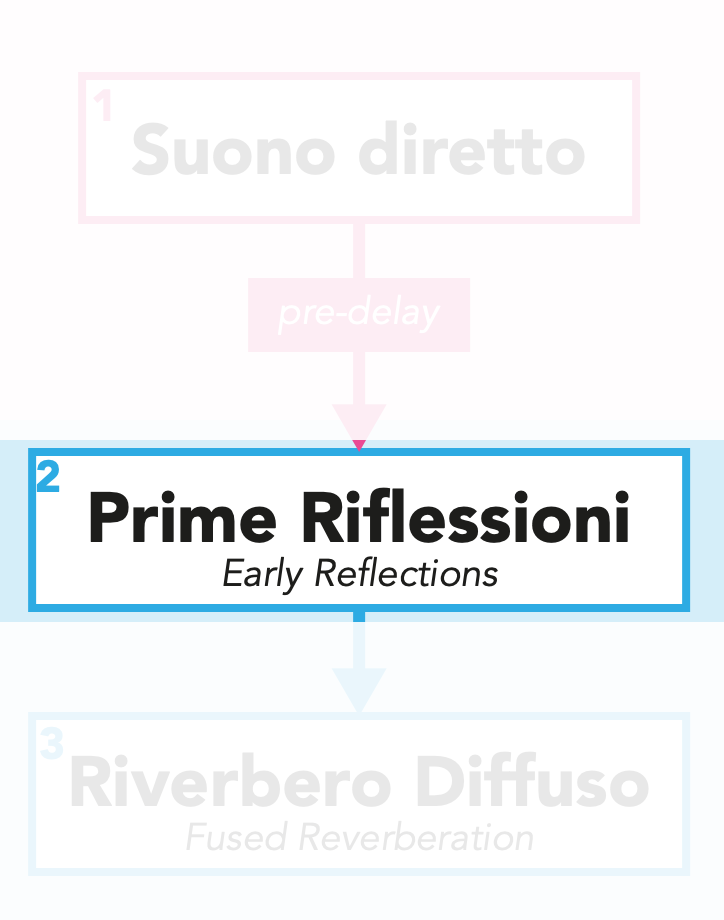
Prime Riflessioni — Delay Multitap
Early Reflections — Multitap Delays
Per simulare le Prime Riflessioni si utilizzano dei Delay Multitap: un insieme di delay con ritardi diversi tra loro che simulano le prime riflessioni sulle pareti della stanza.
Multitap delays are used to simulate the first early reflections: multiple delay units with different delay times, each simulating a reflection from a different wall of the room.
Riverbero Diffuso — Comb e All-Pass
Fused Reverberation — Comb and All-Pass
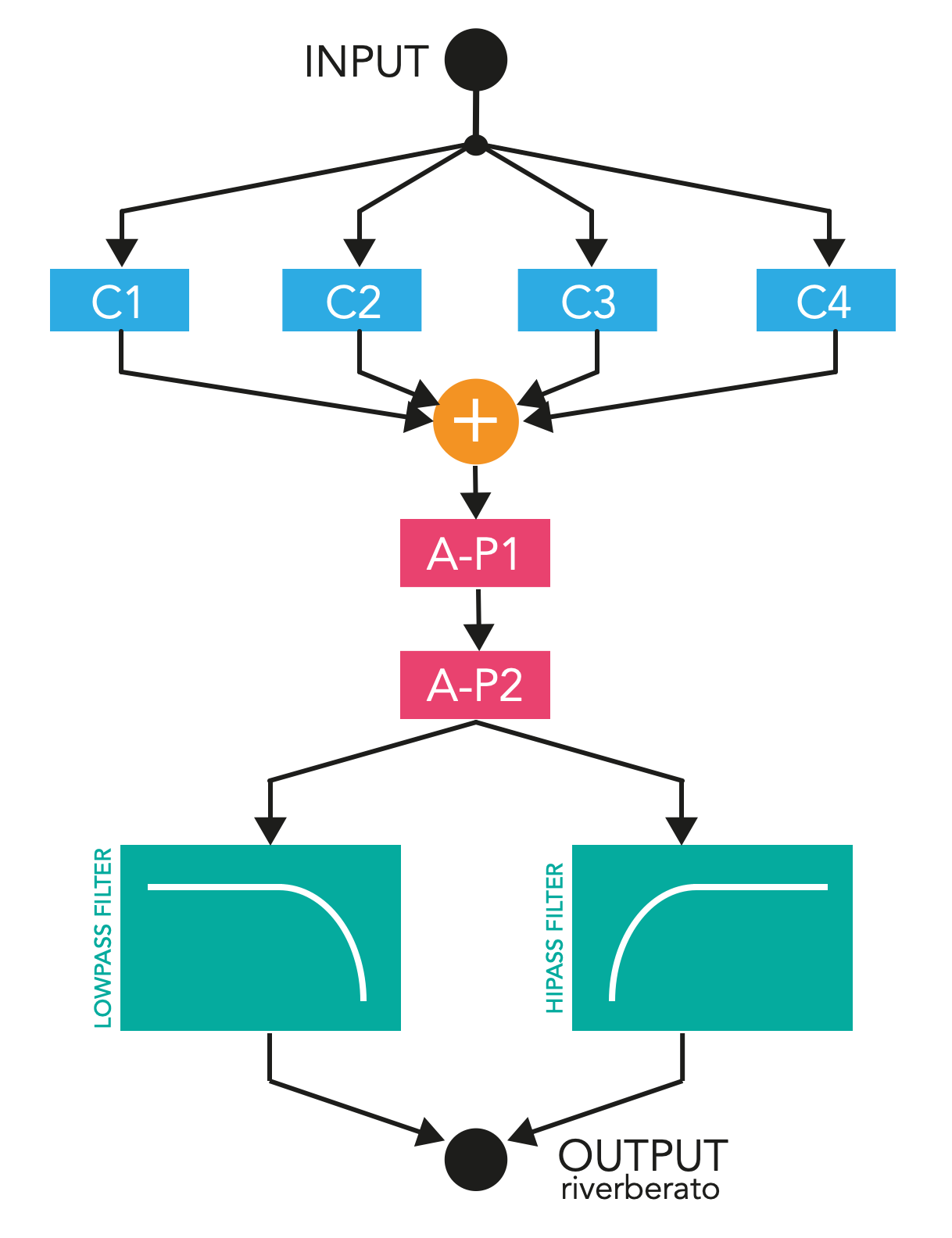
Per simulare il Riverbero Diffuso — diverse centinaia di riflessioni — si combinano e duplicano due unità base: Filtri Comb e Filtri All-pass.
To achieve Fused Reverberation — hundreds of reflections — we utilize, connect, and duplicate two basic processes: Comb filters and All-pass filters.
Filtri Comb
Comb Filters
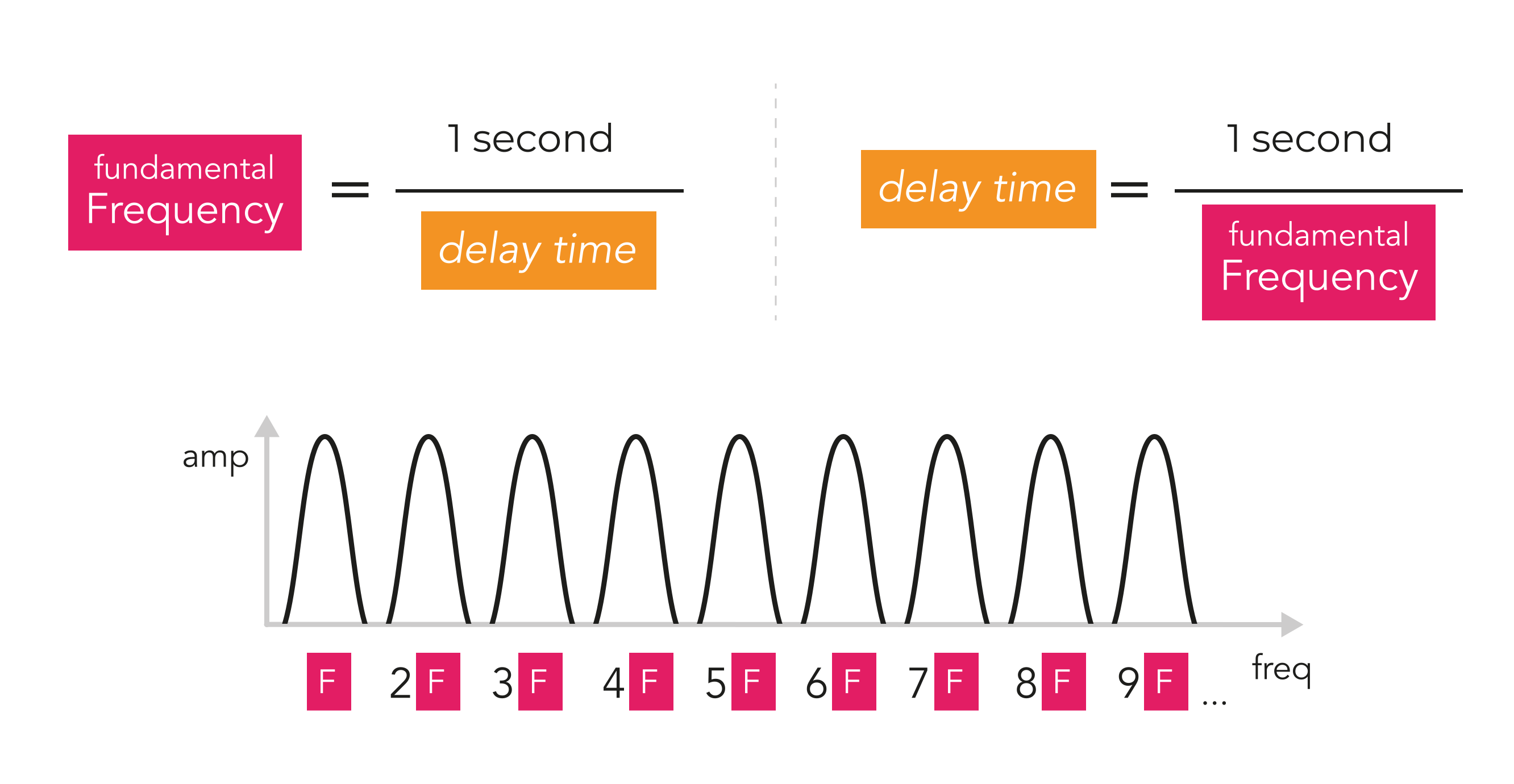
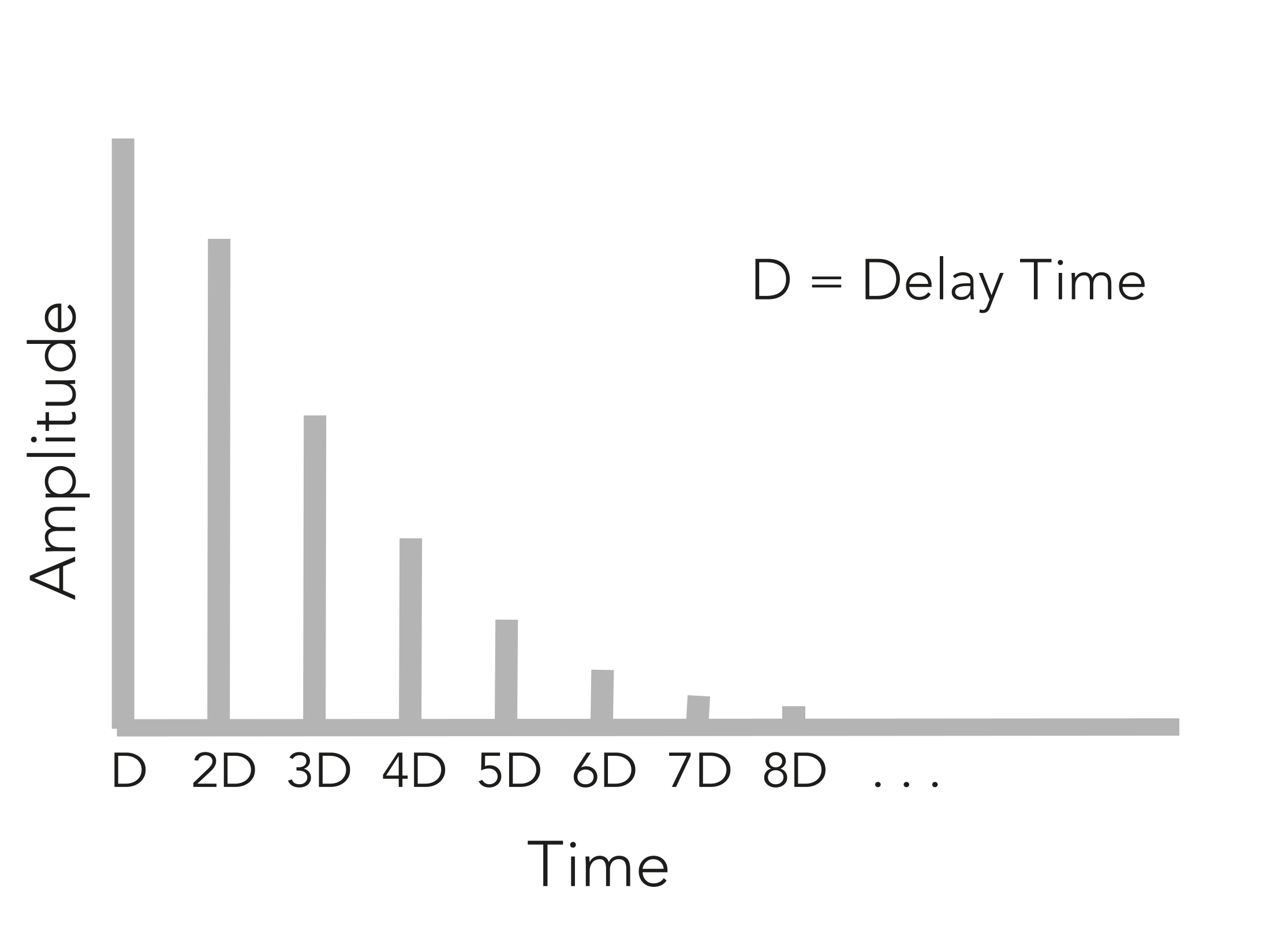
Un delay con feedback e delay time > 10ms. Per il riverbero si usano più filtri comb in parallelo con delay time diversi tra loro (non multipli interi). Il feedback (90–99%) controlla il decay (RT60).
A delay with feedback and delay time > 10ms. For reverb, multiple comb filters are used in parallel with non-integer multiple delay times. The feedback (90–99%) controls the decay (RT60).
Filtri All-Pass
All-Pass Filters
Il filtro all-pass fa passare inalterate tutte le frequenze cambiandone però le fasi. Introduce ritardi legati a particolari frequenze. Si usano in serie nel riverbero per aumentare la densità di riflessioni.
The All-pass filter passes through amplitudes unchanged but alters the phase depending on frequency. Used in series in reverb to increase reflection density.
Combinare Comb e All-PassCombining Comb and All-Pass
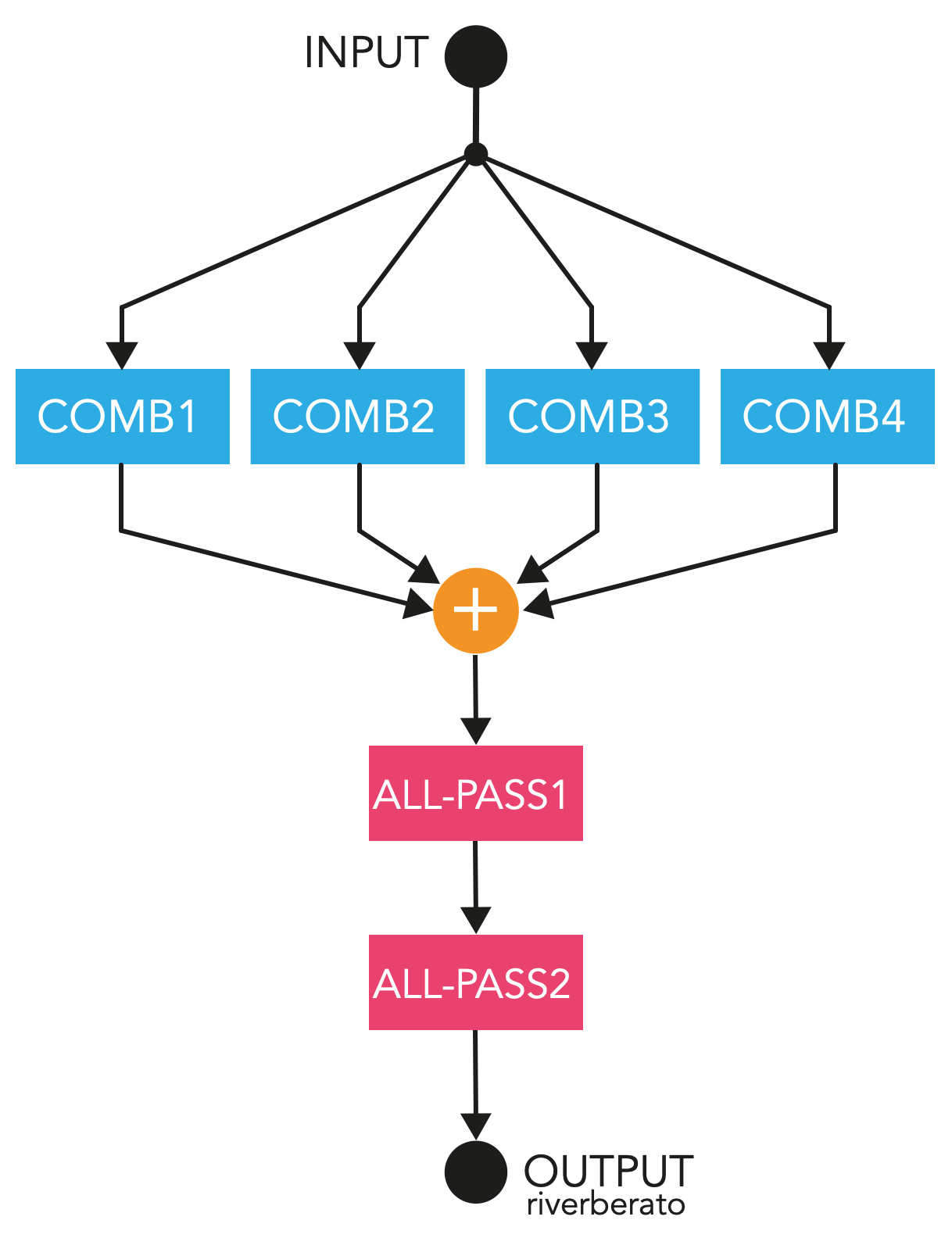
Per ottenere densità sufficiente: più filtri comb in parallelo (sommano le riflessioni) seguiti da filtri all-pass in serie (moltiplicano la densità).
To achieve sufficient density: multiple comb filters in parallel (summing reflections) followed by all-pass filters in series (multiplying density).
Filtri — Low-pass e High-passFilters — Low-pass and High-pass
Per raffinare il riverbero si aggiungono filtri in uscita: un filtro Low-pass simula l'assorbimento delle alte frequenze da parte delle pareti (suono più "scuro"); un filtro High-pass riduce le basse (suono più brillante).
Filters are added at the output to refine the reverb: a Low-pass filter simulates the absorption of high frequencies by the walls (darker sound); a High-pass filter reduces low frequencies (brighter sound).
Riverbero StereofonicoStereo Reverb
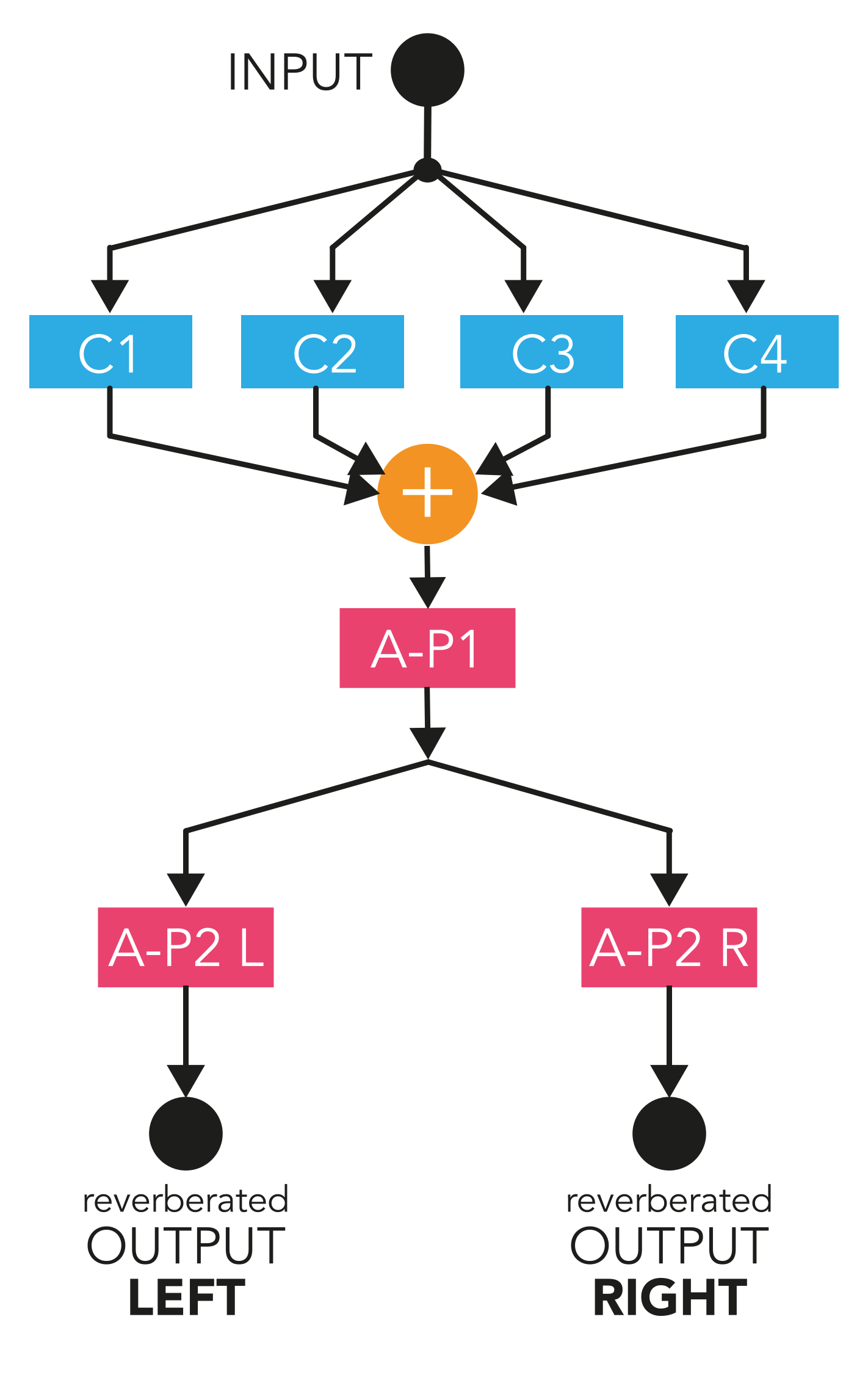
Per ottenere un riverbero stereofonico si differenziano due all-pass finali, uno per il canale destro e uno per il sinistro. L'ultimo all-pass gestisce migliaia di riflessioni create nei passaggi precedenti.
The easiest way to create stereo reverb is to apply a different all-pass filter to each channel in the final stage. One all-pass per channel processes thousands of reflections.
Parametri del RiverberoReverb Parameters
PREDELAY
Ritardo tra suono diretto e prime riflessioni. Un predelay grande dà sensazione di stanza grande.Sets the delay time between the original sound and the first reflections.
SIZE
Controlla i delay time delle unità riverberanti, simulando la dimensione della stanza.Creates the delay times of the various reverberating units, simulating the feeling of room size.
REVERBERATION TIME
Controlla la durata complessiva del riverbero (RT60).Controls the overall duration of the reverberation (RT60).
DIFFUSION
Densità di riflessioni. Simula la complessità geometrica della stanza.Determines the density of reflections that our reverberation creates.
Altri Parametri
More Parameters
FILTER / DAMPING
Simula l'assorbimento di alcune frequenze da parte delle pareti riflettenti.Simulates the absorption of certain frequencies caused by absorptive properties of the walls.
TIPO DI RIVERBEROREVERB TYPE
Pre-impostazioni che simulano riverberi particolari: Plate, Spring, Chamber, Hall, Gated.Presets that simulate particular reverb types: Plate, Spring, Chamber, Hall, Gated.

MIX / DRY–WET
Controlla il rapporto tra suono originale (DRY) e suono riverberato (WET).Controls the ratio between the amplitude of the original sound (DRY) and the reverberated sound (WET).
Riverbero a Convoluzione
Convolution Reverb
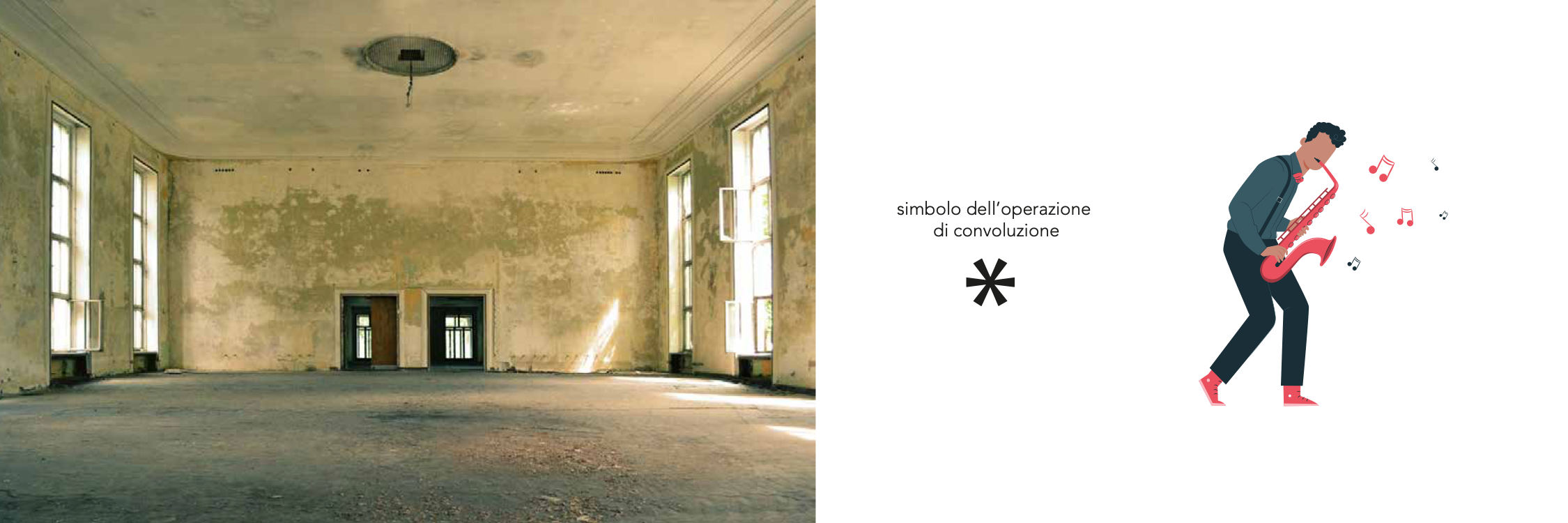
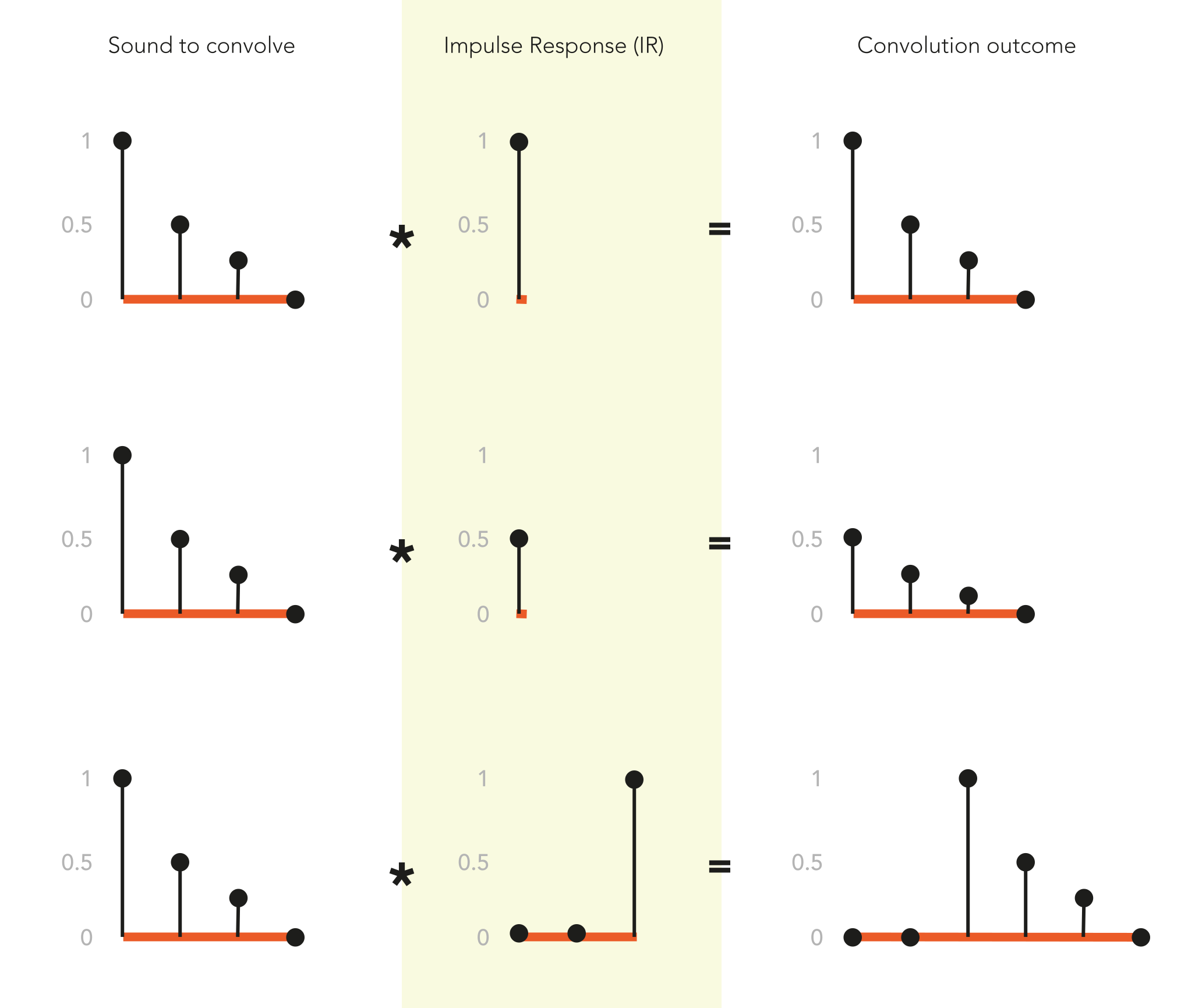
Utilizza l'Impulso di Risposta di una stanza reale e un'operazione matematica (la convoluzione) per applicare il riverbero di quella stanza a qualsiasi suono. Il risultato è molto realistico, ma ha un costo computazionale elevato.
Uses the Impulse Response of a real room and a mathematical operation called convolution to apply that room's reverb to any sound. Very realistic result, but higher computational cost.
Convoluzione Diretta
Direct Convolution
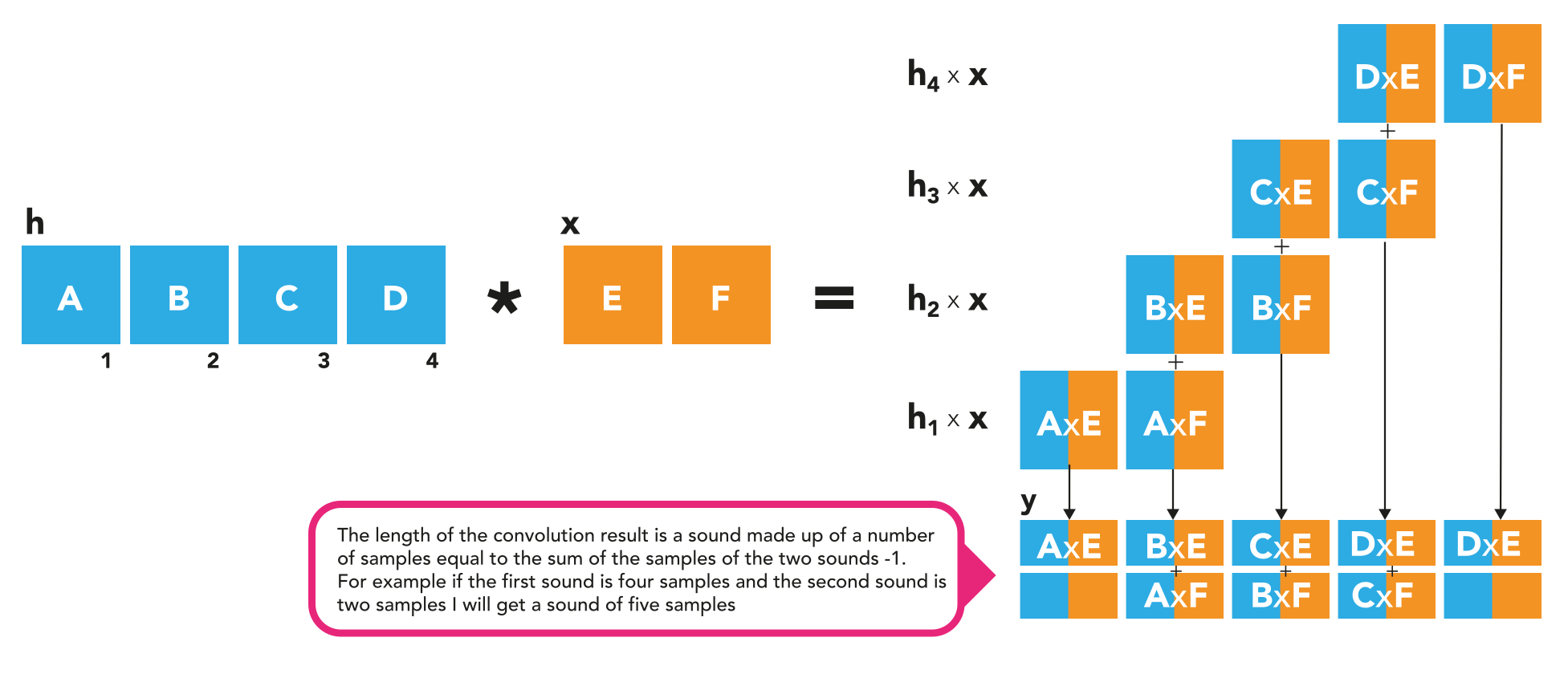
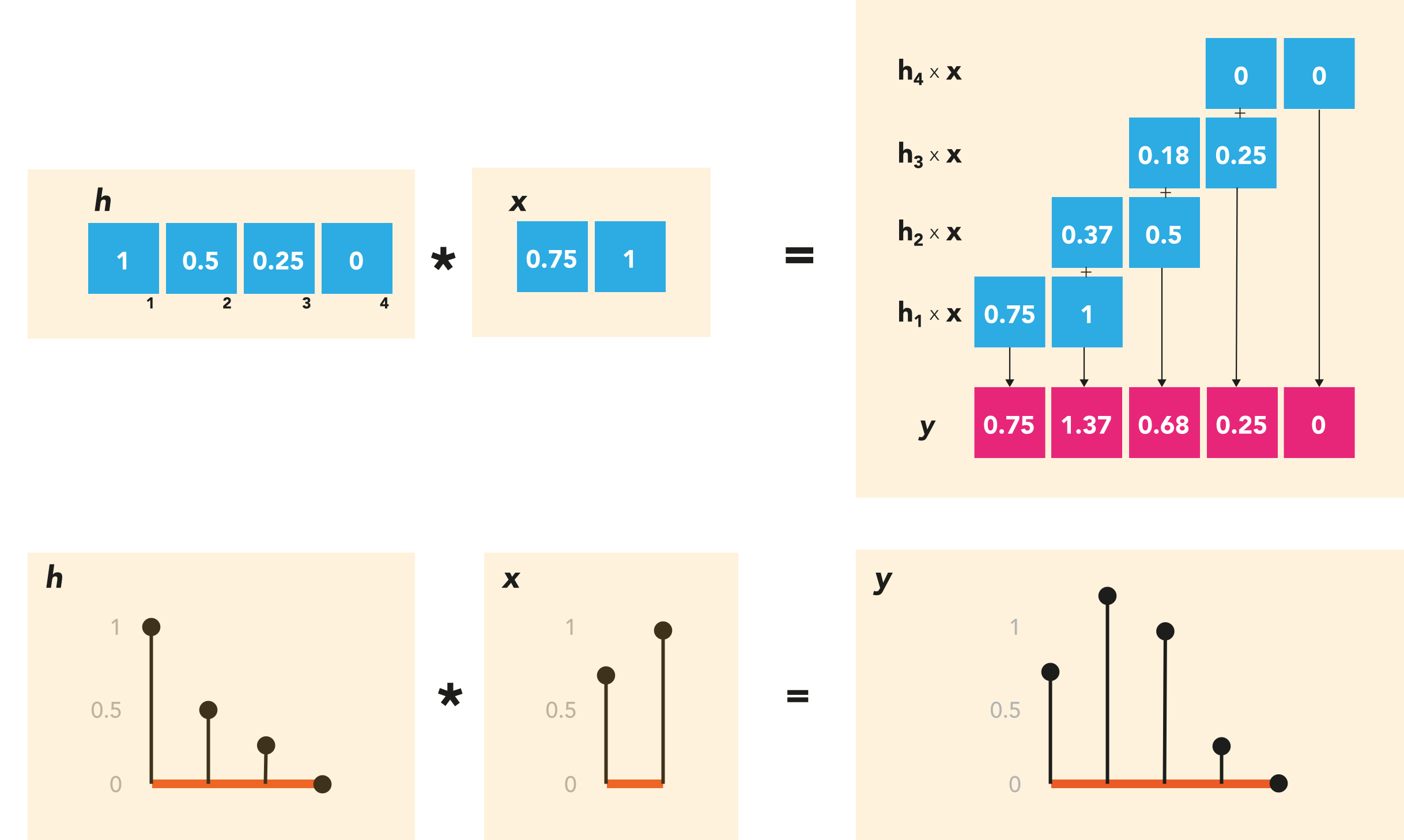
Dati h (impulso di risposta della stanza) e x (suono da riverberare), la convoluzione diretta nel dominio del tempo si ottiene: moltiplicando ogni campione di h per ogni campione di x, disponendo i risultati sfalsati in una tabella e sommando ogni colonna.
Given h (the room impulse response) and x (the dry sound), direct convolution in the time domain is performed by: multiplying all samples of h by all samples of x, placing results in a staggered table, and summing each column.
Convoluzione — esempi semplici
Convolution — simple examples
Convoluzione — esempio completo
Convolution — full example
Il suono finale è un suono che ha le caratteristiche del primo e del secondo suono combinati attraverso la moltiplicazione dei loro campioni.
The final sound will have characteristics of both the first and second sounds, combined through the multiplication of their samples.
Convoluzione nel tempo = Moltiplicazione degli Spettri
Time-domain convolution = Spectrum Multiplication
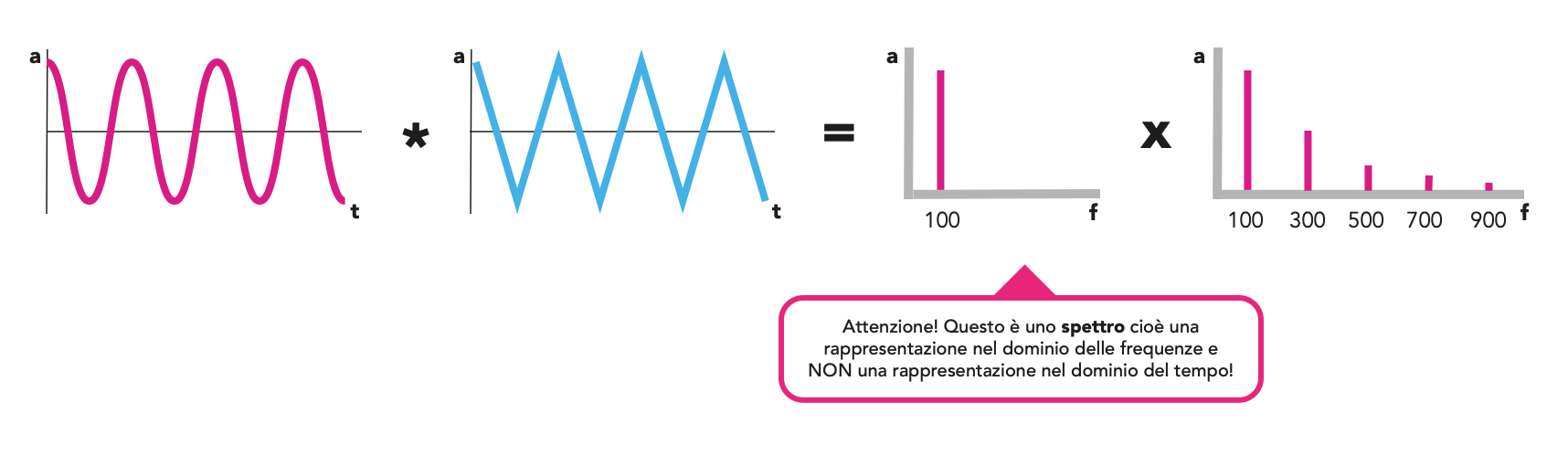
La convoluzione diretta è molto costosa computazionalmente. Esiste però un teorema fondamentale: la convoluzione di due segnali nel dominio del tempo equivale alla moltiplicazione dei loro spettri nel dominio delle frequenze!
The direct convolution is computationally expensive. However, a fundamental theorem states: the convolution of two signals in the time domain is equivalent to the multiplication of their spectra in the frequency domain!
Questo permette la Fast Convolution: molto più veloce ed efficiente per il tempo reale.
This enables Fast Convolution: much faster and more efficient for real-time processing.
Fast Convolution — FFT
Fast Convolution — FFT
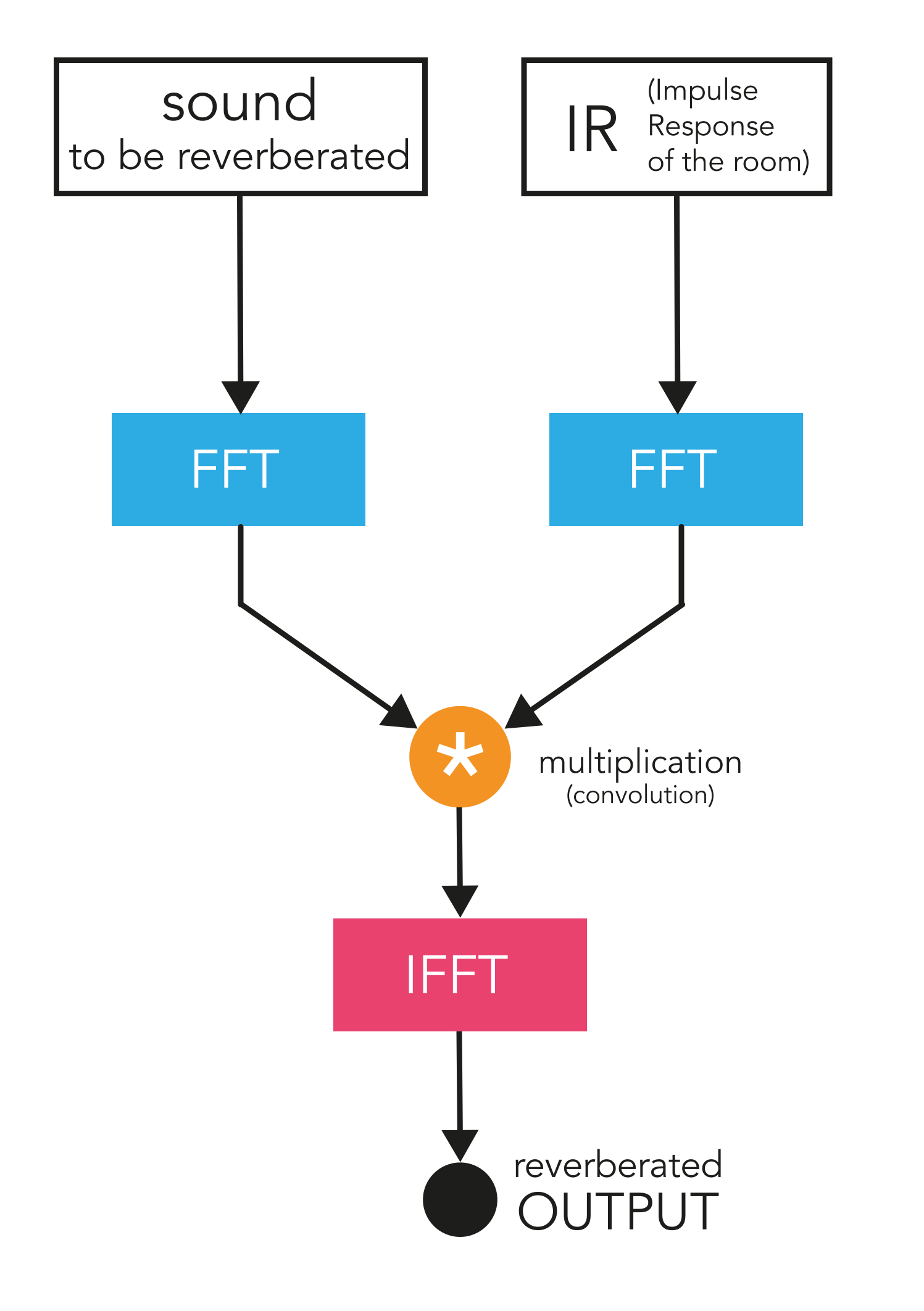
Si ottiene lo spettro dei due segnali con la FFT (Fast Fourier Transform), si moltiplicano gli spettri (convoluzione), e si torna nel dominio del tempo con la IFFT (Inverse FFT).
Get the spectrum of both signals using FFT (Fast Fourier Transform), multiply the spectra (convolution), then convert back to the time domain with IFFT (Inverse FFT).